
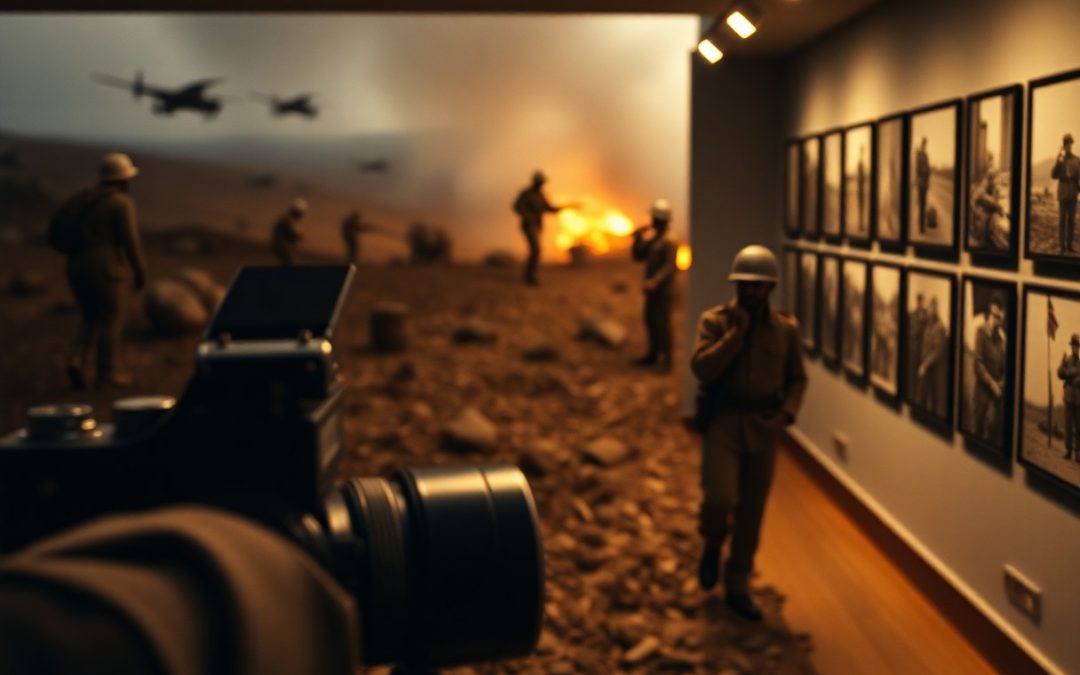
Many people overlook how war has profoundly shaped the evolution of photography, influencing not only the technology used but also how history is documented. As you explore the intersection of conflict and photography, you’ll discover how photographers have captured the raw realities of war, changing public perception and understanding. This post will guide you through key moments in photographic history, highlighting the significance of compelling images that have forever altered our grasp of historical events.
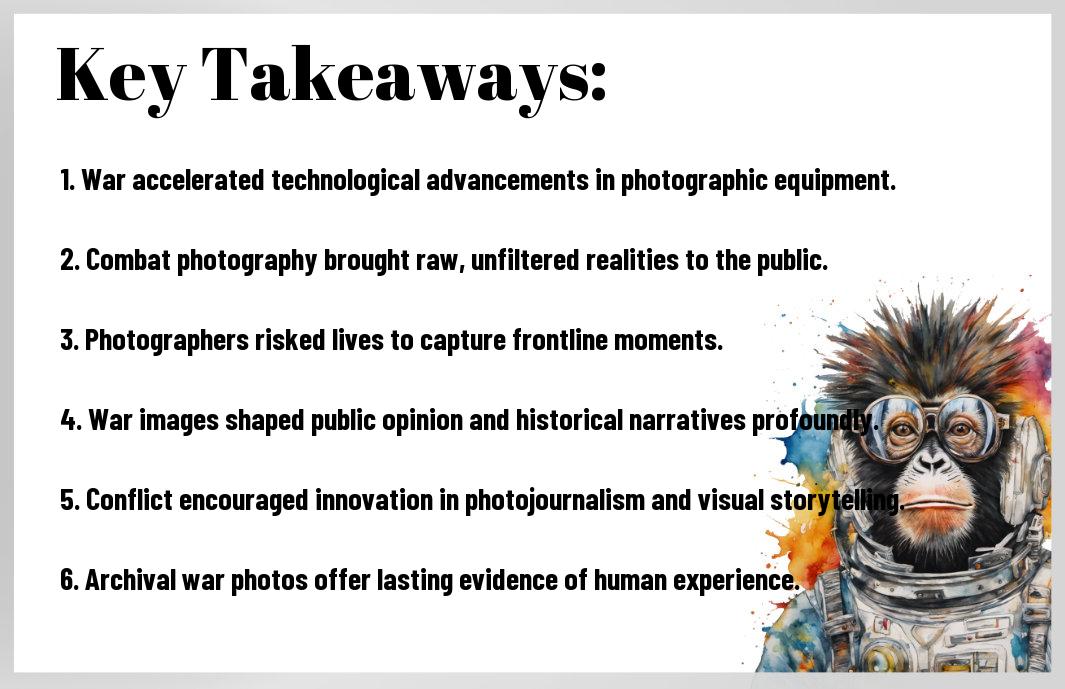
The Genesis of War Photography: From the Civil War to World Wars
You might be surprised to learn that war photography can trace its roots back to the American Civil War. This period marked the first significant use of photography to document the realities of combat, capturing a raw and unfiltered look at battlefields and their aftermath. Photographers like Mathew Brady and Alexander Gardner took haunting images that changed public perception by bringing the brutal realities of war into homes across America. The evolution of technology throughout the two World Wars further expanded the scope and impact of photography, forever altering its role in society.
Pioneering Figures and Their Influence on Early Combat Imagery
You can appreciate how pioneering photographers like Mathew Brady shaped early combat imagery. Their candid images of soldiers, battlefield scenes, and gruesome injuries established a stark contrast to the glorified depictions common in prior art forms. Brady’s work not only set the stage for photojournalism but also inspired future generations of photographers to focus on the truth behind warfare, making it a tool for social change and awareness.
The Role of Photography as a Weapon Against War’s Romanticism
Photography emerged as a formidable counterforce to the romanticism historically associated with war. The gruesome visuals captured on camera shattered the heroic myths, exposing the chaos and suffering that often accompanied conflicts. This stark realism served to challenge the narratives constructed by leaders and poets, prompting the public to reassess their notions of honor and glory in battle. Iconic photographs, such as those from World War I showing injured soldiers or the aftermath of bombings, delivered a poignant message: war is not glorious, but rather tragic and devastating.
In many ways, these photographs became a visual outcry against the glamorization of warfare. The infamous image of a dying soldier captured during the Battle of Antietam, for example, forced viewers to confront the heavy toll of conflict. As the viewer surveyed these haunting scenes, it catalyzed a wider discourse around the ethical implications of war, compelling societies to grapple with its human cost. The visceral honesty of these images created a profound shift in public sentiment, ultimately influencing policy decisions and anti-war movements in the years that followed.
The Technological Revolution: Cameras in the Trenches
Innovations Driven by the Demands of War Coverage
The exigencies of war significantly accelerated camera innovations. During conflicts, photographers sought faster shutter speeds, lighter equipment, and more efficient film development processes to capture real-time events, often in perilous conditions. Brands like Kodak and Leica emerged as pioneers. The introduction of roll film allowed photographers to take multiple images without the laborious process of glass plates. These advancements granted you the ability to document the chaos on battlefields with unprecedented image quality and speed, transforming the way history was recorded.
The Shift from Portable Equipment to Instantaneous Captures
The transition from bulky, cumbersome cameras to lighter handheld models marked a pivotal moment in war photography. Equipped with rapid-fire technology, these portable cameras enabled you to seize those fleeting moments amid crisis. No longer were you tethered to heavy tripods or required extensive setup time. With inventions like the hand-held reflex camera and the compact 35mm format, the process of snapping a shot turned instantaneous, allowing for the documentation of powerful, emotive scenes as they unfolded before your eyes. This ability to react quickly not only changed photographic techniques but also influenced public perception of the realities of war.
As wartime photographers started using accessible, portable equipment, a new era of capturing history began. The emergence of the 35mm camera in the late 1920s empowered you to move fluidly across the battlefield. Featuring fast film sensitivities and high shutter speeds, these cameras allowed you to document high-energy moments—like soldiers charging or artillery fire—in ways that were unimaginable with the previous equipment. Renowned war photographers, such as Robert Capa, embodied this shift, capturing iconic images that conveyed the raw emotions of conflict. The advent of instantaneous captures brought transparency to war and affected how the public interpreted these engagements, redefining the boundaries of photojournalism in the process.
The Ethical Dilemmas of Documenting Conflict
The ethical dilemmas faced by war photographers are manifold, as they must constantly navigate the fine balance between truth-telling and the potential harm their images can cause. Capturing the stark realities of conflict can raise questions about consent, the dignity of subjects, and the impact of images on public perception. Each photograph taken in the midst of chaos has the power to sway opinion and incite emotional reactions, forcing you to consider whether your documentation serves to inform or exploit human suffering.
The Fine Line Between Artistry and Exploitation
In war photography, the line between artistry and exploitation is often blurred. A powerful image can evoke empathy and provoke thought, yet it can also reduce complex human experiences to mere visual spectacle. When you view a stunning yet harrowing photograph, you may find yourself grappling with the discomfort of enjoying an image that captures profound tragedy. Artists and photographers alike must confront whether their work elevates the narrative of those they depict or simply commodifies their suffering.
The Influence of Journalism Ethics on War Photography Practices
Journalism ethics play a pivotal role in shaping war photography practices. Guidelines developed by organizations such as the NPPA (National Press Photographers Association) emphasize respect for subjects and accuracy in representation. This framework encourages you to engage with your subjects while remaining mindful of the context of their suffering. Photographers are often urged to pursue authenticity and show restraint, ensuring that their work promotes understanding rather than sensationalism.
The influence of journalism ethics on war photography is profound. Photographers often adhere to principles that discourage manipulation or alteration of images, ensuring a faithful representation of reality. These guidelines are rooted in the understanding that images can have significant impacts on public opinion and policy. While working in conflict zones, you may encounter scenarios where ethical decisions are paramount; for example, whether to capture a deeply personal moment of grief or to protect the dignity of a subject. The responsibility to portray truthfully while honoring the experiences of those involved heightens the stakes, demanding not just technical proficiency but moral integrity.
Cultural Shifts: How War Photography Shaped Public Perception
War photography has played a pivotal role in shaping society’s understanding of conflicts. Images from the battlefield have not only documented shocking realities but also influenced public sentiment towards wars and military actions. The visceral nature of these photographs provokes emotional responses, helping you grasp the human cost of warfare, often shifting perspectives and fostering anti-war movements.
Case Studies on Iconic Images that Changed Public Opinion
Countless images have resonated deeply, altering how you view the impact of war. Notable examples include:
- The “Fallen Soldier” by Robert Capa during the Spanish Civil War (1936), capturing the death of a soldier and representing the harshness of conflict.
- The “Napalm Girl” photograph by Nick Ut (1972), portraying a young girl fleeing from a napalm strike in Vietnam, which galvanized anti-war sentiments worldwide.
- The “Vulture and the Little Girl” by Kevin Carter (1994), illustrating the famine crisis in Sudan and prompting global humanitarian efforts.
- “Tank Man,” a solitary protestor facing down tanks in Tiananmen Square (1989), which emerged as a symbol of resistance and courage.
- “The Queen’s Guard” during World War II, capturing British soldiers and enhancing nationalistic fervor, helping to rally public support for the war effort.
The Role of Photography in Propaganda and Recruitment Efforts
Throughout history, war photography has been a powerful instrument for propaganda, utilized by governments to manipulate public perception. Images designed to inspire patriotism, heroism, and sacrifice flood the media, often glamorizing war and encouraging enlistment. For example, U.S. recruitment posters featuring iconic war photographs during World War I led to an increase in enlistment by approximately 50%. Such imagery can evoke a sense of duty among citizens and reshape collective narratives around warfare, blurring the lines between glorification and the reality of combat.
The Digital Age: Evolving Perspectives on War Photography
As you explore into the digital age, you’ll find that war photography has undergone a significant transformation with the advent of technology. Photographers now capture conflicts with high-definition cameras and drones, providing unprecedented perspectives previously limited to professional journalists. This evolution has allowed for instant sharing, influencing public perception and discourse surrounding war. You, as a viewer, have access to real-time images that can shift narratives, challenge assumptions, and spark global conversations in an instant.
The Advent of Social Media and Citizen Journalism
Social media platforms have become powerful tools for citizen journalists to document and disseminate war imagery. Individuals armed with smartphones now participate in the storytelling process, often providing ground-level insights that traditional media outlets may miss. As you scroll through feeds, you encounter photographs that offer raw glimpses into conflict zones, often accompanied by firsthand accounts that deepen your understanding of the situation unfolding. The immediacy of these images changes the dynamics of engagement, transforming how you perceive global conflicts.
Challenges in Authenticity and the Rise of Misinformation
The proliferation of war imagery through social media raises significant concerns about authenticity. With the ease of photo editing and the creation of misleading narratives, discerning fact from fiction becomes increasingly challenging. You might find instances where manipulated images circulate, leading to the spread of misinformation and skewing public understanding of war. It’s necessary to approach these images with a critical eye, ensuring that you engage with trusted sources that uphold journalistic integrity.
In a landscape cluttered with both genuine and fabricated content, the challenge of authenticity looms large. A notable example lies in the 2021 Afghanistan conflict, where manipulated images were widely shared, causing outrage and confusion among audiences. The viral nature of these posts can undermine the credibility of legitimate reports, making it vital for you to cultivate media literacy skills. Verification tools and fact-checking websites play a crucial role in helping you navigate through the chaos, allowing you to distinguish impactful, authentic war photography from misleading portrayals. As platforms repair their systems and you become more adept at discerning truth, the power of responsible imagery can still hold a transformative potential in documenting the realities of war.
Conclusion
With this in mind, you can appreciate how war has profoundly shaped the evolution of photography, elevating it to a vital tool for documenting history. The lens not only captures the stark realities of conflict but also influences public perception and historical narrative. By understanding this relationship, you can better recognize the power of photography in conveying the human experience and its ability to inspire change, fostering a deeper connection to the stories behind the images you encounter.


