
![[HERO] The Ultimate Guide to Museum Guide to Museum Quality Prints: Everything You Need to Know Before You Buy](https://cdn.marblism.com/V8_8sqjfMDz.webp)
Just as a master chef wouldn’t serve a Michelin-star meal on a paper plate, you shouldn’t expect a world-class photograph to shine on mediocre paper. When you step into the world of high-end art collecting, you’ll hear the term "museum quality" thrown around like confetti at a wedding. But what does it actually mean for you, the collector?
Whether you are looking to adorn your penthouse with limited edition photography prints or you’re a photographer wondering how to sell fine art photography prints that actually command a premium price, understanding the anatomy of a print is your first step toward mastery. You aren't just buying an image; you're investing in a legacy that should look just as vibrant 100 years from now as it does today.
What Exactly is a Museum Quality Print?
When we talk about museum quality prints, we aren’t just talking about a "nice-looking" picture. We are talking about a rigorous standard of production designed to resist the three horsemen of the art apocalypse: fading, yellowing, and deterioration.
A true museum-grade piece is an archival print engineered to last for over a century. This isn't the stuff you get at a local drugstore or a big-box office supply shop. To achieve this level of excellence, three specific elements must align: the ink, the paper, and the process.
The Magic of Pigment Inks
Most standard prints use dye-based inks. While they look punchy at first, they are notoriously sensitive to light. Leave one in a sunny room for a year, and you’ll watch your vibrant sunset turn into a muddy gray ghost.
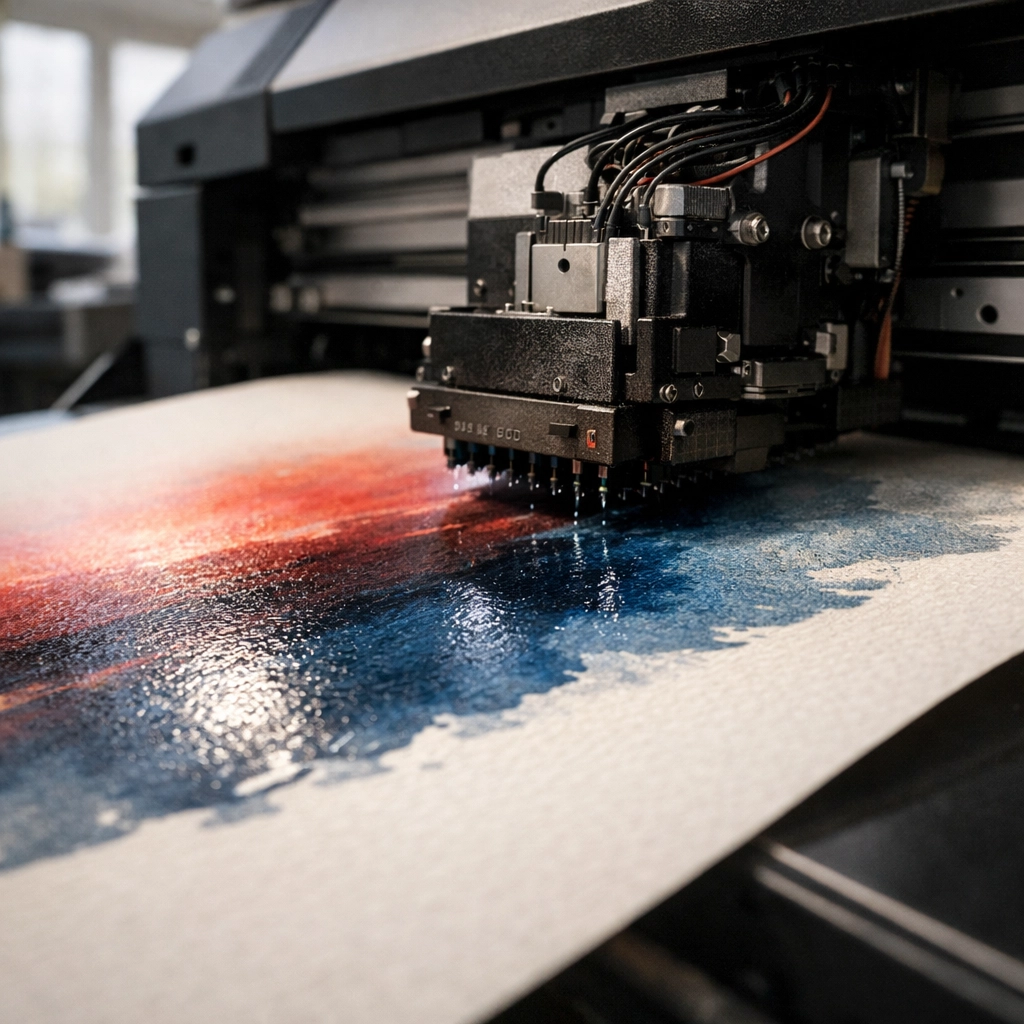
In contrast, museum-quality work uses pigment-based inks. These are actual microscopic particles of color that bond to the surface of the paper. They offer a depth and richness that dye simply cannot replicate. Because these pigments are naturally more stable, your investment remains protected against UV rays and atmospheric pollutants.
The Foundation: Why Archival Paper Matters
You could have the best ink in the world, but if you spray it on cheap, acidic paper, the art is doomed. Traditional wood-pulp paper contains lignin, which turns yellow and brittle over time (think of an old newspaper).
For archival prints, you want paper that is acid-free and lignin-free. The gold standard is 100% cotton rag paper. It’s thick, it has a beautiful tactile texture, and it’s chemically stable. When you run your fingers along a piece of fine art photography from Edin Fine Art, you can feel the difference in the weight and the "tooth" of the paper. It feels substantial, like something that belongs in a gallery.
Giclée: The Gold Standard of Printing
The term you’ll see most often is "Giclée" (pronounced zhee-klay). It sounds fancy because it is. This is a high-resolution inkjet printing process that uses a minimum of 300 DPI (dots per inch) and a multi-ink system (often 10 to 12 different colors) to create smooth gradations and incredibly accurate color.
When you buy limited edition photography prints, you are paying for this level of precision. The printer can reproduce subtle skin tones, deep shadows, and highlights that a standard printer would simply "clip" or turn into a messy blob of ink.
The Collector’s Checklist: What to Look For Before You Buy
As a collector, you need to develop an eye for quality. You aren't just looking at the subject matter; you're looking at the execution. Here is how you can tell if a print is truly museum quality:
| Feature | What to Look For | Why It Matters |
|---|---|---|
| Black Density | Deep, rich blacks with visible shadow detail. | Ensures the image has "pop" without looking muddy. |
| Color Accuracy | Colors should look natural, not oversaturated or "neon." | Faithfully reproduces the artist's original vision. |
| Resolution | Sharp edges and fine details, even when viewed up close. | Prevents pixelation or blurriness in large formats. |
| Surface Integrity | No dust, fibers, or "banding" (visible lines from the printer). | Indicates a professional, clean-room printing environment. |
If you are a photographer looking to reach this level of clarity in your own files before they ever hit the printer, starting with the right edit is non-negotiable. I personally recommend using the Ultimate Lightroom Preset Collection to ensure your digital files have the dynamic range and color balance required for high-end output.

The "Birth Certificate" of Your Art: Certificates of Authenticity
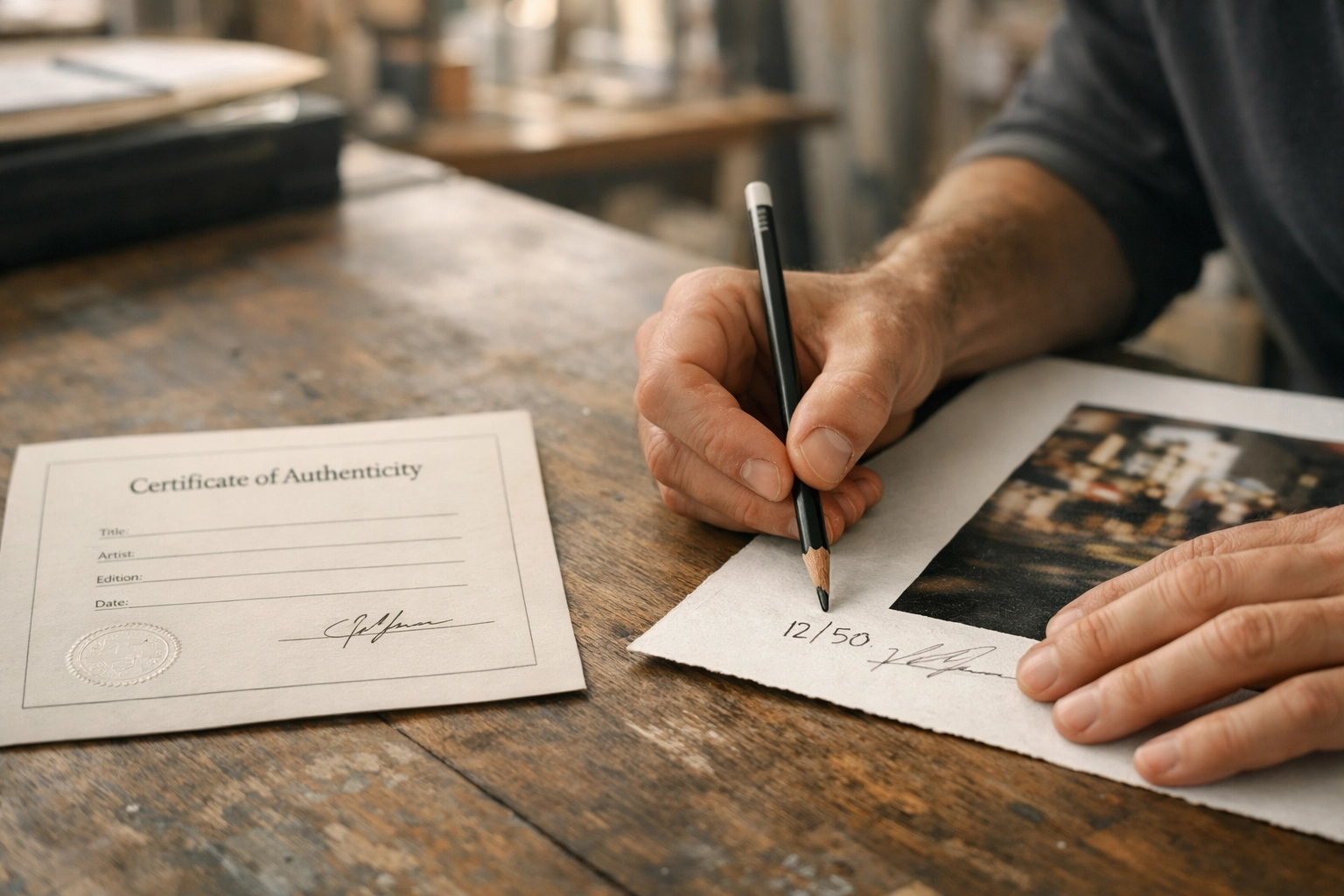
If you are buying high-value art, you must demand a certificate of authenticity for art prints (COA). Think of this as the title to your car or the deed to your house. Without it, the resale value of your piece drops significantly.
A proper COA should include:
- The title of the work.
- The artist’s name and signature.
- The edition number (e.g., 5 of 25).
- The date of production.
- The specific materials used (ink and paper type).
This document proves that the work is an original part of a limited run and not an unauthorized reproduction. It’s what separates a "poster" from a "collectible." At Edin Studios, we treat these documents with as much respect as the art itself because we know they are vital for your collection's long-term value.
How to Sell Fine Art Photography Prints (A Tip for the Creators)
If you're on the other side of the lens and wondering how to sell fine art photography prints to serious collectors, you have to stop thinking like a hobbyist. Curators and high-end buyers aren't just looking for a cool photo; they are looking for a professional experience.
- Limit Your Editions: If everyone can buy it, it’s not an investment. Keep your runs small (e.g., 10, 25, or 50) to create scarcity.
- Standardize Your Quality: Always use the same high-end archival paper for a specific series so your collectors know what to expect.
- Price for Longevity: Museum quality materials cost more. Don't be afraid to price your work higher to reflect the fact that it will last a lifetime.
- Transparency: Be vocal about your process. Tell your buyers about the 100% cotton rag paper and the pigment inks. Education builds trust.
Protecting Your Investment
Once you’ve acquired your museum quality prints, your job isn’t done. Even the best archival print can be damaged by poor framing. Always use UV-protective glass or acrylic and acid-free mounting boards. Avoid hanging your art in direct sunlight or in areas with high humidity (like a bathroom with a shower).
If you treat your prints with respect, they will remain as breathtaking as the day you first saw them. Whether you are browsing Edin Chavez Blog for inspiration or ready to make your first major purchase, remember that quality is a choice. You can buy something for today, or you can buy something for forever.
Final Thoughts
Navigating the world of fine art can feel overwhelming, but it boils down to one thing: excellence. By insisting on museum quality prints, you are ensuring that your aesthetic taste is backed by scientific longevity. From the cotton fibers in the paper to the certificate of authenticity for art prints tucked behind the frame, every detail matters.
For more insights on how to elevate your work, explore our site for a deep dive into hundreds of tutorials and guides. Whether you're a seasoned collector or an aspiring artist, we’re here to help you navigate the beautiful intersection of technology and art.

Ready to start your collection? Visit Edin Fine Art to see our latest limited edition releases, or head over to Edin Studios for professional services. Don't forget to check out the Edin Chavez Blog for more educational content on the craft of photography.


