
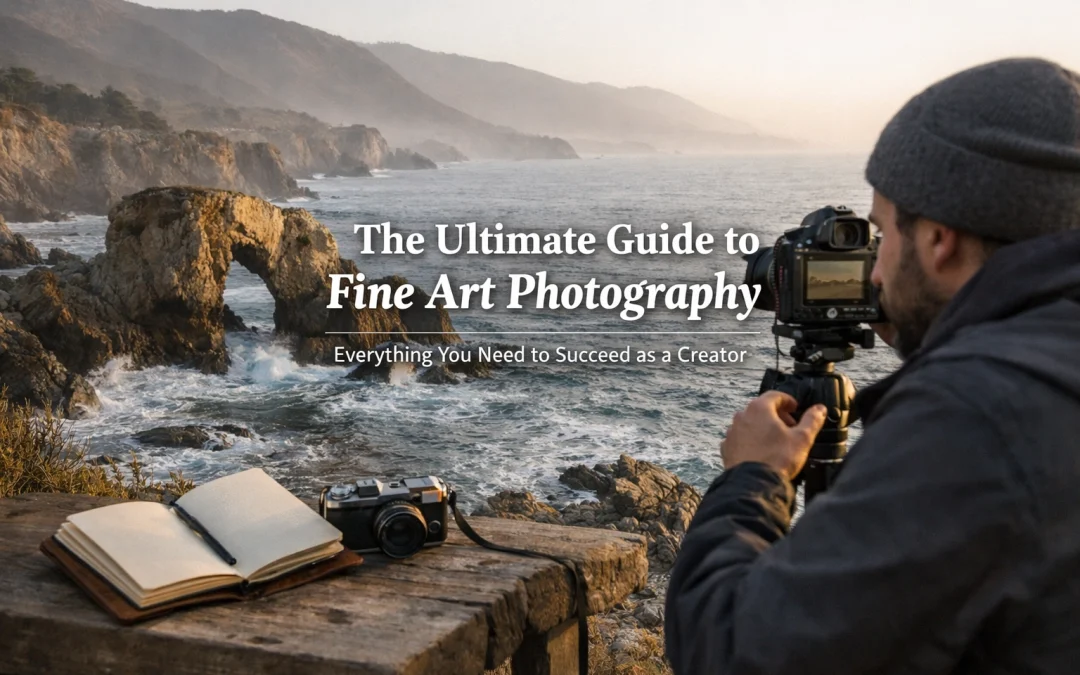
As you step into the world of professional imagery, you quickly realize that fine art photography is fundamentally different from commercial or documentary work. While most photographers are focused on capturing a literal representation of a scene, your goal as a fine artist is to express an idea, a message, or an emotion through your lens. This discipline requires you to move beyond the technical "how" and dive deep into the creative "why."
By mastering the intersection of technical precision and artistic vision, you transform a simple digital file into a piece of art that commands attention. Whether you are aiming to sell archival prints or simply want to elevate your portfolio, understanding the nuances of this craft is your first step toward true creative freedom.
Defining Your Artistic Vision
Before you even pick up your camera, you must understand that fine art begins with your internal perspective. Unlike a photojournalist who reacts to the world, you are a creator who shapes it. Your vision is the thread that ties your entire body of work together, ensuring that when someone sees your photographs, they recognize your "voice" instantly.
To develop this vision, you should start by identifying the themes that resonate with you personally. Are you drawn to the stark contrast of black and white architecture, or does the vibrant energy of Miami street life inspire your creativity? By narrowing your focus, you create a thematically consistent body of work that is far more valuable to collectors and galleries than a random assortment of high-quality images.
Establishing a Signature Style
Your signature style is what makes your work stand out in a saturated market. This isn't just about your favorite subject matter; it involves your consistent use of composition, color palettes, and lighting. When you commit to a specific aesthetic, you provide your audience with a reliable experience. This consistency is what allows you to transition from being a hobbyist to a recognized fine art photographer.
 )
)
Alt Text: Long exposure of Miami Beach shoreline at twilight with silky waves and pastel skies, a prime example of fine art photography techniques.
Technical Mastery for the Fine Artist
While your vision is the soul of your work, your technical skills are the skeleton that supports it. You cannot fully express your artistic intent if you are struggling with your gear. Mastering manual mode is non-negotiable for you; you must have absolute control over aperture, shutter speed, and ISO to manipulate light and shadow to your liking.
Essential Composition Principles
Composition is the language you use to guide your viewer’s eye through your image. By understanding the "rules," you gain the power to break them effectively for emotional impact. Using leading lines: such as a fence in a rural landscape or the geometric edges of industrial structures: allows you to create depth and movement within a flat frame.
| Principle | Impact on Your Work | Best Used For |
|---|---|---|
| Rule of Thirds | Creates a sense of balance and natural flow. | Landscapes and environmental portraits. |
| Leading Lines | Directs the viewer’s eye toward your primary subject. | Street photography and architecture. |
| Negative Space | Provides "breathing room," emphasizing the subject's isolation. | Minimalist and abstract fine art. |
| Symmetry | Evokes a feeling of stability, formality, and perfection. | Architecture and stadium photography. |
Advanced Techniques to Elevate Your Work
To truly separate your portfolio from the masses, you need to employ advanced techniques that create a surreal or heightened reality. These methods allow you to capture details that the human eye cannot see on its own, adding a layer of mystery and sophistication to your work.
The Power of Long Exposure
By using slow shutter speeds, you can turn moving water into mist or transform clouds into soft, painterly streaks. This technique is particularly effective in landscapes or when capturing the night lights of a bustling city. When you use a sturdy tripod and a remote release, you ensure your static elements remain tack-sharp, creating a stunning contrast against the motion blur.
HDR and Focus Stacking
For scenes with extreme light ranges: like a sunset over Yosemite: HDR (High Dynamic Range) allows you to retain detail in both the brightest highlights and the deepest shadows. Similarly, focus stacking ensures that every inch of your frame, from the foreground blades of grass to the distant mountain peaks, is in crisp focus. These techniques contribute to the museum quality feel that collectors look for in professional fine art.
 )
)
Alt Text: High-detail landscape of Yosemite National Park at golden hour featuring El Capitan, highlighting the focus stacking technique in fine art photography.
The Digital Darkroom and Creative Editing
In the world of fine art, your work is only half-finished when you press the shutter. Post-processing is where you refine your raw data into a cohesive piece of art. This stage allows you to enhance the mood, correct colors, and direct the viewer's attention through selective dodging and burning.
Because consistency is key to your brand, using a professional foundation for your edits can save you hundreds of hours. By integrating the Ultimate Lightroom Preset Collection, you can apply a professional-grade baseline to your images, ensuring a uniform look across your entire series while still allowing for custom tweaks that reflect your unique style.
Whether you are working out of Edin Studios or your home office, your editing process should be intentional. Every adjustment you make should serve the narrative of the photograph. If you are editing a series on Key West, perhaps you want to emphasize the warm, tropical hues; if you are shooting Mexico, you might lean into vibrant, high-contrast tones.
From Screen to Wall: Archival Prints and Presentation
The ultimate realization of a fine art photograph is the physical print. In an era of fleeting digital images, a physical piece of art offers a permanence that is highly valued. When you prepare your work for sale, you must prioritize quality above all else. This means opting for archival prints that use pigment-based inks and acid-free papers.
Museum quality isn't just a marketing buzzword; it is a standard that ensures your art will last for generations without fading or yellowing. When a collector invests in your work from Edin Fine Art, they are buying a legacy piece. You should consider various finishes, such as acrylic, canvas, or fine art matte paper, depending on the mood of the image. For instance, high-gloss finishes work wonders for Las Vegas neon lights, while a textured matte paper might better suit a moody black and white portrait.
 )
)
Alt Text: Gallery interior featuring a large archival print of an industrial landscape, demonstrating museum quality presentation for fine art photography.
Building a Sustainable Creative Business
Success in fine art photography requires you to be as much of an entrepreneur as you are an artist. You must proactively market your work and build relationships with your audience. Having a strong presence on your own photography blog allows you to share the stories behind your images, which creates a deeper emotional connection with potential buyers.
Marketing and Visibility
- Develop a Portfolio: Curate your 15-20 best images that showcase a consistent style.
- Network Locally: Connect with galleries in cities like Los Angeles or Reno to get your work in front of physical audiences.
- Leverage Social Media: Use platforms to show your "behind-the-scenes" process, but always drive traffic back to your own website to capture leads.
- Offer Variety: While large-scale prints are the goal, consider offering smaller, limited-edition runs to make your work accessible to a broader range of collectors.
By treating your photography as a business, you ensure that you have the resources to continue creating. This commitment to your professional practice is what will eventually lead to gallery representation and high-value private commissions.
Final Thoughts for the Aspiring Artist
Mastering fine art photography is a marathon, not a sprint. It requires you to be patient with your progress and relentless in your pursuit of excellence. By focusing on your unique vision, mastering your technical tools, and insisting on the highest quality for your final prints, you position yourself as a leader in the creative community.
Remember that every great artist started exactly where you are now. The difference between those who succeed and those who don't is the willingness to experiment, fail, and try again. With the right tools, such as the Ultimate Lightroom Preset Collection, and a dedication to the craft, your path to becoming a respected creator is clear.
For more insights on how to elevate your work, explore our site for a deep dive into hundreds of tutorials and guides at https://blog.edinchavez.com/.


