
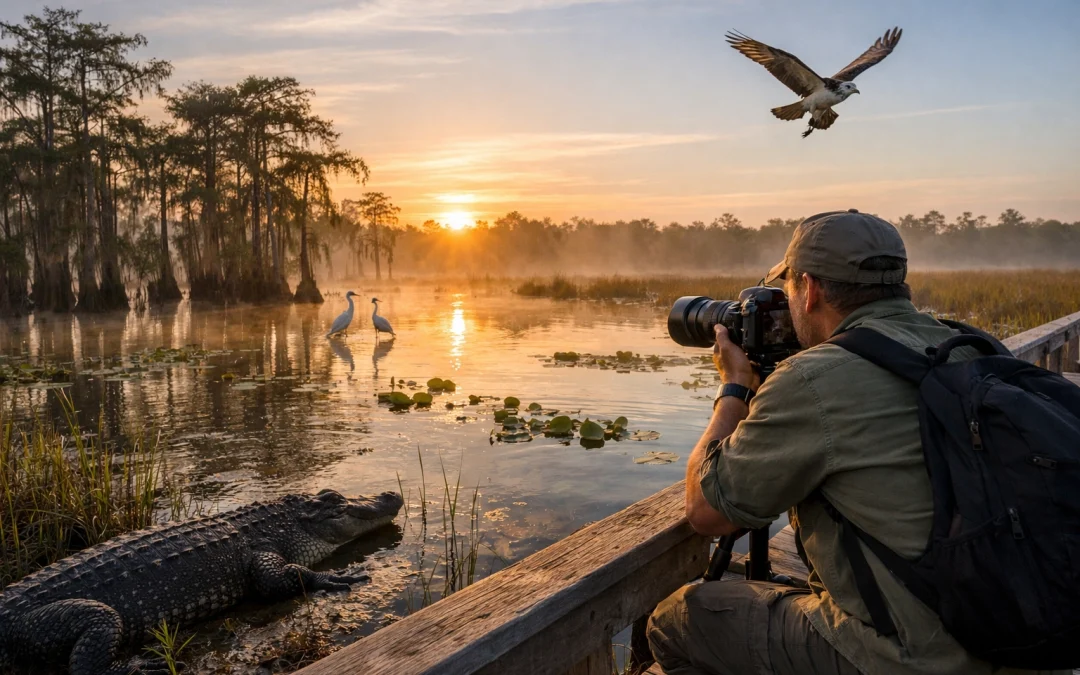
Just as the first light of dawn breaks over the vast expanse of the "River of Grass," you realize that the Everglades is not just a swamp; it is a living, breathing canvas of fine art. Whether you are a seasoned pro or an aspiring hobbyist, capturing the essence of this UNESCO World Heritage site requires more than just showing up. You need a strategy, the right gear, and an intimate knowledge of the best Everglades photography locations.
This guide is designed to empower you with the insider knowledge necessary to navigate these wetlands and return home with a portfolio that stands out. If you want to dive even deeper into the technical settings and seasonal secrets, you should grab the Everglades Photography Guide to ensure your success.
The Iconic Anhinga Trail: Wildlife Photography at Its Peak
When you arrive at the Royal Palm Visitor Center, your first stop must be the Anhinga Trail. This location is legendary for wildlife photography in the Everglades because the animals here are remarkably accustomed to human presence. This allows you to get close-up, intimate shots that would be impossible elsewhere.
As you walk the paved path and wooden boardwalk over Taylor Slough, your lens will find Anhingas drying their wings in the sun, turtles balancing on logs, and alligators camouflaged among the lily pads. For the best results, you should arrive at sunrise. The soft, directional light during the first hour of the day creates a painterly quality that elevates a standard wildlife shot into a piece of fine art.
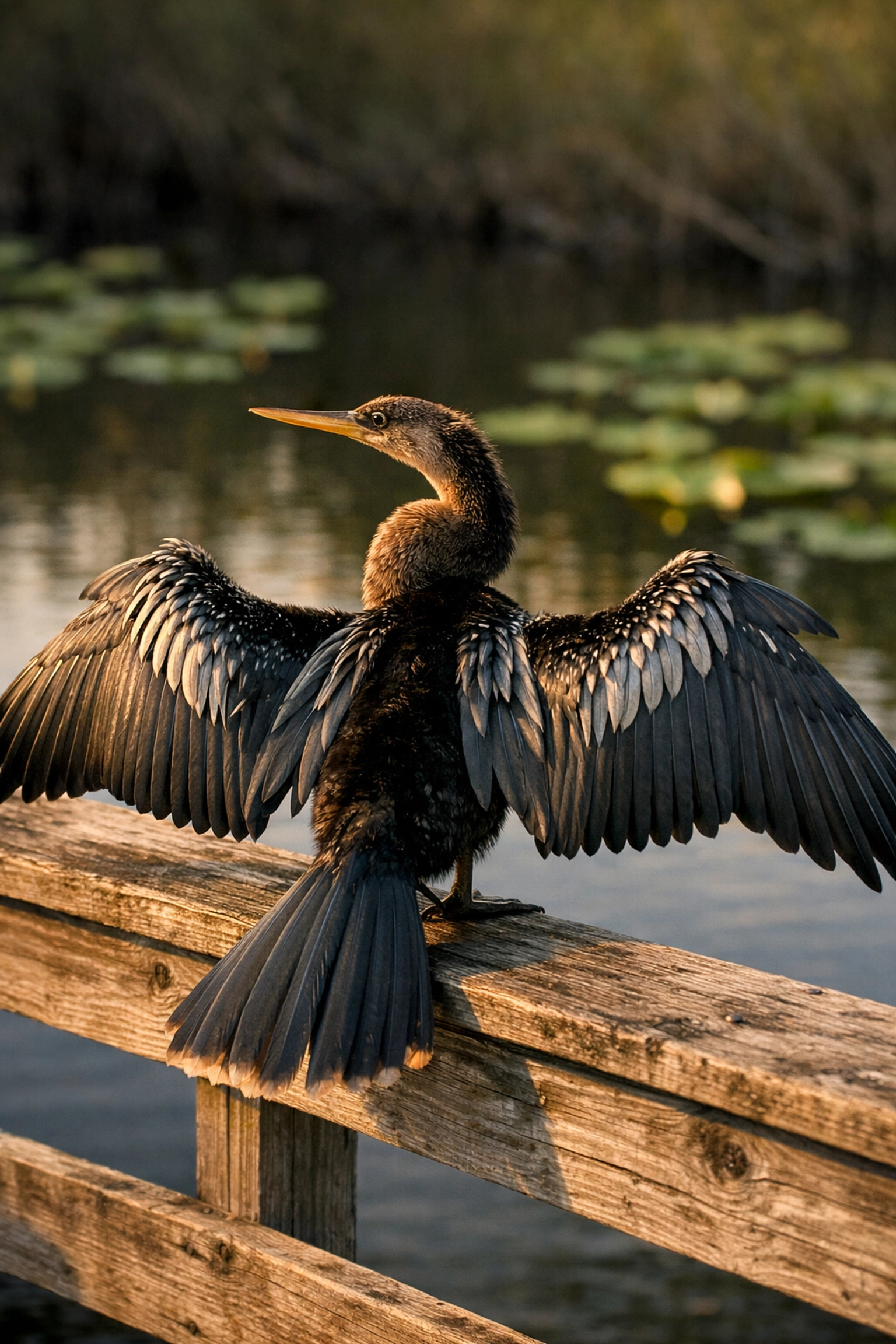
To capture the soul of the birds here, a telephoto lens in the 300mm to 600mm range is essential. By using a shallow depth of field, you can isolate an Anhinga’s eye or the texture of an alligator’s scales against a creamy, blurred background. For more tips on how to polish these shots in post-processing, check out how to bring your photos to life in Lightroom.
Shark Valley: Panoramic Landscapes and Scale
If you are looking for the ultimate destination for landscape photography in the Everglades, Shark Valley is your primary target. Located along the Tamiami Trail, this 15-mile loop offers a perspective of the sawgrass prairie that is unmatched.
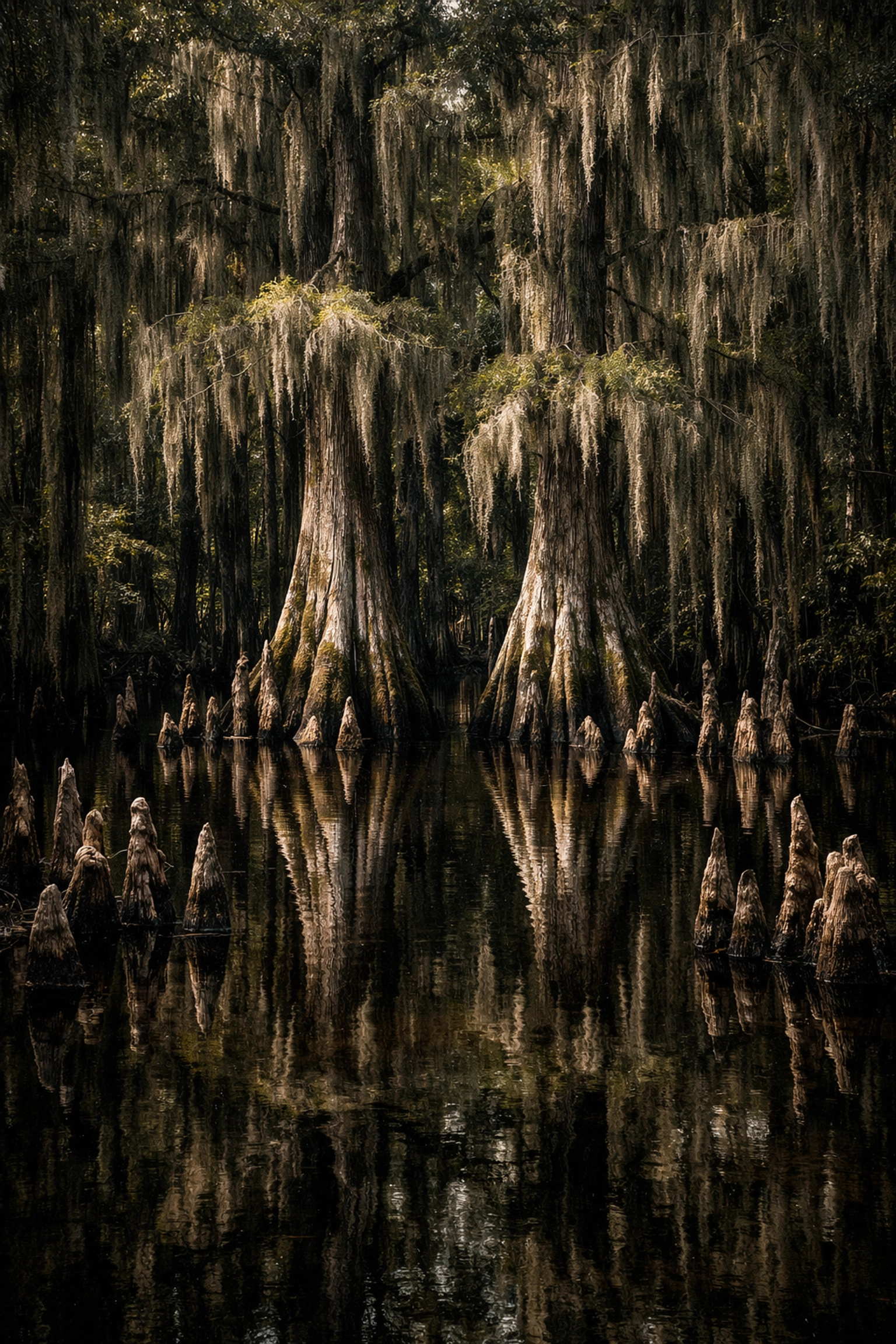
The highlight of this location is the 65-foot observation tower. When you stand at the top, you are gifted with a 360-degree panoramic view of the horizon. This is where a 16-35mm wide-angle lens becomes your best friend. Use it to capture the vastness of the sky meeting the water, creating a sense of scale that defines the Florida landscape.
| Feature | Best Time | Recommended Gear | Primary Subject |
|---|---|---|---|
| Anhinga Trail | Sunrise | 300-600mm | Birds, Alligators |
| Shark Valley | Sunset/Mid-day | 16-35mm | Vistas, Alligators |
| Big Cypress | Early Morning | 70-200mm | Cypress Domes, Owls |
| Pahayokee | Sunrise | 16-35mm | Silhouettes, Clouds |
| Flamingo | Late Afternoon | 400mm+ | Spoonbills, Crocodiles |
Big Cypress National Preserve: The Fine Art of Shadows
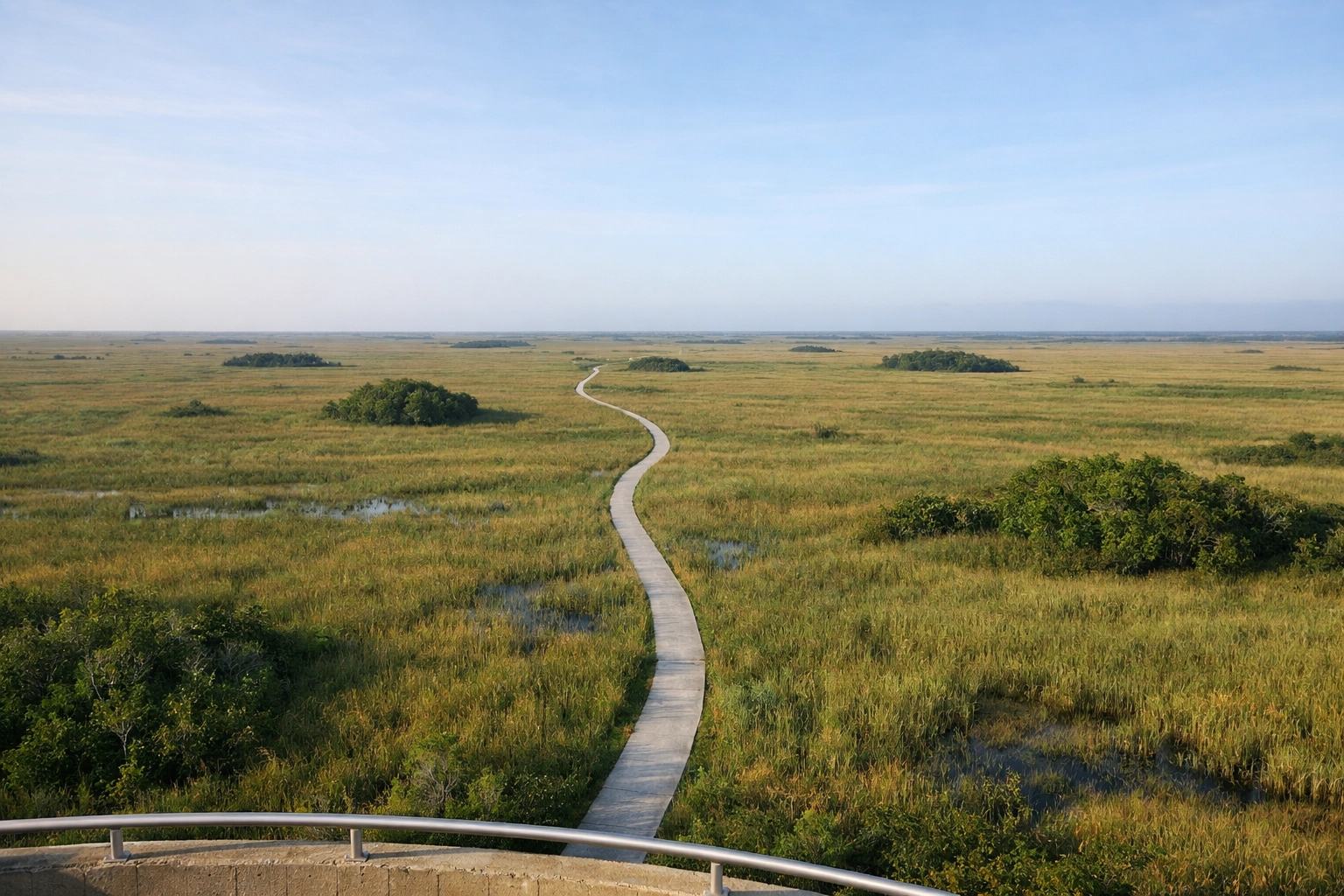
Just north of the main park lies the Big Cypress National Preserve. For those who prefer a more rugged, untamed atmosphere, this is your sanctuary. The 24-mile Loop Road is a goldmine for landscape photography in the Everglades. Here, the terrain is characterized by dense cypress strands and tea-colored waters that create dramatic, moody shadows.
As you drive slowly along the road, look for cypress domes: groups of trees that grow in a circular pattern around a central deep-water hole. The reflections here are "smooth as butter" on calm mornings. This area is also excellent for spotting barred owls and the elusive ghost orchid. To truly capture the high-contrast beauty of these swamps, you can see how I handle similar lighting in my Miami cityscape B&W tutorial.
Pahayokee Overlook: Chasing the Florida Sky
Pahayokee Overlook is where you go when you want to capture the iconic silhouette of a lone cypress tree against a fiery Florida sunset. The elevated boardwalk provides a vista over the hardwood hammocks and sawgrass that stretches for miles.
To succeed here, you must arrive before first light and face east. Watch as the sky transitions from deep purple to gold, casting long shadows across the textures of the sawgrass. This is a prime location to practice your compositional depth. By including foreground elements like the edge of the boardwalk or a cluster of grass, you lead the viewer's eye through the frame, creating a powerful visual journey.
Flamingo: The Intersection of Two Worlds
At the very end of the main park road lies Flamingo. This is a unique transition zone where freshwater meets the saltwater of Florida Bay. This environmental intersection provides rare opportunities to photograph both American Alligators and American Crocodiles in the same vicinity.
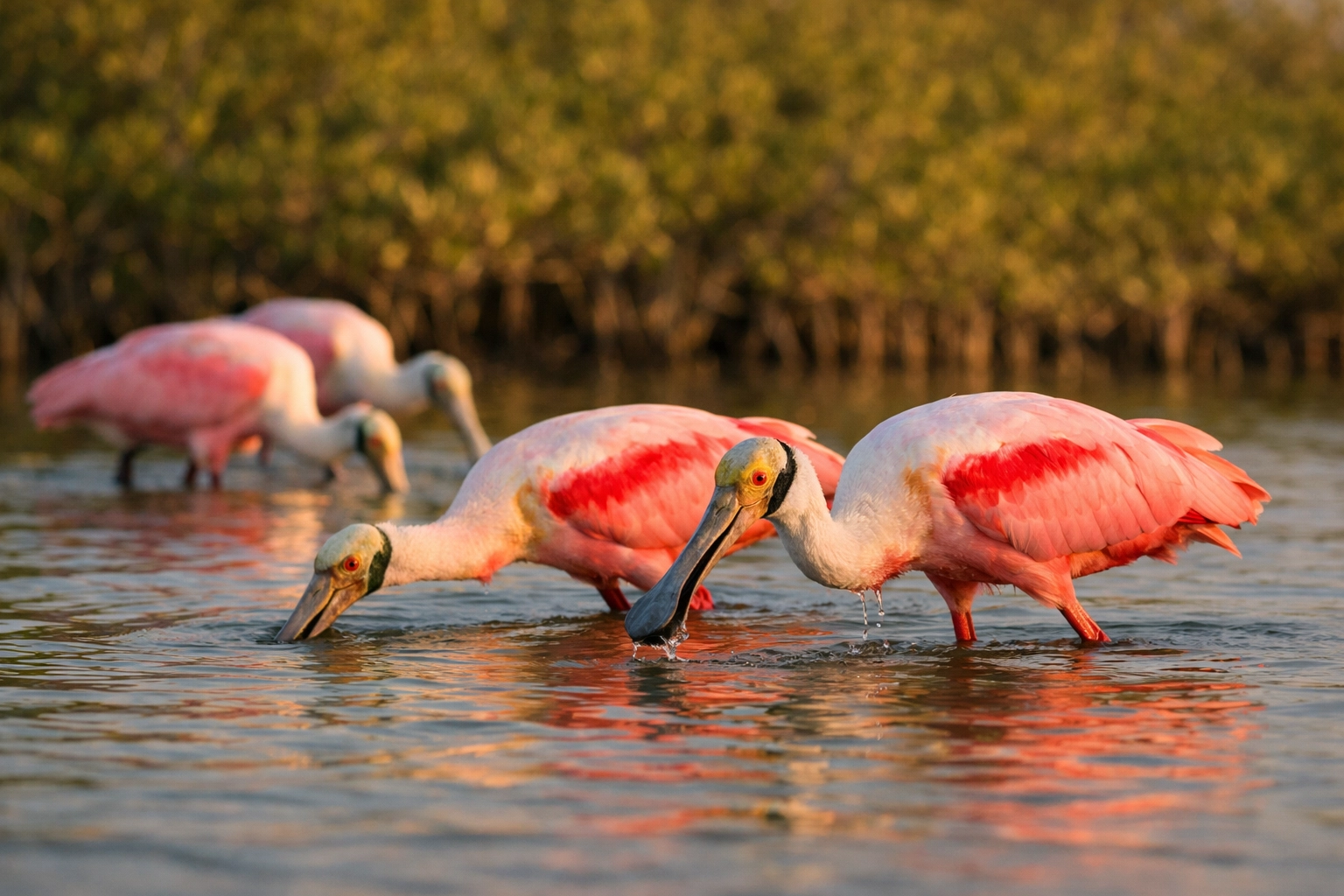
Eco Pond is a specific hotspot you cannot miss, especially during the dry season (December–April). This is when Roseate Spoonbills frequent the area. Their vibrant pink feathers against the deep blue water provide a striking color contrast that is a dream for any photographer. To ensure these colors pop in your final edits, I highly recommend using the Ultimate Lightroom Preset Collection, which I’ve optimized specifically for outdoor and wildlife photography.
Essential Gear and Technical Tips for Success
To truly excel at Everglades photography locations, you must be prepared for the environment. The humidity and sudden rain showers mean you need to protect your gear.
- Lens Selection: Carry a wide-angle (16-35mm) for the vast landscapes and a long telephoto (at least 400mm) for the wildlife. A 70-200mm is a great "walk-around" lens for the Loop Road.
- Stability: A sturdy tripod is non-negotiable for those low-light sunrise shots at Pahayokee or long exposures of the water at Nine Mile Pond.
- Protection: Use waterproof dry bags and lens covers, especially if you plan on taking a kayak out to Nine Mile Pond for aquatic life shots.
- Polarizers: A circular polarizer will help you manage reflections on the water and deepen the blues of the sky, which is critical in the harsh Florida sun.
By integrating these tools with the techniques mentioned above, you empower yourself to create work that reflects the true beauty of the Everglades. If you find yourself transitioning from the swamp to the city, don't forget to check out my Private Miami Photography Tour to sharpen your urban shooting skills.
Elevate Your Vision with Professional Guidance
The Everglades is a complex ecosystem that rewards patience and preparation. While this guide provides the foundation, there is no substitute for a comprehensive, field-tested resource. The Everglades Photography Guide offers deeper insights into specific GPS coordinates, seasonal migration patterns, and advanced compositional strategies that will transform your portfolio.
Whether you are capturing the prehistoric gaze of an alligator at Anhinga Trail or the ethereal mist of Big Cypress, your commitment to excellence is what will set your work apart. You are not just taking pictures; you are documenting one of the most unique environments on Earth.
For those looking to expand their horizons beyond Florida, you might find inspiration in my guides to other iconic locations like Pyramid Lake or the alien landscapes of Mono Lake. Every location offers a new lesson in light and composition.
Experience the Everglades through the lens of a professional by visiting Edin Chavez Blog and exploring the fine art collections at Edin Fine Art. If you are looking for high-end production and commercial work, visit Edin Studios to see how we bring professional visions to life.
For more insights on how to elevate your work, explore our site for a deep dive into hundreds of tutorials and guides at https://blog.edinchavez.com/.


