
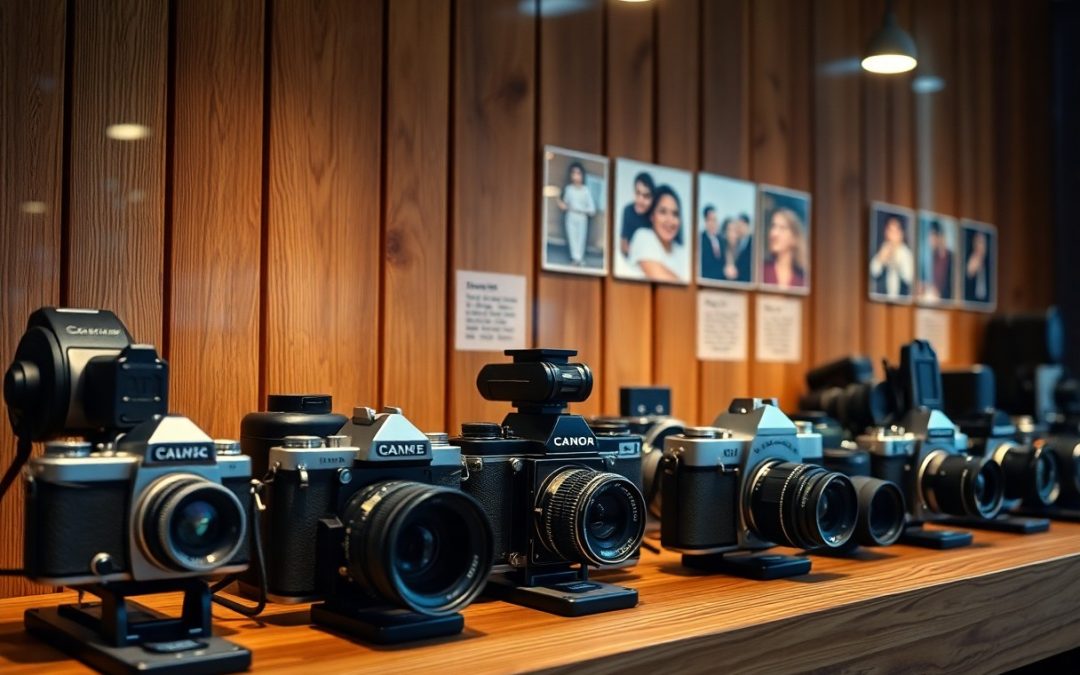
With the evolution of photography spanning nearly two centuries, you may find it fascinating to explore the key milestones that have shaped this art form. From the early days of daguerreotypes to the instant gratification of digital cameras, your understanding of photography will deepen as you traverse its historical timeline. This blog post will guide you through significant innovations and breakthroughs that have transformed how you capture and share images, highlighting the remarkable journey of photography from the 19th century to the present day.
The Dawn of Photography: Defining Genres and Techniques
The emergence of photography in the 19th century laid the groundwork for the diverse genres and techniques that you see today. Early photographers innovated with their craft, capturing portraits, landscapes, and events, while also experimenting with different methods and tools. This newfound ability to freeze moments in time transformed how people perceived and documented the world around them, paving the way for the artistic and technical advancements in photography through the years.
The Invention of the Camera Obscura
The camera obscura, a device that projects images of external scenes onto a surface, laid the foundation for the invention of photography. As early as the 5th century BCE, philosophers such as Mozi and Aristotle described its principles, but it wasn’t until the Renaissance that artists began using it for accurate perspective in their work. You can think of it as a precursor to modern cameras, guiding artists in capturing realistic representations of their subjects long before photography was even conceived.
Early Processes: From Daguerreotype to Calotype
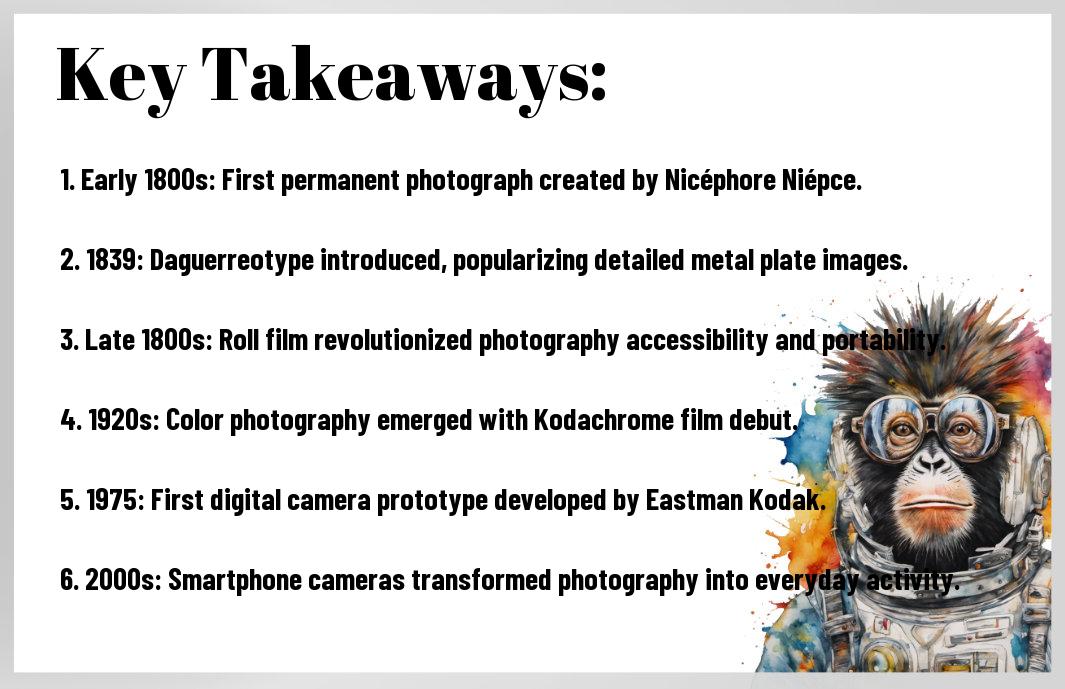
The development of photography took significant strides with the advent of the daguerreotype in 1839. Introduced by Louis Daguerre, this process produced highly detailed images on silver-coated copper plates, marking a monumental leap in the art form. Just a few years later, William Henry Fox Talbot introduced the calotype, which utilized paper negatives and allowed for multiple prints from a single exposure. This transition laid the groundwork for future photographic techniques and accessibility.
Daguerreotypes were celebrated for their clarity and detail, creating striking portraits of individuals that became immensely popular. However, their single-image nature made them somewhat limiting. In contrast, the calotype process, invented by Talbot in 1841, allowed for the creation of a negative from which multiple positive prints could be made. This innovation opened up new possibilities for photographers and changed the landscape of photography, as it enabled reproductions and the growth of photographic studios. The competition between these early techniques sparked further experimentation and set the stage for the myriad of photographic methods we know today.
The Birth of Photographic Movements: 19th Century Innovations
The 19th century marked the beginning of significant photographic movements that not only changed the way you perceive images but also established photography as a serious form of artistic expression. As photographers experimented with techniques and styles, they began to seek ways to transcend mere documentation, which ultimately gave rise to various movements that blended art, technology, and philosophy.
The Pictorialist Movement: Blending Art and Photography
The Pictorialist Movement emerged in the late 19th century, aimed at establishing photography as a legitimate art form. Photographers like Alfred Stieglitz and Edward Steichen championed soft-focus techniques and artistic manipulation, creating images that evoked emotion akin to traditional paintings. You would often see their work characterized by dreamlike qualities and a focus on aesthetic beauty, reinforcing the idea that photography could convey deep artistic intent.
Technological Advancements: The Roll Film Revolution
The introduction of roll film in the late 1880s revolutionized photography, making it more accessible to the masses. This innovation eliminated the cumbersome glass plates previously used, allowing you to capture multiple images on a single roll. Companies like Eastman Kodak played a pivotal role by popularizing film cameras, which were user-friendly and portable, fundamentally shifting the landscape of photography.
The roll film revolution wasn’t just about convenience; it democratized photography and ignited a wave of creativity. With the ability to take numerous shots without worrying about expensive plates, you could experiment freely. This transition from cumbersome equipment to simple, handheld cameras ushered in a new era, enabling amateurs and professionals alike to explore various styles and topics. By the turn of the century, photographic clubs flourished, showcasing work that ranged from everyday scenes to artistic compositions, thus expanding photography’s reach and cultural impact.
The Rise of Commercial Photography: A Changing Landscape
The emergence of commercial photography transformed the visual landscape in ways previously unimaginable. As photography became more accessible to the masses, businesses recognized its potential for marketing and promotion. From portraits to product shots, commercial photography evolved into a crucial element of branding, paving the way for professional photographers to carve out their niches in the industry. The fusion of art and commerce not only popularized photography but also created a demand for skilled photographers who could capture the essence of products, services, and moments.
The Impact of Kodak: Making Photography Accessible
With the introduction of the Kodak camera in 1888, photography became a pastime for the general public. This revolutionary device allowed anyone to take pictures with ease, using the slogan “You press the button, we do the rest.” By eliminating the need for a darkroom and complex equipment, Kodak democratized photography, leading to a surge in amateur photographers and an explosion of images. This significant shift laid the groundwork for modern photography, encouraging more people to document their lives.
The Development of Advertising and Photojournalism
The evolution of advertising and photojournalism during the late 19th and early 20th centuries marked a turning point in how visual storytelling was approached. As businesses sought new ways to capture consumer attention, images became integral to advertising campaigns. Meanwhile, photojournalism emerged as a powerful medium for conveying news stories, with iconic publications like National Geographic and Life magazine showcasing the work of talented photographers. This dual evolution helped intertwine photography with daily life and current events, establishing a deeper appreciation for the art form.
Advertising and photojournalism went hand-in-hand, fundamentally changing how information was consumed and perceived. In the early 1900s, the use of striking photographs in advertisements transformed consumer culture, leading brands to harness the emotional power of imagery. Photojournalism, exemplified by groundbreaking photographers such as Edward Weston and Dorothea Lange, not only documented reality but also shaped public opinion during critical moments in history. The visual representation of news stories and advertisements fostered a connection between viewers and the themes being portrayed, highlighting photography’s vital role in communication and commerce.
The Digital Revolution: Photography in the Age of Technology
The advent of the digital age transformed photography in profound ways, making it more accessible and versatile. Digital cameras replaced film, allowing you to easily take hundreds of shots without the risk of wasting film. With the rise of editing software and digital storage options, creativity flourished, enabling photographers to experiment like never before. The transition sparked an era where instant sharing became the norm, thus revolutionizing not just how images are captured but how they are experienced globally.
The Transition from Film to Digital: A Paradigm Shift
The shift from film to digital photography marked a significant technological leap that transformed the landscape. Digital sensors capture images as pixels rather than chemical reactions on film, permitting immediate review and virtually eliminating the costs associated with film development. You can shoot, edit, and share your photos almost instantaneously, a convenience that has led to a higher frequency of shooting and more opportunities for creativity.
The Birth of Social Media and Its Influence on Photography
As social media platforms emerged, they redefined the way you engage with photography. Platforms like Instagram and Facebook provided a space for amateurs and professionals to showcase their work to a global audience. Rapid sharing and online interactions have not only popularized photography but also created new styles and trends. Hashtags and viral challenges further democratized this art form, encouraging you to experiment and connect with other creators worldwide.
The influence of social media on photography goes beyond mere sharing; it has changed the very nature of how you perceive and create images. Trends like ‘Instagrammable’ aesthetics shape not only your framing choices but also the content you decide to capture. The immediacy of social media encourages you to embrace spontaneity and innovation, as you seek to gain visibility and engagement. The platform’s algorithms curate feeds in ways that challenge traditional notions of photography’s best practices, inviting you to adapt and evolve with the ever-changing digital landscape.
Contemporary Photography: Expanding Boundaries and Narratives
Today, contemporary photography is a vibrant interplay of diverse practices and perspectives, where artists continuously push the boundaries of visual storytelling. From conceptual art to documentary, the medium serves as a platform for addressing social issues, exploring identity, and reimagining reality. This evolution is accompanied by a profound integration of technology, which enables unique creative expressions and broadens the horizons for artists and audiences alike.
Smartphone Photography: Democratizing the Art
The rise of smartphone photography has transformed how you engage with the medium. With high-quality cameras at your fingertips, you can capture and share moments instantly, making photography accessible to everyone, regardless of skill level. Platforms like Instagram have turned casual shooters into influential visual storytellers, opening up new avenues for personal expression and community connection.
The Role of Artificial Intelligence in Modern Photography
Artificial intelligence is revolutionizing the photography landscape by automating processes and enhancing creativity. AI algorithms can now analyze images for optimal edits, generate unique compositions, and even offer personalized suggestions, allowing you to explore new artistic directions with unprecedented ease.
This trend has significant implications for how you create and engage with photography. AI-powered tools like Adobe’s Sensei can perform complex tasks such as background removal and image enhancement in mere seconds, streamlining your workflow. Beyond editing, AI is being harnessed to generate entirely new photographic experiences, with systems capable of synthesizing imagery based on textual prompts. You’re witnessing a shift where machines complement your creative process, expanding your capacity to experiment and express your vision in ways that were once unimaginable. As this technology continues to evolve, the line between human creativity and machine-generated content will blur, inviting exciting new possibilities in the art of photography.
Conclusion
Now that you’ve explored a timeline of photography, from its beginnings in the 19th century to the innovations of today, you can appreciate how each milestone has shaped the art and science of capturing images. Understanding these key developments helps you recognize the evolution of techniques, technology, and artistic expression that influence your photographic journey. As you continue to engage with photography, consider how past advancements inspire your creative vision and the future of this ever-evolving medium.


