
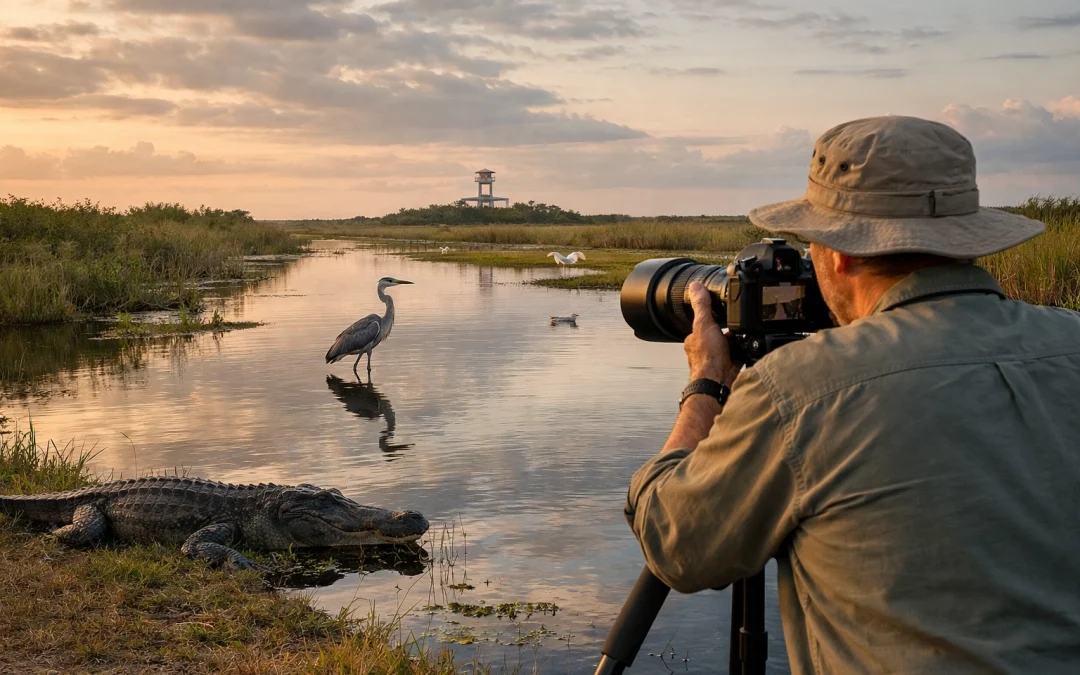
As the morning mist begins to lift off the sawgrass prairies, you realize that Shark Valley is not just another stop on the map; it is arguably the most accessible theater for wildlife photography in the Everglades. Located in the heart of the "River of Grass," this 15-mile loop offers you an unparalleled opportunity to stand inches away from prehistoric predators and elegant wading birds. Whether you are a seasoned pro or just starting your journey into landscape photography in the Everglades, understanding how to navigate Shark Valley will transform your portfolio from standard snapshots into compelling fine art.
At Edin Chavez Photography, we believe that the best images come from a combination of technical precision and an intimate understanding of the environment. Shark Valley provides the environment; this guide provides the precision. By the time you finish reading, you will know exactly where to stand, which settings to toggle, and how to capture the soul of this UNESCO World Heritage site.
Why Shark Valley Stands Out Among Everglades Photography Locations
Many Everglades photography locations require trekking through deep mud or navigating complex waterways by airboat. Shark Valley is different. The paved 15-mile loop road acts as a front-row seat to the ecosystem’s most dramatic displays. Because the road is elevated slightly above the water level, alligators and birds naturally congregate along the banks to sun themselves or hunt.
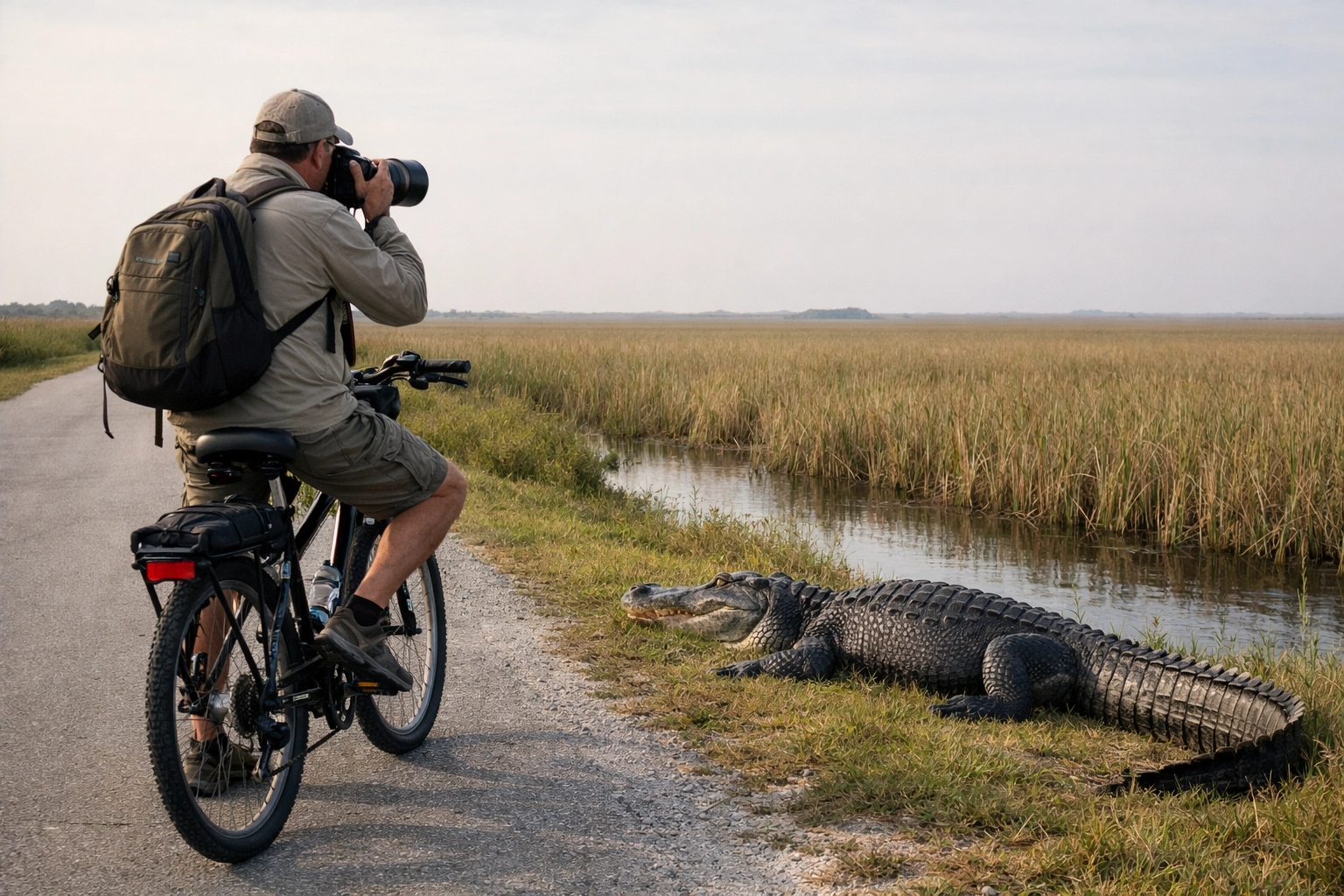
This accessibility allows you to focus less on survival and more on composition. You can explore the loop via bicycle, tram, or on foot. For the serious photographer, I always recommend a bicycle or walking the first few miles. This pace ensures you don't miss the subtle movements in the grass: a stalking Heron or a juvenile alligator hiding in the lilies. To truly elevate these captures, using my Ultimate Lightroom Preset Collection can help you recover the vibrant greens and deep shadows that define the Florida wetlands.
Mastering Your Gear: Lenses and Accessories
When you are shooting wildlife photography in the Everglades, your gear choice dictates your narrative. Because the wildlife at Shark Valley is often remarkably close to the path, you don't always need a 600mm lens to get the shot. In fact, carrying too much heavy glass can hinder your mobility on the 15-mile loop.
The Essential Lens Kit
- The Workhorse (70-200mm): This is your primary tool. It allows you to capture environmental portraits where the animal is contextualized by the vast landscape.
- The Reach (300mm – 500mm): Essential for tight headshots of birds or capturing action across the canal.
- The Wide-Angle (16-35mm): Don't leave this behind. When you reach the observation tower, you will want this to capture the expansive landscape photography in the Everglades.
Critical Accessories
You must use a circular polarizer. The glare off the water in the Everglades can be punishing, washing out colors and hiding the textures of the underwater flora. A polarizer cuts through this reflection, revealing the hidden world beneath the surface and saturating the deep blues of the Florida sky. Additionally, a sturdy monopod provides the stability needed for long lenses without the bulk of a full tripod.
| Feature | Recommended Equipment | Why You Need It |
|---|---|---|
| Primary Lens | 70-200mm f/2.8 or f/4 | Versatility for close-range alligators and environmental shots. |
| Telephoto | 100-400mm or 500mm | Necessary for bird-in-flight and distant subjects. |
| Filter | Circular Polarizer | Removes water glare and enhances sky/foliage saturation. |
| Stability | Monopod | Balances weight during long waits for animal movement. |
| Protection | Rain Cover | The Everglades weather is unpredictable; protects your investment. |
Technical Settings for Sharp Wildlife Captures
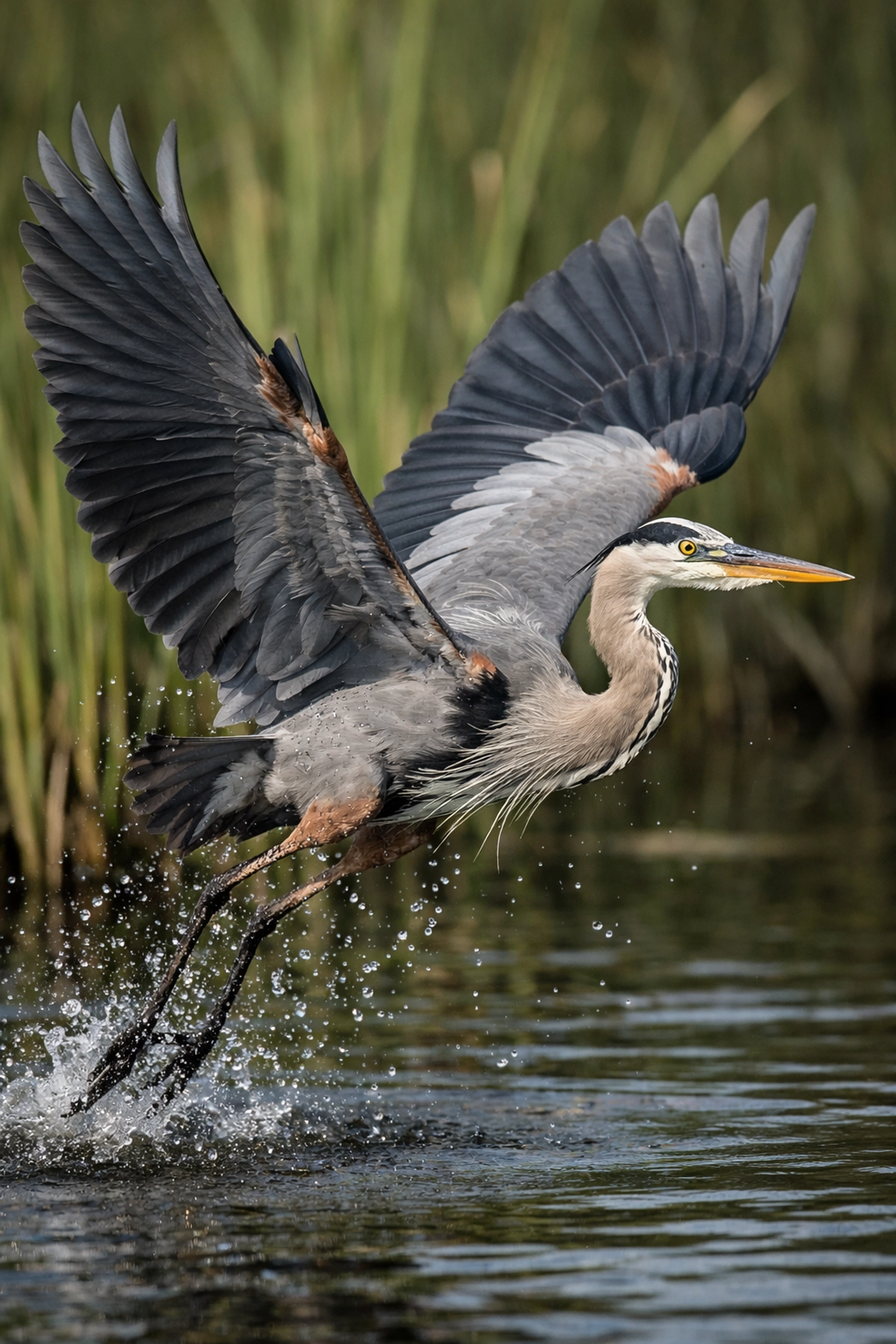
Your success in the field depends on your ability to react to sudden movements. A Great Blue Heron taking flight happens in a heartbeat. To ensure your images are tack-sharp, you need to master your shutter speed and autofocus modes.
For most wildlife encounters at Shark Valley, you should maintain a shutter speed of at least 1/1000s. If you are focusing specifically on birds in flight, push that to 1/2000s or higher. Use Continuous Autofocus (AF-C or AI Servo) to track moving subjects. I recommend using "Back Button Focus" to separate your shutter release from your focus acquisition: this gives you ultimate control when an alligator is stationary but might lunge at any moment.
Where to Stand: Navigating the 15-Mile Loop
Knowing where to position yourself is the difference between a cluttered shot and a masterpiece. Shark Valley's layout offers three distinct zones for your photography.
1. The First Mile (The "Gator Hole")
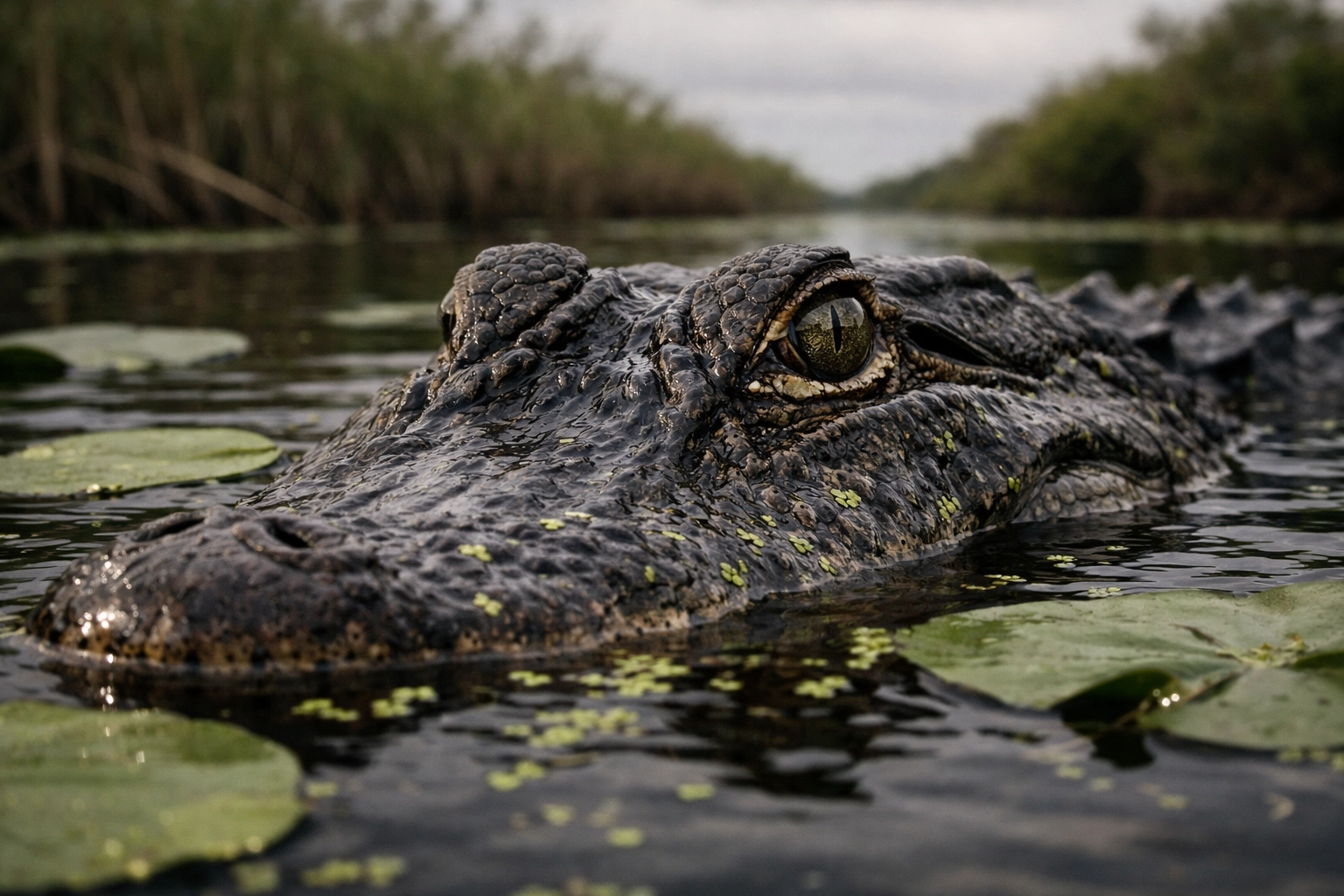
Most visitors crowd the entrance, but as a photographer, you should use the first mile to look for intimate details. The canals here are deep, and alligators often lounge right on the pavement. Position yourself low. Getting your camera down to the alligator's eye level creates an intimate, powerful perspective that makes the viewer feel like they are in the water with the subject.
2. The Mid-Loop Prairies
As you move further into the loop, the trees thin out, opening up the vistas. This is where you focus on landscape photography in the Everglades. Look for "islands" of trees, known as hardwood hammocks, to act as focal points in your wide-angle compositions. This area is also prime for spotting Snail Kites and Northern Harriers patrolling the sawgrass.
3. The Observation Tower
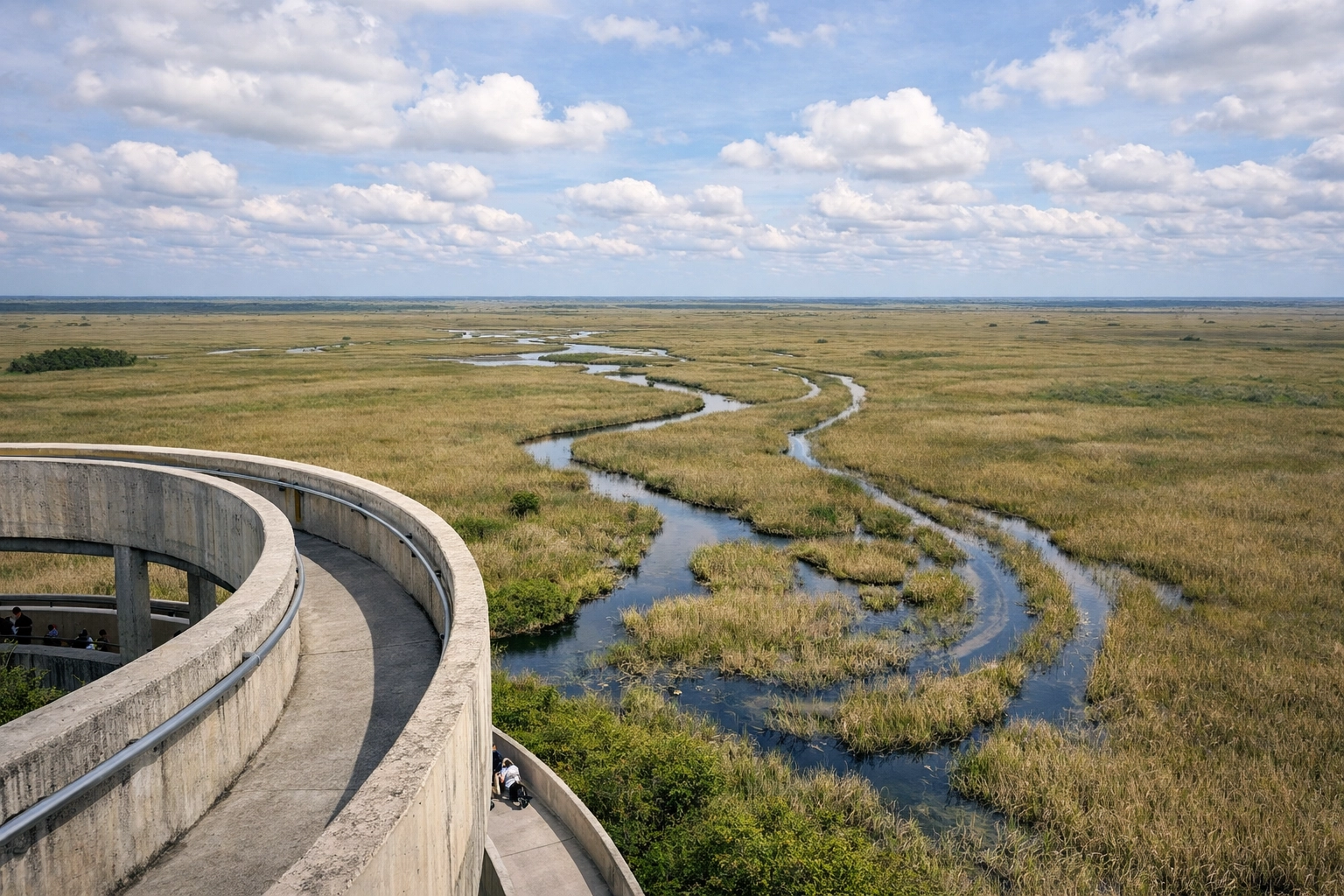
The halfway point of the loop is the famous observation tower. This is the only place in Shark Valley where you can get a true bird's-eye view. Use this elevation to photograph the winding water trails made by alligators and airboats. It’s also a fantastic spot for "Bird-in-Flight" (BIF) photography, as you are often at eye level with the birds soaring on the thermals.
Lighting and Timing: The Golden Hour Strategy
If you want your work to reflect the quality of Edin Fine Art, you must respect the light. Midday in the Everglades is harsh, flat, and unforgiving. The sun creates deep shadows under the eyes of birds and blows out the highlights on alligator scales.
The "Magic Hour": the hour after sunrise and the hour before sunset: is when Shark Valley truly comes alive. During the dry season (November through April), the wildlife is most active during these cooler periods. The low sun angle paints the sawgrass in gold and creates long, dramatic shadows that add depth to your landscapes. If you're serious about mastering these conditions, my Everglades Photography Guide provides specific GPS coordinates for the best sunrise and sunset spots.
Ethical Wildlife Photography
Your presence should never change the behavior of the animal. In Shark Valley, it is tempting to get closer than the recommended 15 feet because the animals seem "used to" people. However, as a professional, you have a responsibility to maintain a respectful distance. Use your telephoto lens to bridge the gap. Not only is this safer, but it also allows you to capture natural behaviors: hunting, nesting, and resting: that the animal would stop doing if it felt threatened by your proximity.
Refine Your Vision with Expert Guidance
Photographing the Everglades is a rewarding but challenging endeavor. The humidity, the vastness, and the nuances of the wildlife require more than just a good camera; they require a strategy. By following the tips in this guide, you are already ahead of 90% of the tourists visiting the park.
However, if you want to bypass the trial and error and go straight to capturing gallery-quality images, you need the right roadmap. My comprehensive Everglades Photography Guide is designed to be your digital mentor. It covers every major trail, including Anhinga and Flamingo, with detailed advice on timing, gear, and hidden gems that only locals know.
For those looking to expand their skills beyond the wetlands, explore our other resources at Edin Studios or check out our latest tips on the Edin Chavez Blog.
Final Thoughts for Your Shark Valley Adventure
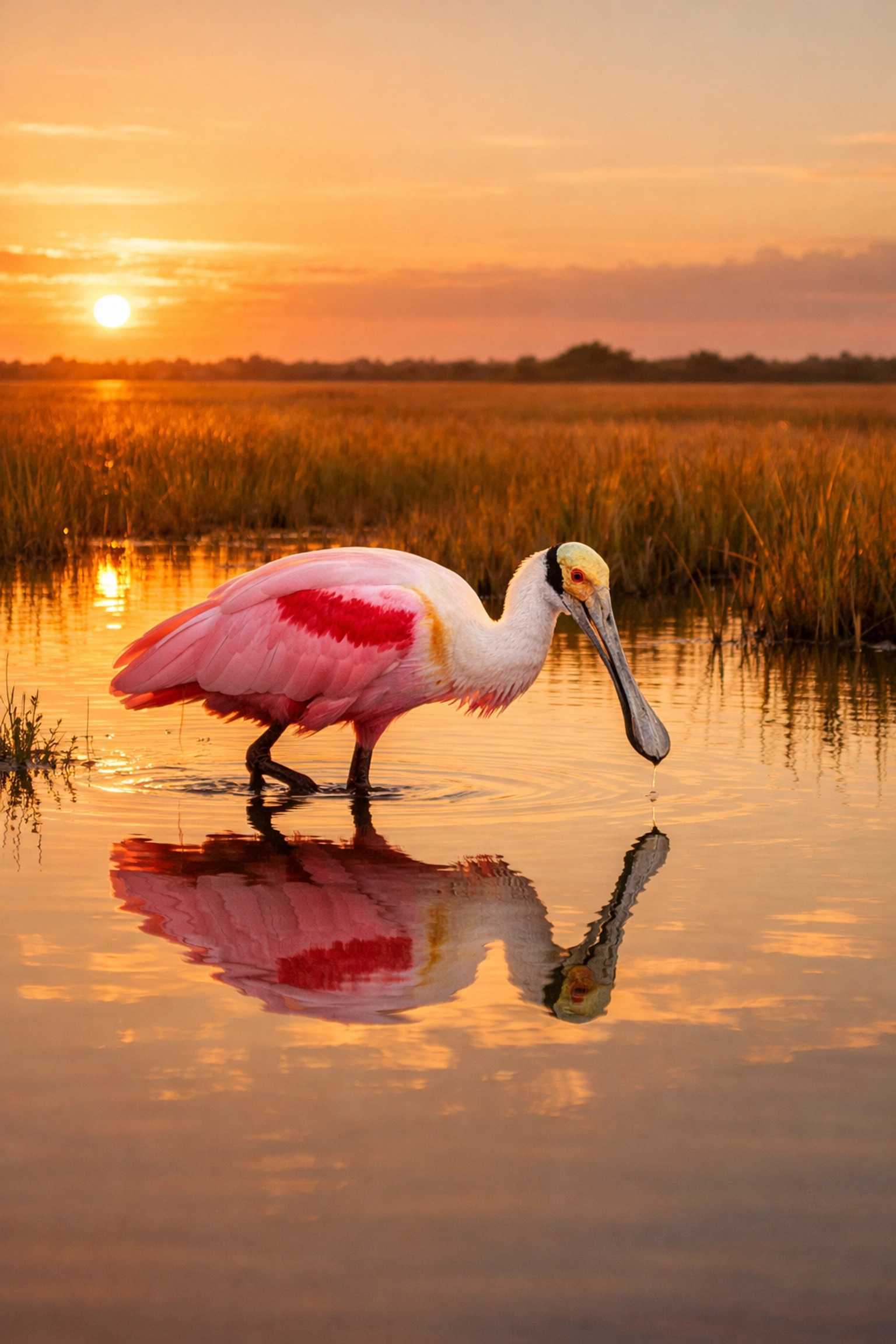
Shark Valley is a place of raw, prehistoric beauty. When you stand on that loop road, you are witnessing an ecosystem that has remained largely unchanged for millennia. Your job as a photographer is to translate that timelessness into a single frame. Focus on the eyes of the alligator, the flight of the Roseate Spoonbill, and the endless horizon of the sawgrass.
With these techniques and the right mindset, your trip to Shark Valley will result in more than just photos: it will result in art.
Ready to capture the Everglades like a pro?
Purchase the Ultimate Everglades Photography Guide Here!


