
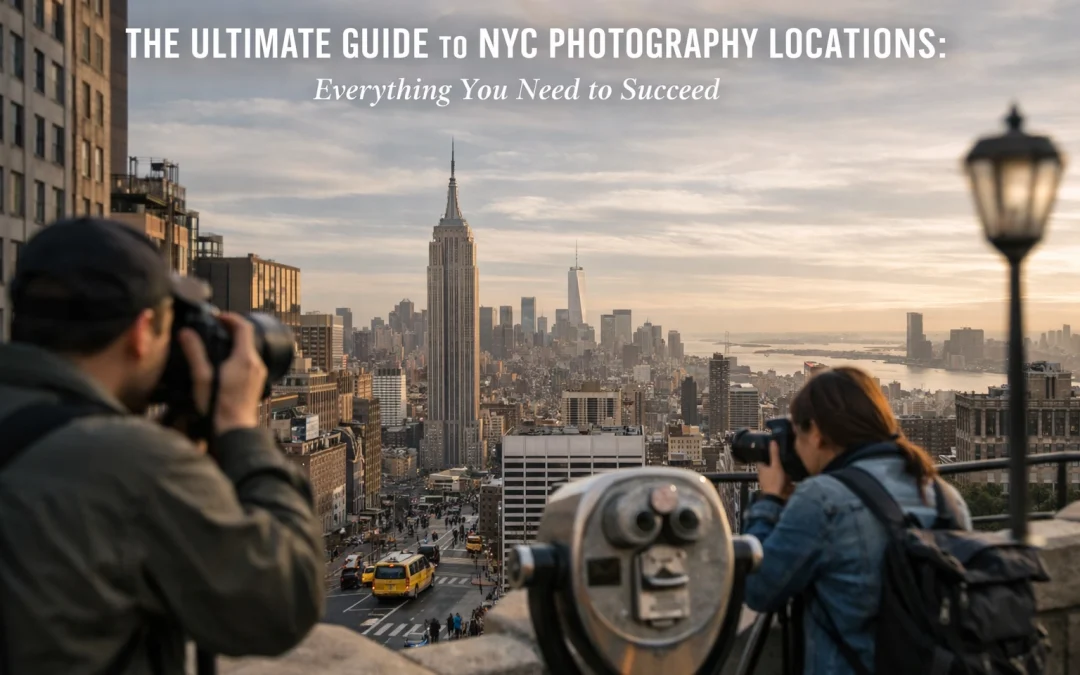
Just as the sun begins to peek over the Atlantic, casting a golden glow across the steel-and-glass canyons of Manhattan, you realize that New York City isn't just a place; it’s a living, breathing canvas waiting for your lens. Many photographers arrive in the Big Apple feeling overwhelmed by the sheer scale of the city, but your journey is about to be different. You aren't just here to take snapshots; you are here to create fine art.
At Edin Chavez Photography, we believe that capturing the best places to take pictures in NYC requires more than just a camera: it requires a vision. Whether you are hunting for that perfect long exposure of the subway or a high-contrast architectural masterpiece, this guide is your blueprint for success. By the time you finish reading, you will have the insider knowledge necessary to navigate the NYC photo spots that most tourists miss, ensuring your portfolio stands out in a crowded digital world.
The Iconic Framing: DUMBO and the Brooklyn Bridge
When you think of the quintessential New York City shot, your mind immediately goes to the cobblestone streets of DUMBO. Specifically, the intersection of Washington Street and Water Street. This isn't just a popular spot; it is the holy grail of New York City photography locations.
As you stand between the red-brick warehouses, the Manhattan Bridge perfectly frames the Empire State Building in the distance. To succeed here, you must embrace the early morning. While the city sleeps, you will find the silence and the light you need to create something truly spectacular. Arriving at sunrise ensures you beat the Instagram crowds and capture the blue hour transition that turns the bridge into a glowing masterpiece of engineering.
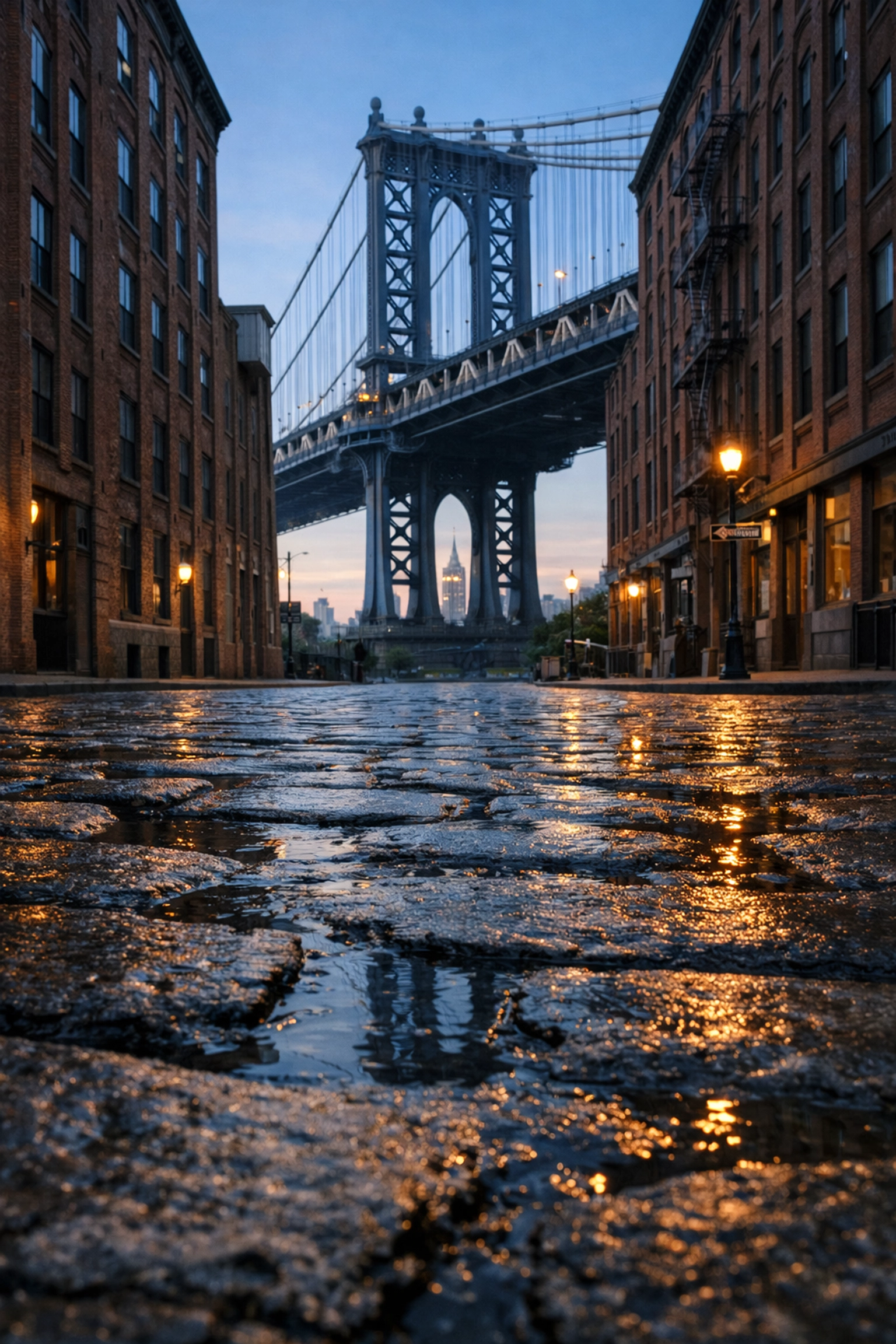
Ultra-realistic description: A low-angle shot of Washington Street in DUMBO at 5:45 AM. The cobblestones are damp from a light mist, reflecting the soft blue and gold light of dawn. The Manhattan Bridge looms large in the background, perfectly centering the Empire State Building between its steel pillars. No people are in sight, giving the scene a serene, cinematic feel.
By visiting Edin Studios, you can see how professional framing elevates these classic locations into high-end fine art. Remember, your composition at this spot defines your style. Don't just settle for the eye-level shot; get low to the ground to emphasize the texture of the historic cobblestones.
Reaching the Heavens: The Observation Decks
If you want to capture the sheer magnitude of the skyline, you need to get above the noise. New York City offers several observation decks, but two stand out for the serious photographer: Top of the Rock and The Edge.
Top of the Rock provides you with the most balanced view of the city. From here, you have an unobstructed line of sight to the Empire State Building to the south and Central Park to the north. Because there are no glass partitions on the upper deck, your lens is free from reflections, allowing you to capture the crisp, sharp details of the architectural grid below.
On the other hand, The Edge at Hudson Yards propels your perspective into the future. With its glass floor and angled windows, it offers a dramatic, vertigo-inducing look at the city. This is where you go to capture the modern, sleek side of New York.
| Location | Best Time to Shoot | Key Feature for Photographers |
|---|---|---|
| Top of the Rock | Sunset / Blue Hour | No glass barriers on the top floor for clear shots. |
| The Edge | Golden Hour | Unique 1,100-foot-high outdoor sky deck with views of the Hudson. |
| Summit One Vanderbilt | Mid-day / Afternoon | Mirror-filled rooms that create surreal, repetitive patterns. |
With these locations in your itinerary, you are guaranteed to walk away with images that look like they belong in a gallery. If you want the full breakdown of how to time these shots perfectly, you need the New York City Photography Guide.
The Heart of the City: Central Park’s Timeless Beauty
Stepping into Central Park is like entering another world. For a photographer, it offers a seamless blend of nature and urban architecture. Your mission here is to find the contrast between the organic curves of the trees and the rigid lines of the surrounding skyscrapers.
Bow Bridge is perhaps the most romantic spot in the entire park. Its low-slung, elegant curve provides a perfect middle ground for your composition, with the iconic San Remo apartments towering in the background. If you visit during the fall, the explosion of orange and red foliage creates a color palette that is unmatched anywhere else in the world.
Just a short walk away is Bethesda Terrace. The architecture here is nothing short of breathtaking. The Minton tile ceiling in the arcade provides a sophisticated, moody backdrop for portraits or architectural studies. This is where your educational journey into light and shadow truly begins.
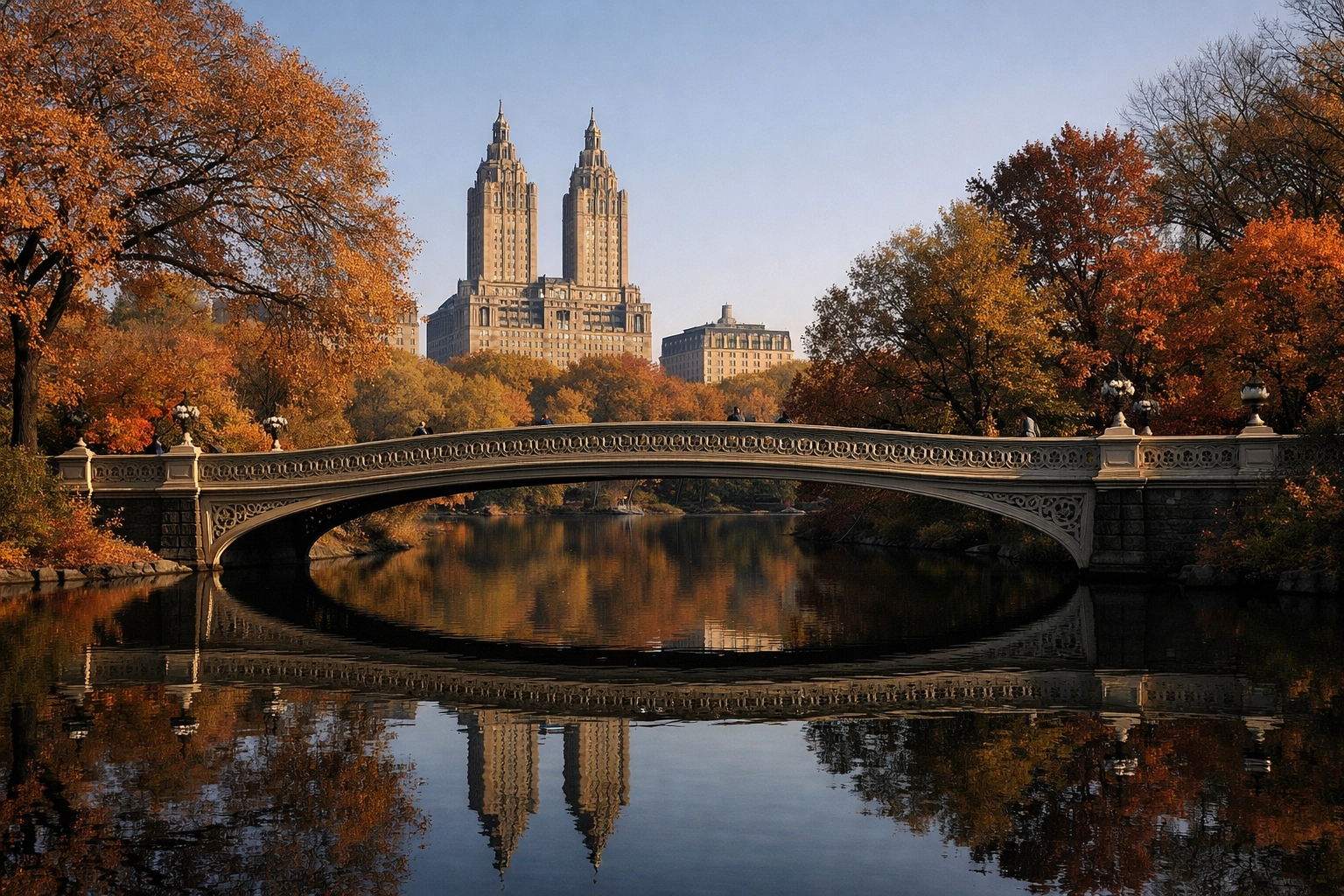
Ultra-realistic description: A wide-angle shot of Bow Bridge in Central Park during peak autumn. The trees are vibrant shades of burnt orange and deep crimson, reflecting perfectly in the calm water of The Lake. In the background, the twin towers of the San Remo building rise into a clear, crisp blue sky. The lighting is soft morning light, highlighting the intricate ironwork of the bridge.
Architectural Marvels: The Oculus and Radio City
New York is a city of layers, and nowhere is this more evident than at the World Trade Center. The Oculus, designed by Santiago Calatrava, is a futuristic rib-cage of white steel that challenges every photographer to think about symmetry. When you step inside, the white-on-white interior acts as a giant softbox, providing you with even light that is perfect for high-key architectural photography.
In stark contrast, Radio City Music Hall offers a vintage, neon-soaked aesthetic that takes you back to the golden age of Manhattan. To capture the soul of this building, you should visit at night. The glow of the red and yellow neon signs against the dark sky creates a high-energy vibe that is quintessential New York.
By integrating these diverse architectural styles into your shoot, you demonstrate a range that few photographers achieve. For more tips on how to master different urban environments, keep an eye on our latest updates at the Edin Chavez Blog.
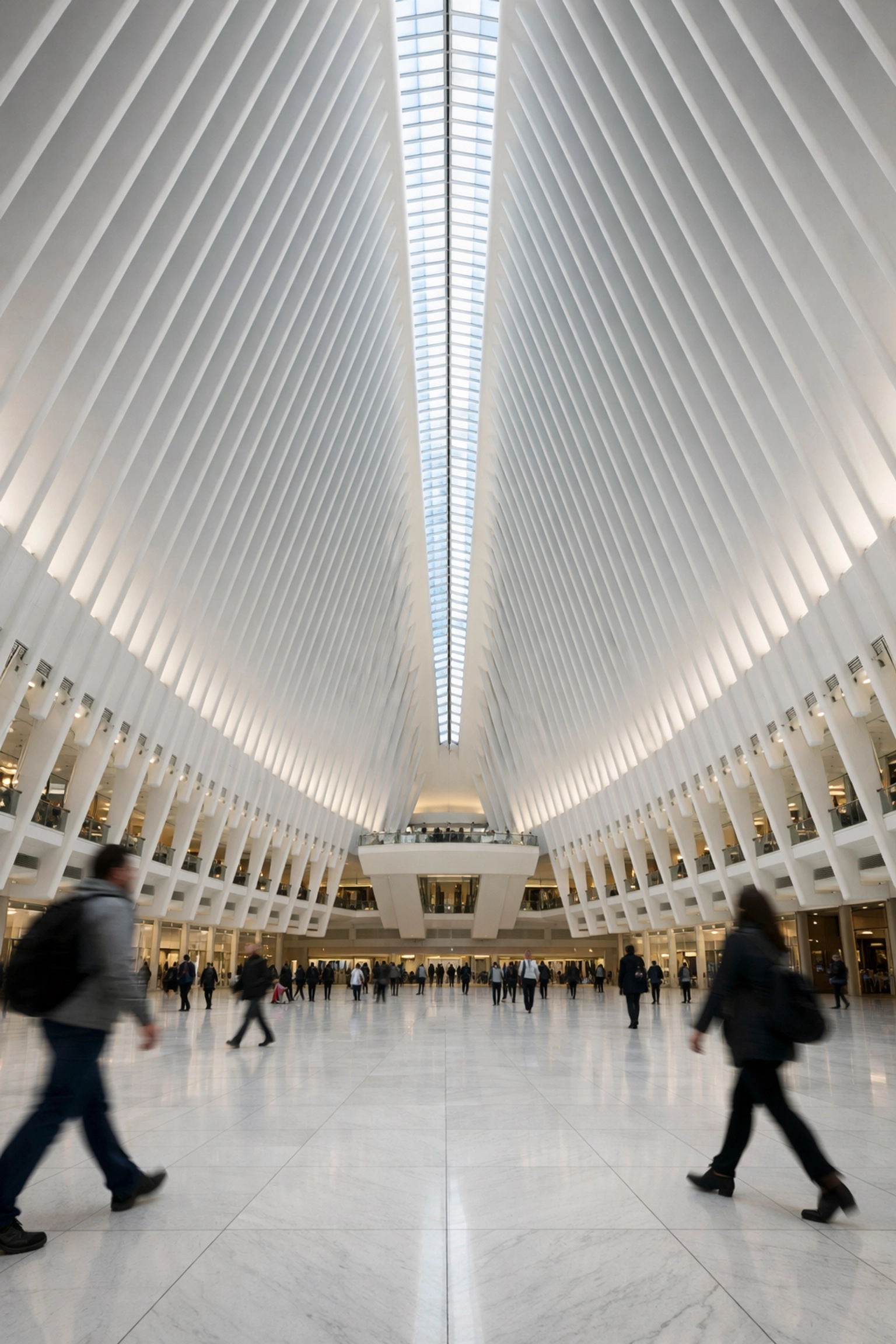
Ultra-realistic description: An interior shot of the Oculus at the World Trade Center. The camera is positioned exactly in the center of the main hall, looking up at the skylight. The symmetry of the white steel ribs creates a hypnotic pattern. A few blurred figures move across the polished white floor, giving a sense of scale and motion.
Street Photography: Capturing the Energy
You haven't truly experienced NYC photo spots until you’ve stood in the middle of the chaos with your camera ready. Times Square is the obvious choice, but the real magic happens when you look for the "small" moments amidst the "big" lights. The steam rising from a manhole cover, the reflection of a yellow taxi in a rain puddle, or the intense expression of a street performer: these are the shots that tell the story of the city.
If you prefer a more grit-meets-glam vibe, head down to SoHo. The cast-iron architecture and fire escapes provide a textured, industrial backdrop that is a dream for street photographers. The narrow streets create dramatic shadows, allowing you to play with high-contrast black-and-white compositions.
How to Guarantee Success on Every Shoot
Planning your trip to the world's most photographed city shouldn't be left to chance. You need a strategy that ensures you are at the right place at the exactly right time. This is where the New York City Photography Guide becomes your most valuable piece of gear.
This guide isn't just a list of locations; it’s an all-access pass to the secrets of professional photography in NYC. It provides:
- Exact GPS Coordinates: No more wandering around hoping to find the spot.
- Timing Insights: Learn exactly when the light hits the buildings for maximum impact.
- Pro Tips: Specific settings and gear recommendations for every location mentioned in this post.
Don't leave your masterpiece to luck. Empower your creativity and ensure every shutter click counts.
Get your New York City Photography Guide here and start shooting like a pro today!
Mastering the Technicals: Light, Gear, and Patience
Capturing the best places to take pictures in NYC requires a technical foundation that supports your artistic vision. New York’s lighting is notoriously tricky; the "canyon effect" of the tall buildings means you will often deal with deep shadows and bright highlights simultaneously.
- Use a Tripod: For those blue hour shots in DUMBO or long exposures in Grand Central, a sturdy tripod is non-negotiable.
- Filters are Your Friend: A circular polarizer will help you manage reflections on the glass buildings, while a Neutral Density (ND) filter will allow you to blur the movement of the crowds and taxis.
- Patience: New York moves fast, but your photography shouldn't. Wait for that one person to walk into your frame to provide scale, or wait for the light to hit that one specific window.
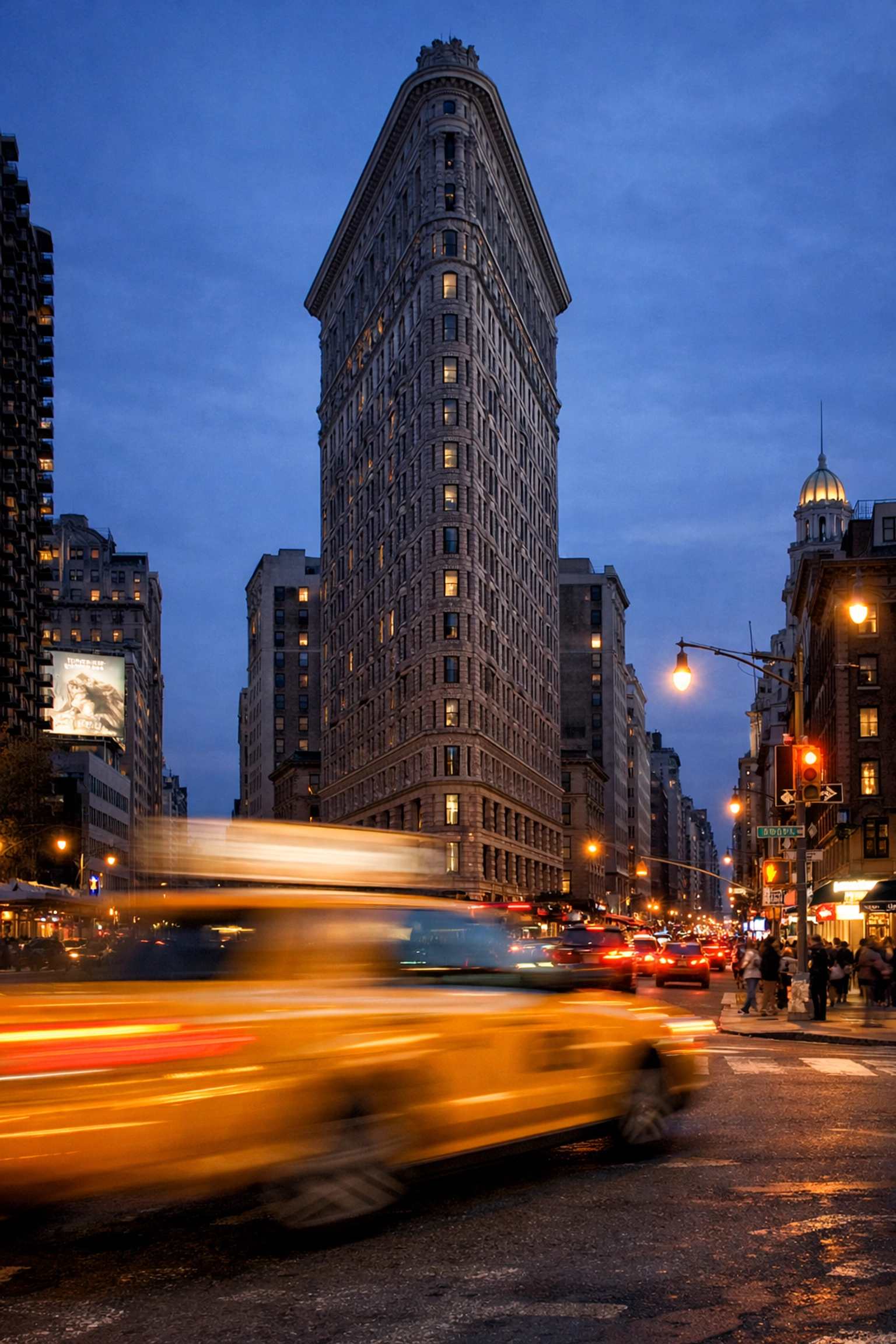
Ultra-realistic description: A long exposure shot of a classic yellow New York City taxi speeding past the Flatiron Building at dusk. The taxi is a blur of bright yellow light, while the historic building remains sharp and detailed in the background. The street lamps are just starting to flicker on, adding a warm glow to the scene.
Your Journey Starts Now
The city is waiting for you. From the heights of the skyscrapers to the depths of the subway stations, New York City offers an unparalleled variety of subjects. You have the drive, you have the vision, and now you have the locations.
This guide has given you a glimpse into the incredible beauty of NYC through a fine art lens. Whether you are capturing the Manhattan Bridge or the quiet corners of Central Park, remember that you are part of a long tradition of artists who have found inspiration in these streets.
With these considerations in mind, it’s time to pack your bag, charge your batteries, and head out. Your portfolio is about to reach a whole new level of excellence. Don't forget to grab the New York City Photography Guide to ensure you don't miss a single shot.
The world is your canvas: go out there and paint it with light. Stay inspired, keep shooting, and we’ll see you in the city!


