
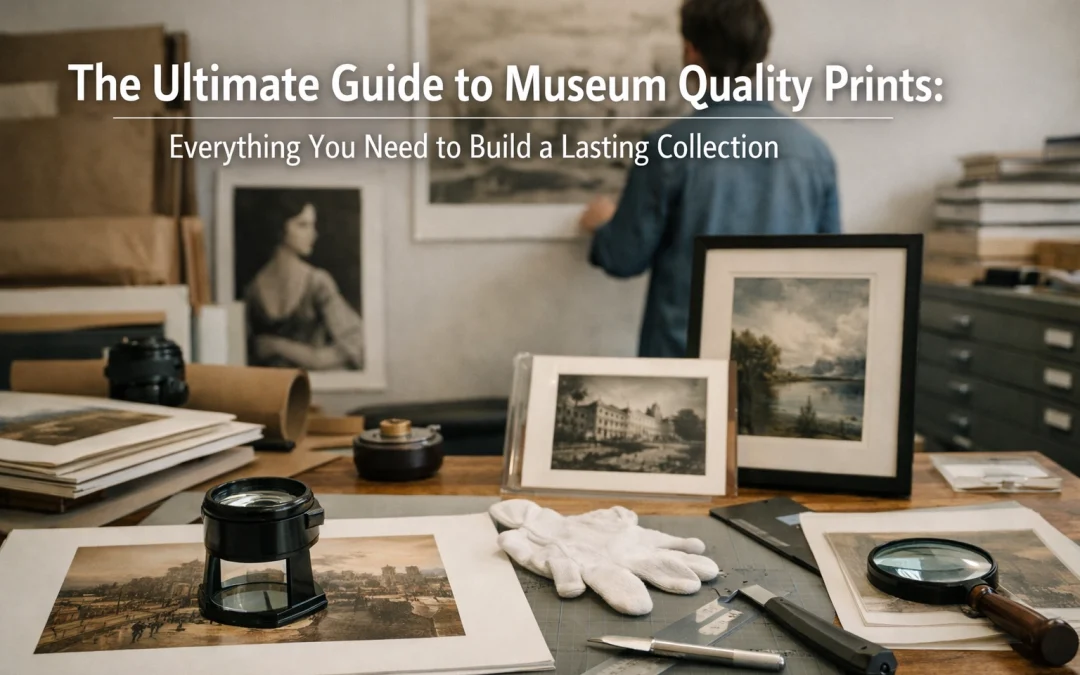
Just as a master curator meticulously selects pieces for a grand exhibition, your journey into art collecting begins with understanding the physical foundation of the work you bring into your home. When you step into the world of high-end art, you aren't just buying a picture; you are investing in a legacy. Understanding the nuances of museum quality prints is the difference between owning a piece of decor that fades in five years and owning a masterpiece that survives for centuries.
At Edin Chavez Photography, we believe that your collection should be as enduring as the moments captured in the frame. Whether you are a seasoned curator or a first-time buyer looking to elevate your space, this guide empowers you with the insider knowledge needed to distinguish professional-grade art from mass-market reproductions. By the time you finish reading, you’ll have the confidence to build a collection that stands the test of time.
The Anatomy of Excellence: What Makes a Print "Museum Quality"?
Many people assume that any high-resolution image on paper qualifies as "fine art," but the reality is far more technical. A museum-quality print is defined by its archival stability, color fidelity, and material excellence. This isn't just a marketing term; it is a technical standard that ensures the artwork remains vibrant and structurally sound for over 100 years.
To achieve this level of perfection, the process moves away from standard commercial printing and into the realm of archival prints. This involves a synergy between three critical components: pigment-based inks, acid-free substrates, and high-resolution output.
Pigment vs. Dye: The Science of Color
Most home or office printers use dye-based inks, which are liquid colors that soak into the paper. While they look bright initially, they are notorious for fading when exposed to UV light. In contrast, museum quality prints utilize pigment-based inks. These are tiny, solid particles of color suspended in a carrier liquid. Because these pigments sit on the surface and bond deeply with the fibers, they provide unmatched resistance to light and humidity.
The Foundation: Archival Paper
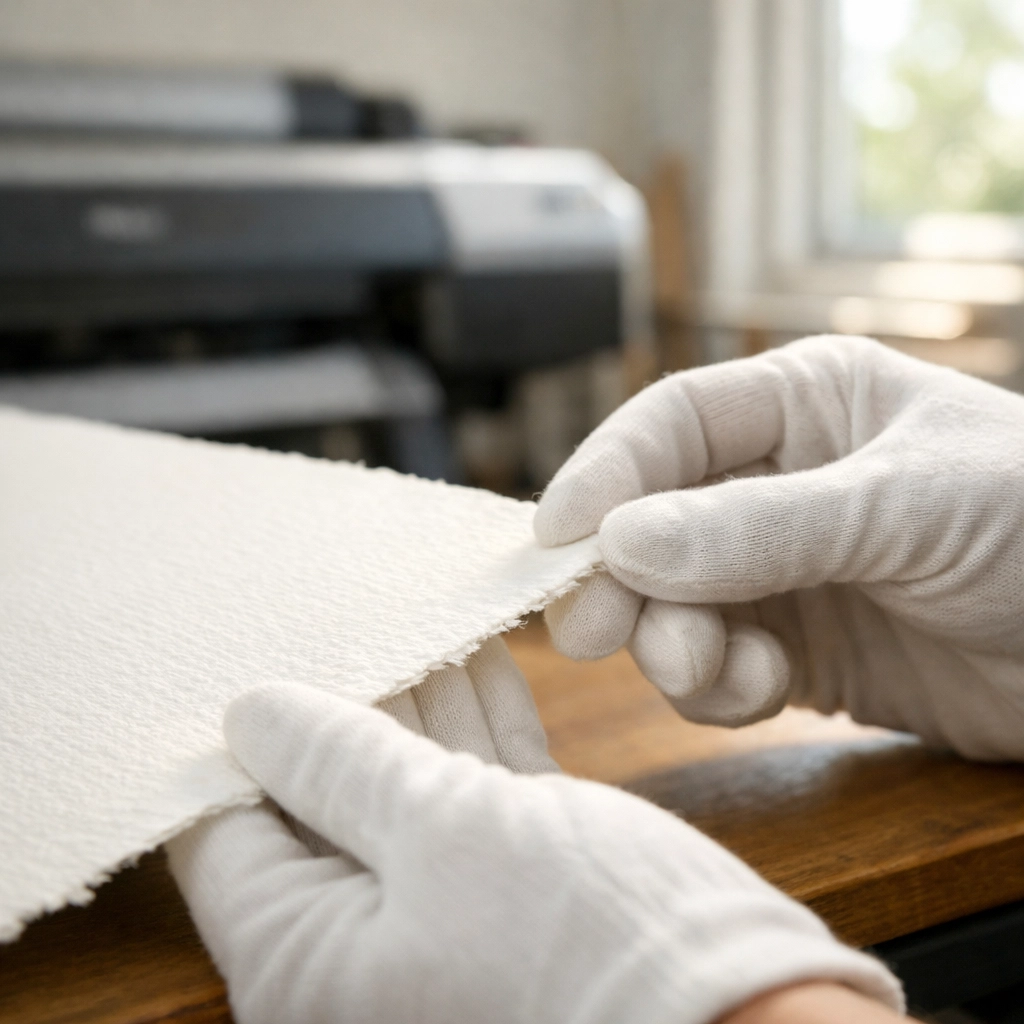
The paper you choose is just as important as the ink. Standard papers contain lignin and acids that cause them to yellow and become brittle over time: think of an old newspaper. High-value limited edition photography prints are typically printed on 100% cotton rag or alpha-cellulose papers. These materials are naturally acid-free and pH-neutral, ensuring the paper stays "bright" and flexible for generations.
Why Limited Edition Photography Prints Are the Collector’s Choice
As you build your collection, you will encounter the term "limited edition." This is more than just a label; it is a promise of scarcity and value retention. Unlike open editions, which can be printed an infinite number of times, limited editions have a strictly controlled run.
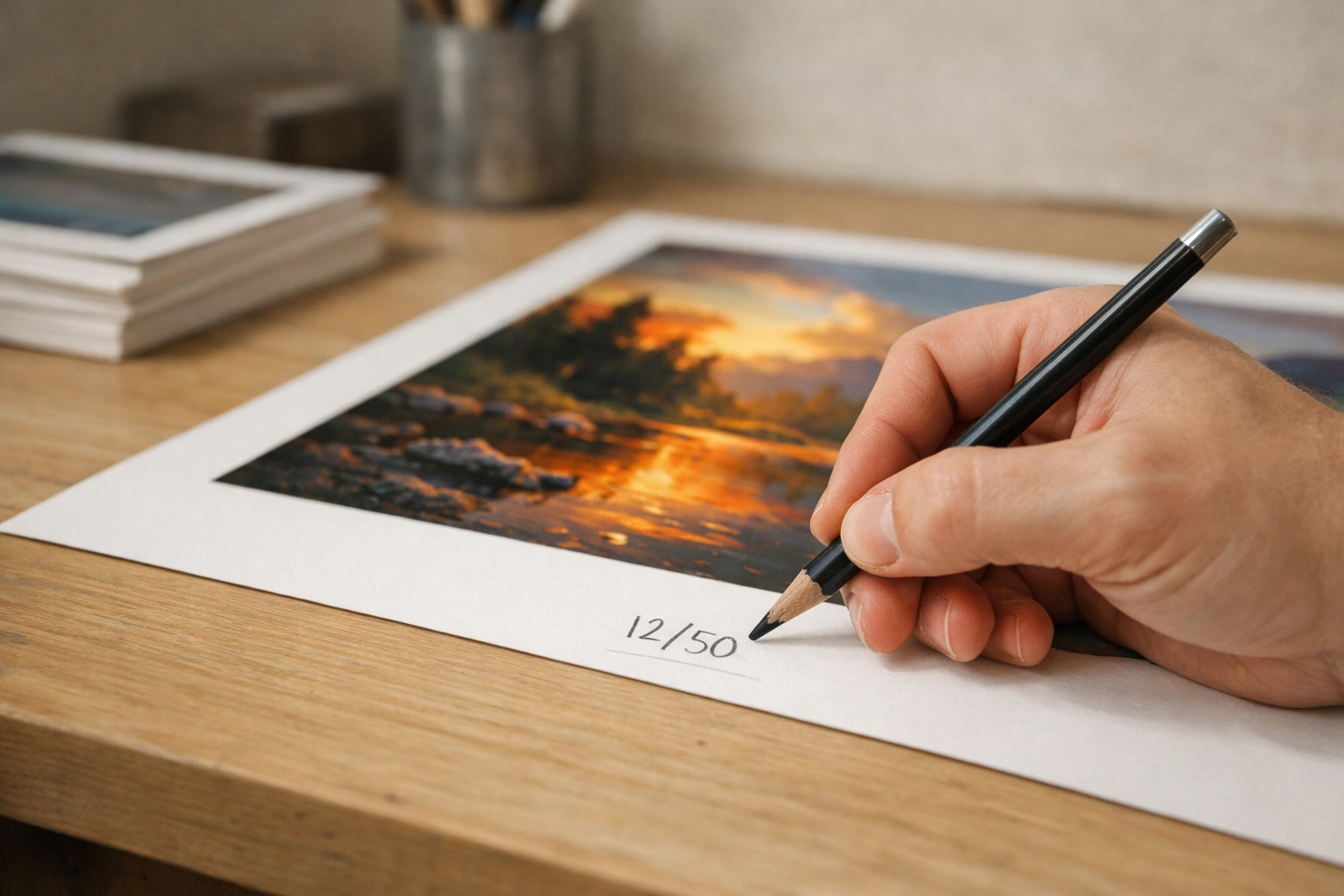
When you purchase a limited edition piece from Edin Fine Art, you are securing a specific number in a set: for example, "3 of 25." Once that 25th print is sold, the edition is closed forever. This scarcity is what drives the secondary market value and makes your investment grow over time.
The Importance of the Edition Number
Your print’s position in the edition run can influence its desirability. While all prints in a digital run are technically identical in quality, lower numbers (like 1/50) or "Artist Proofs" (marked as AP) often carry a certain prestige in the eyes of curators. This structured scarcity is why learning how to sell fine art photography prints effectively starts with understanding the psychology of the "limited" label.
| Feature | Standard Print | Museum Quality Print |
|---|---|---|
| Ink Type | Dye-Based (Fades easily) | Pigment-Based (Archival) |
| Paper | Wood Pulp/Glossy Photo | 100% Cotton Rag / Acid-Free |
| Longevity | 5–10 Years | 100+ Years |
| Value | Decorative only | Collectible investment |
| Color Depth | Standard RGB | Wide Gamut Giclée |
The Golden Rule: The Certificate of Authenticity
In the world of fine art, your word is only as good as your documentation. A certificate of authenticity for art prints (COA) is the most vital document you can own alongside the artwork itself. It serves as the "birth certificate" and "ID card" for your piece, proving it was produced or authorized by the artist.
A valid COA should include:
- The artist's name and signature.
- The title of the work.
- The edition number (e.g., 5/20).
- The exact materials used (e.g., Hahnemühle Photo Rag, Epson UltraChrome Pigment Inks).
- The date of production.
Without this document, reselling your piece at its true value becomes nearly impossible. When you browse the Edin Chavez Blog, you’ll see we emphasize that every high-value piece must be accompanied by this proof of origin to protect your investment.
The Giclée Standard: Digital Craftsmanship
You may have heard the term "Giclée" (pronounced zhee-klay) used interchangeably with fine art printing. Derived from the French word meaning "to spray," this technique represents the pinnacle of digital art reproduction. It involves using a high-precision inkjet printer to apply millions of microscopic droplets of pigment ink onto archival paper.
This process allows for a tonal range and detail level that traditional darkroom prints often struggle to match. With a minimum resolution of 300 DPI, Giclée printing ensures that every texture, shadow, and highlight Edin Chavez captures in the field is translated perfectly to the final medium. This level of detail is what makes a viewer feel as though they could step right into the landscape.
Protecting Your Investment: Display and Care
Even the finest archival prints require proper care to maintain their "day-one" brilliance. As a collector, you are the guardian of the piece. Environmental factors like sunlight, moisture, and even the oils on your skin can degrade a print if you aren't careful.
Museum-Grade Framing
Never "economize" on framing for a high-value piece. You should always insist on UV-protective glass or acrylic, which filters out up to 99% of harmful rays. Furthermore, ensure that the matting used is 100% acid-free. If a cheap, acidic mat touches your print, it will cause "mat burn": a permanent brown stain along the edges of the image.
Handling with Care
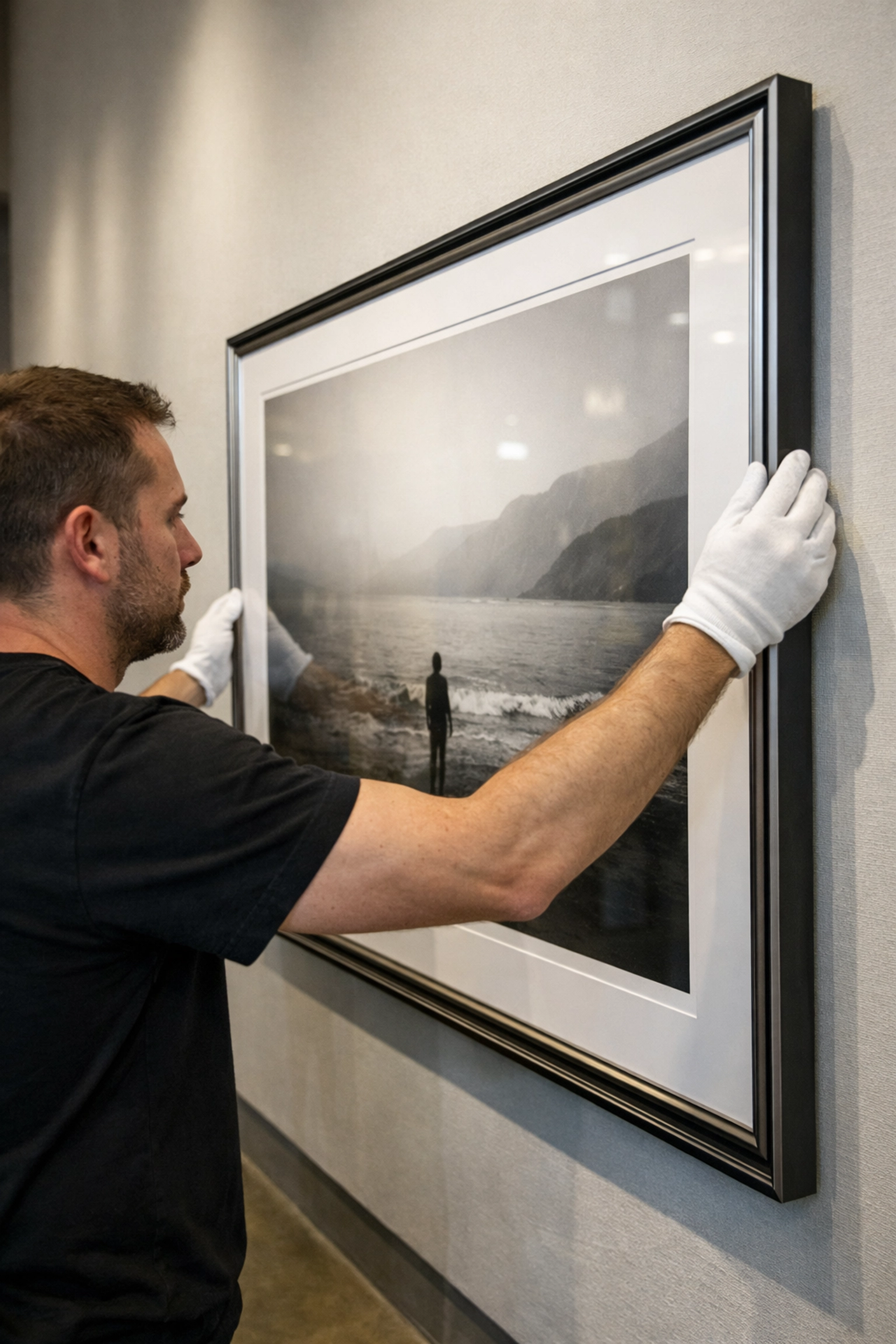
When you receive a new print, resist the urge to touch the surface with your bare hands. Professional curators always use white cotton gloves. The oils and salts on your fingertips can react with the pigment and leave permanent marks that only become visible years later.

How to Sell Fine Art Photography Prints
If you are an artist reading this, or a collector looking to rotate your gallery, understanding the market is key. Knowing how to sell fine art photography prints involves more than just listing them online; it requires building a brand of trust.
- Consistency is King: Ensure every print you sell meets the exact same archival standards.
- Transparent Editioning: Be clear about your edition sizes and never "re-open" an edition once it is sold out.
- Professional Presentation: High-quality mockups and detailed descriptions of the materials (like those found on Edin Studios) help buyers feel confident in their purchase.
- The Unboxing Experience: For high-value collectors, the way the art arrives matters. Protective tissue, sturdy tubes or crates, and an elegantly presented COA elevate the perceived value.
Building Your Personal Gallery
Collecting art is a deeply personal journey, but it is one that should be built on a foundation of quality. By focusing on museum quality prints, you aren't just decorating a wall; you are curating an environment that reflects your taste and appreciates in value.
When you look for your next piece, ask the hard questions about ink types, paper brands, and editioning. A true fine art gallery will always be happy to provide these technical details because they are proud of the craftsmanship involved.
With these considerations, you are no longer just a buyer; you are a savvy collector. You understand that the soul of the photograph is captured by the artist, but its life is preserved by the quality of the print. Whether you are looking for a striking Miami cityscape or a serene nature scene, ensure that your choice is one that will be admired by generations to come.
Explore the latest collections and learn more about the art of photography at Edin Chavez Photography and stay updated with the latest industry insights at the Edin Chavez Blog. Your masterpiece is waiting.


