
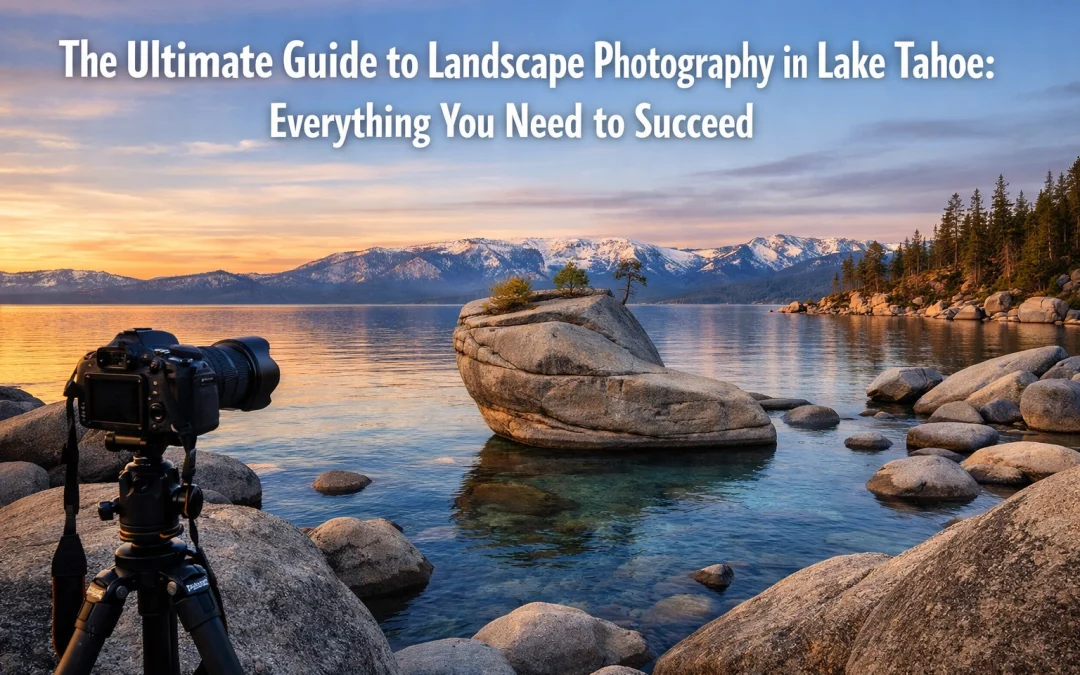
As you prepare your gear for a trip to the Sierra Nevada, you aren't just looking for a casual stroll; you are hunting for the shot of a lifetime. Lake Tahoe stands out as North America’s premier alpine photography destination, offering a dramatic interplay of granite boulders, sapphire waters, and snow-capped peaks. Whether you are chasing the first light of dawn over the Nevada shore or capturing the milky way over the California side, your success depends on more than just showing up. It requires a strategy, a deep understanding of the terrain, and the right resources to put you in the right spot at the precise moment the light hits.
At Edin Chavez Blog, we believe that every shutter click should be an intentional step toward a masterpiece. This guide is designed to empower you with insider knowledge, ensuring your portfolio reflects the true, raw beauty of the "Jewel of the Sierras." To truly master this landscape, you need the most comprehensive resource available: the Lake Tahoe Photography Guide.
Mastering the Technical Landscape
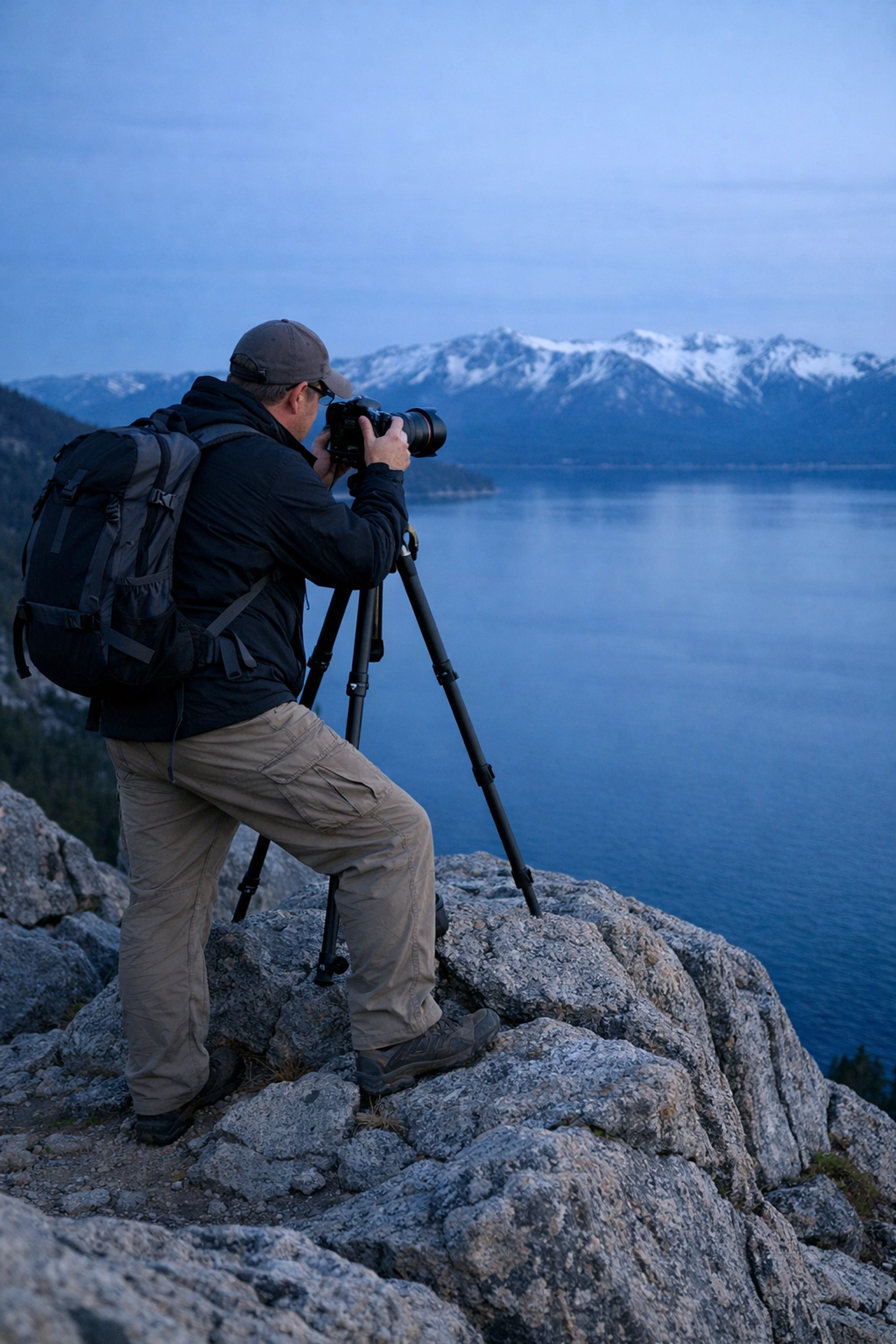
Before you hike a single trail, you must understand how to handle the unique atmospheric conditions of Lake Tahoe. At over 6,000 feet of elevation, the air is thinner, the light is sharper, and the contrasts are more aggressive than at sea level. Your technical approach must be as robust as the mountains themselves.
Wide-angle photography is your bread and butter here. When you use a lens in the 16mm to 24mm range, you can frame a foreground of ancient, weathered boulders while still capturing the vastness of the lake and the distant peaks. This technique ensures that your viewers feel like they are stepping into the scene rather than just looking at a flat image.
However, do not ignore the power of the telephoto lens. Compressing the layers of the Sierra Nevada mountains as they fade into the distance provides a sense of scale that wide angles simply cannot achieve. By integrating both styles, you ensure a diverse and professional portfolio. To see how these techniques translate into gallery-ready work, explore the fine art world at Edin Fine Art.
Iconic Lake Tahoe Photography Locations
Lake Tahoe is massive, and your time is valuable. You don't want to waste your golden hour stuck in traffic or searching for a trailhead. You need to know exactly where the best photo spots in Lake Tahoe are located.
1. Emerald Bay: The Crown Jewel
Located on the southwest corner, Emerald Bay is perhaps the most photographed location in the world for a reason. As you look down from the overlook, Fannette Island sits perfectly in the center of the bay, surrounded by water so green it looks like a liquid gemstone.
- Pro Tip: Arrive at least 45 minutes before sunrise. As the sun peaks over the East Shore, it lights up the mountains behind you, reflecting a warm, orange glow onto the calm waters of the bay.
- Composition: Use the rock walls near the parking area to frame your shot, creating a natural window that leads the viewer’s eye straight to the island.
2. Bonsai Rock: The Icon of the East Shore
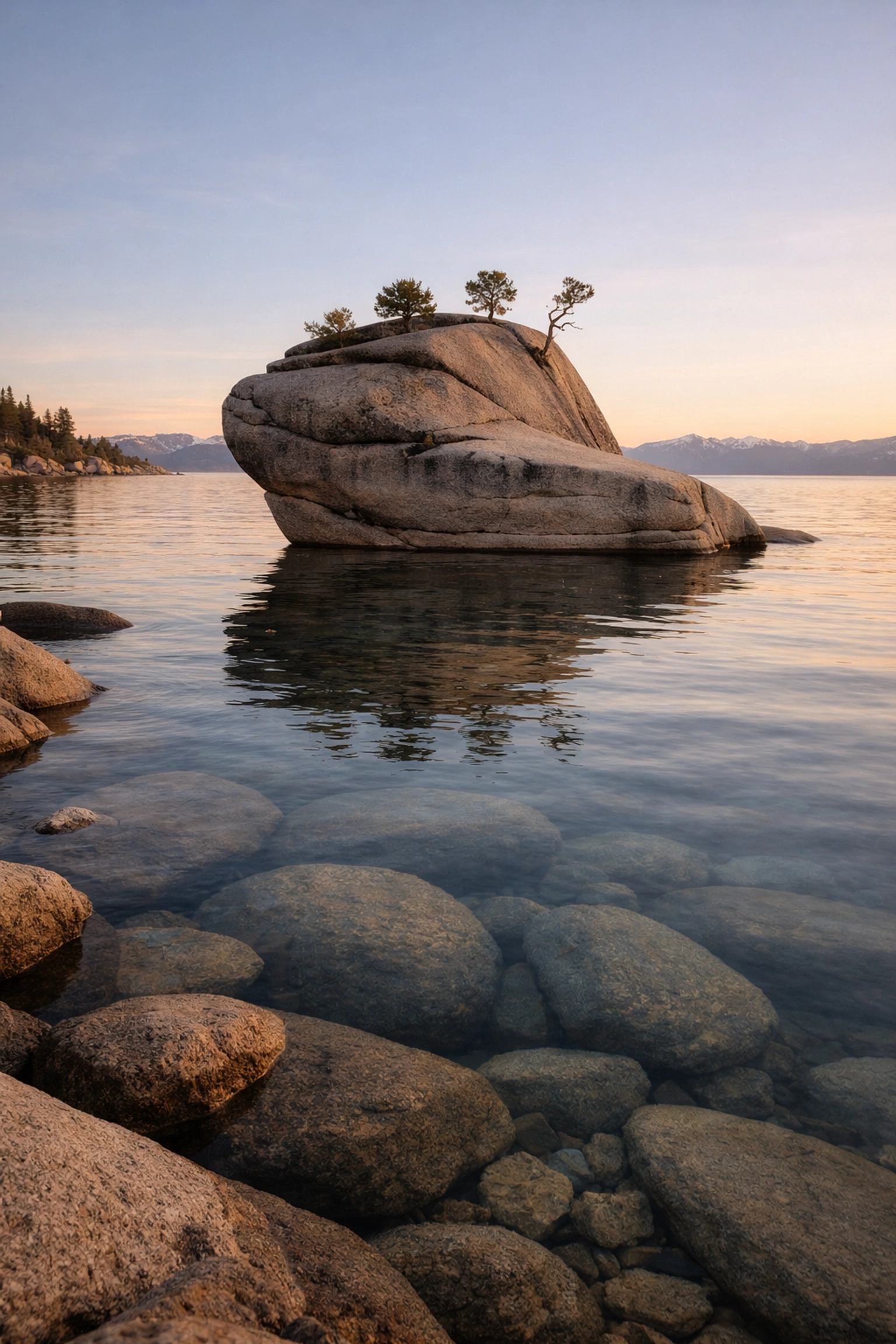
If you are looking for that "smooth as butter" long exposure shot, Bonsai Rock is your destination. Located on the Nevada side, this solitary rock with four small trees growing out of its crevices is a masterclass in minimalism.
- The Shot: Use a 6-stop or 10-stop ND filter to blur the movement of the water. This creates a dreamlike, ethereal surface that makes the rock look like it is floating in a cloud.
- Access: The hike down is short but steep. Your commitment to getting down to the water's edge will be rewarded with a perspective that most tourists never see.
3. Sand Harbor: Boulders and Turquoise Depths
For those who want to capture the "Caribbean of the Sierras" vibe, Sand Harbor is unmatched. The white sand and massive underwater boulders provide incredible texture and color. This is the place to practice your landscape photography in Lake Tahoe by focusing on the clarity of the water.
| Location | Best Time | Difficulty | Key Feature |
|---|---|---|---|
| Emerald Bay | Sunrise | Easy | Fannette Island & Reflections |
| Bonsai Rock | Sunset | Moderate | Minimalist Rock Formations |
| Sand Harbor | Mid-Morning | Easy | Turquoise Water & Boulders |
| Cave Rock | Sunset | Moderate | 180-degree Panoramic Views |
Timing and Lighting Strategy
The difference between a snapshot and fine art is light. In Tahoe, the "Golden Hour" isn't just a suggestion; it is a requirement. Because the lake is surrounded by high peaks, the sun often disappears behind the mountains 30 minutes before the actual sunset time. This creates a "soft box" effect that is perfect for capturing the subtle textures of the forest and the lake’s surface.
By using the Lake Tahoe Photography Guide, you avoid the guesswork. We provide you with the exact GPS coordinates and the best times of year to visit each spot. For instance, did you know that certain waterfalls only flow during the spring snowmelt, or that the Milky Way aligns perfectly with the South Shore during the summer months?
Elevating Your Work with Post-Processing
Your journey doesn't end when you click the shutter. To truly make your images pop and reflect the vibrant reality of what you saw, your editing process must be seamless. This is where many photographers struggle, but you have the advantage. By applying the Ultimate Lightroom Preset Collection, you can enhance the natural blues and greens of the lake without making the image look artificial.
These presets are well-crafted to handle the high dynamic range often found in Tahoe’s high-contrast environments. They help you recover shadows in the pine forests while maintaining the integrity of the bright, snow-capped peaks.
Safety and Ethics in the Wild
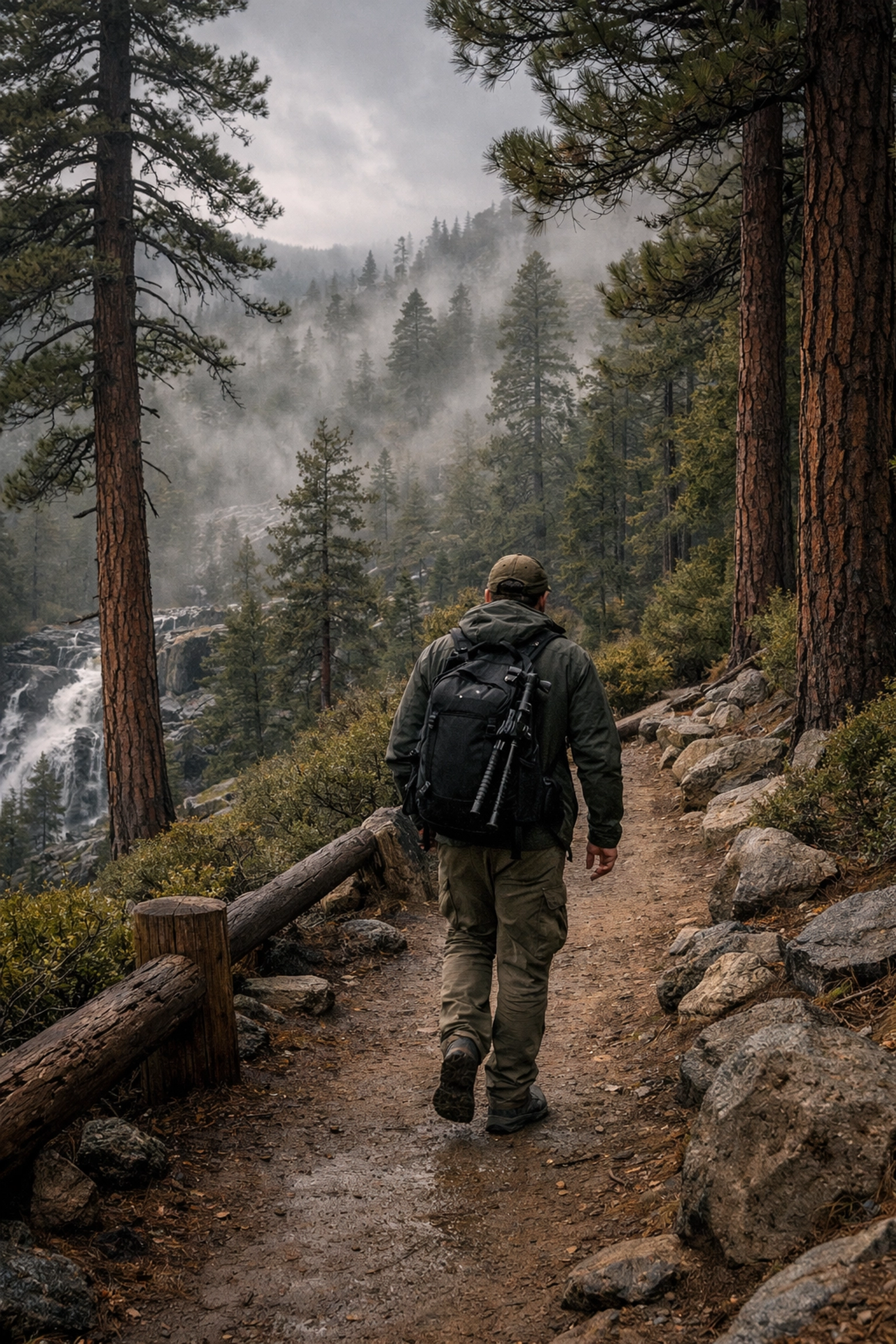
As a professional or aspiring pro, your adherence to "Leave No Trace" principles is vital. Lake Tahoe’s ecosystem is fragile. When you are visiting popular Lake Tahoe photography locations, stay on the marked trails. Not only does this protect the environment, but it also ensures that these locations remain open for photographers in the future.
The weather here can change in an instant. A clear afternoon can turn into a localized snowstorm or a lightning-heavy thunderstorm within thirty minutes. Always check the local forecast and carry layers. Your gear is an investment; your safety is a priority.
Why You Need a Dedicated Guide
You could spend weeks scouring the internet for bits and pieces of information, or you could take the shortcut to excellence. The Lake Tahoe Photography Guide is an extensive, user-friendly resource that puts years of professional scouting into your hands.
This guide propels your skills forward by revealing:
- Secret, less-crowded spots like Secret Cove and Skunk Harbor.
- The best seasonal advice for capturing fall foliage or winter ice formations.
- Parking secrets that will save you hours of frustration.
Success in photography is about preparation meeting opportunity. With our guide, you create your own opportunities.
Final Thoughts for the Tahoe Photographer
Landscape photography at Lake Tahoe is a transformative experience. It challenges your technical skills while rewarding your soul with some of the most beautiful vistas on the planet. From the granite peaks of Desolation Wilderness to the calm, reflective waters of the East Shore, every corner of this lake offers a new story to tell through your lens.
When you invest in your craft, you are not just buying gear or guides; you are investing in your vision. Whether you are aiming to sell prints on Edin Fine Art or simply want to document your travels with professional flair, the right knowledge is your most powerful tool.
Hence, take these tips, grab your tripod, and head to the mountains. The light is waiting for you.
For more insights on how to elevate your work, explore our site for a deep dive into hundreds of tutorials and guides at https://blog.edinchavez.com/.


