
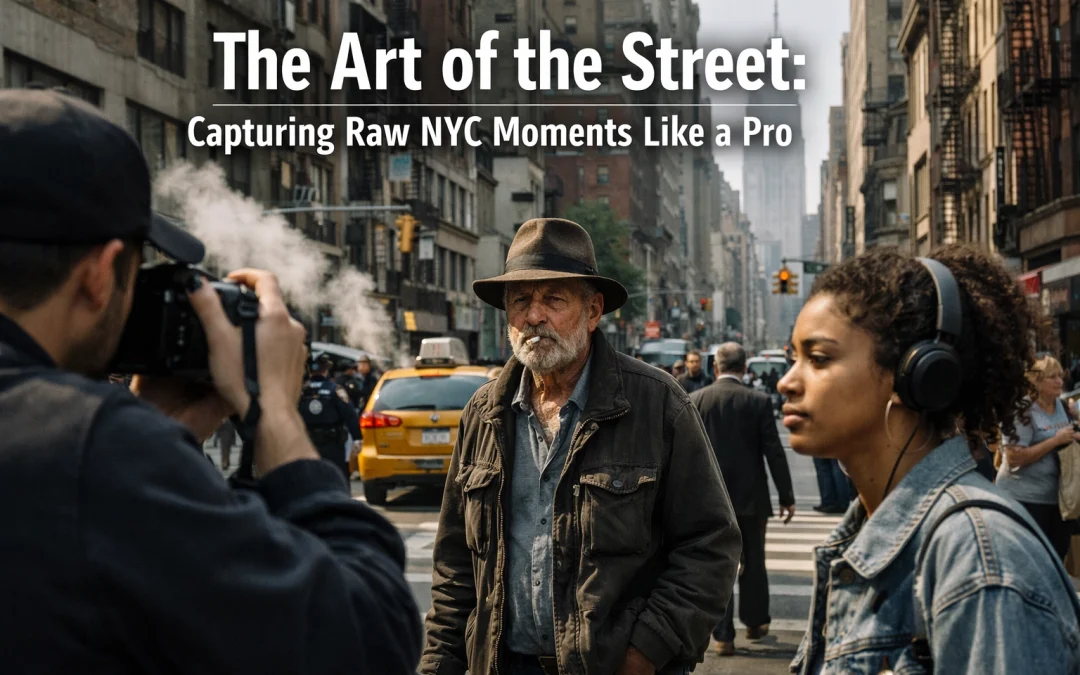
As you step off the subway and onto the steaming grates of Manhattan, you aren't just entering a city; you are stepping into a living, breathing organism that never stops moving. For a photographer, New York City is the ultimate playground, but it can also be an intimidating wall of noise and light if you don't know how to navigate it. You aren't here to take the same postcard shots everyone else has on their phone. You are here to capture the soul of the city: the grit, the glamour, and the quiet, emotional narratives that play out in the shadows of skyscrapers.
Mastering street photography in NYC requires more than just a fast shutter finger; it demands a shift in your perspective. This post is part of my comprehensive series on conquering the Big Apple with your camera. Before you dive into the deep end of the street, make sure you check out my Ultimate Guide to NYC Photo Spots, which serves as your master map for this journey.
The Gear: Choosing Your Weapon for the Concrete Jungle
While you might be tempted to pack every lens you own, the street demands agility. Carrying a massive gear bag through Times Square is a recipe for exhaustion and missed shots. To capture raw moments like a pro, you need to be light on your feet.
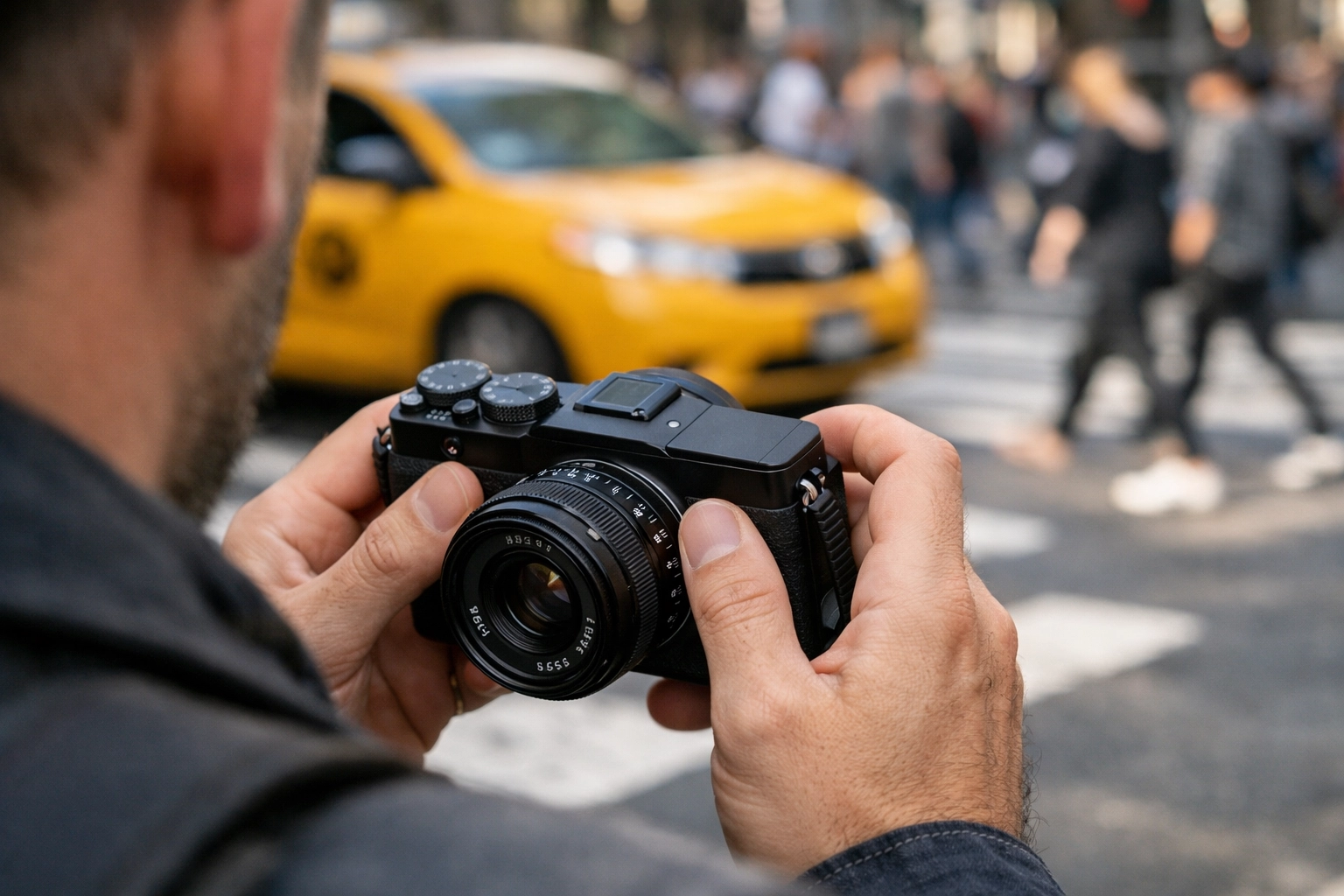
Your choice of lens dictates the relationship you have with your subject. In the world of fine art photography, the most authentic moments often come from being physically close to the action. This is why prime lenses: specifically the 35mm and 50mm: are the gold standard for NYC street photography.
- The 35mm Lens: This matches the natural field of view of the human eye. It forces you to get close enough to feel the energy of the street while still providing enough context to tell a story about the environment.
- The 50mm Lens: Often called the "Nifty Fifty," this lens is perfect for isolating subjects and creating a more intimate, cinematic look. It provides a beautiful compression that makes the city streets feel layered and dense.
Technical Mastery: Camera Settings for Constant Change
New York is a city of high-contrast light. One minute you are in the blinding midday sun of a crosswalk, and the next, you are swallowed by the deep, blue shadows of a narrow alleyway in Tribeca. To ensure you never miss a fleeting moment, you must master your settings so they become second nature.
I recommend using Aperture Priority mode. This allows you to control the depth of field: essential for that fine art photography look: while the camera handles the rapidly changing light levels. During the day, keep your aperture around f/8 to ensure everything from the foreground to the background remains sharp. As the sun dips behind the skyline, open up to f/2.8 or wider to let in every available drop of light.
Recommended Settings for NYC Street Photography
| Environment | Aperture | Shutter Speed | ISO |
|---|---|---|---|
| Midday Sun | f/8 – f/11 | 1/500s or faster | 100 – 400 |
| Deep Shadows / Alleys | f/4 – f/5.6 | 1/250s | 400 – 800 |
| Golden Hour | f/2.8 – f/4 | 1/200s | 800 – 1600 |
| Night / Neon Lights | f/1.8 – f/2.8 | 1/125s | 3200+ |
By locking in these parameters, you empower yourself to focus on composition and timing rather than fiddling with dials while a perfect moment vanishes before your eyes.
The Art of Being Invisible
The biggest hurdle for most photographers in NYC is the fear of being noticed. If your subject sees you pointing a camera at them, the "raw" moment is gone, replaced by a pose or a look of annoyance. To capture emotional storytelling in photography, you have to become a ghost.
You achieve this through your body language. Avoid making direct eye contact with your subjects. Instead, look slightly past them or at the architecture behind them. People will assume you are waiting for the light to hit a building or capturing a wide landscape. Another pro technique is "shooting from the hip." By holding your camera at waist level and using a wide-angle lens, you can capture incredibly candid perspectives without ever bringing the viewfinder to your eye.
Your clothing also plays a role. Leave the bright colors and heavy branding at home. Wear dark, muted tones that allow you to blend into the shadows and the crowds. The goal is to be just another face in the sea of eight million people.
Emotional Storytelling: Beyond the Surface
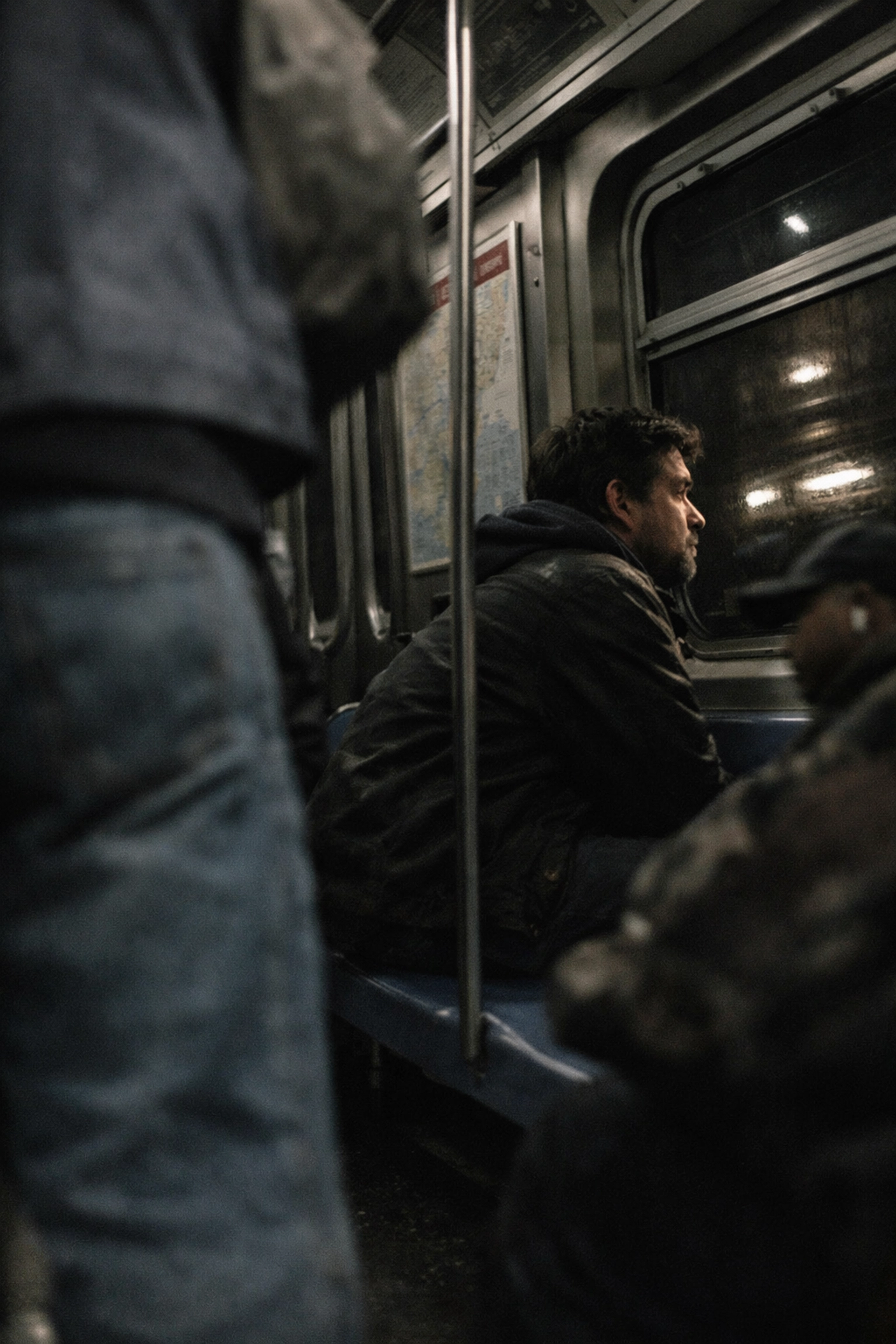
Anyone can take a photo of a yellow taxi. But you are looking for something deeper. You are looking for the "fine art" in the everyday. This comes down to emotional storytelling. Look for juxtapositions: a businessman in a tailored suit sitting next to a street performer, or a moment of quiet reflection in the middle of a chaotic subway station.
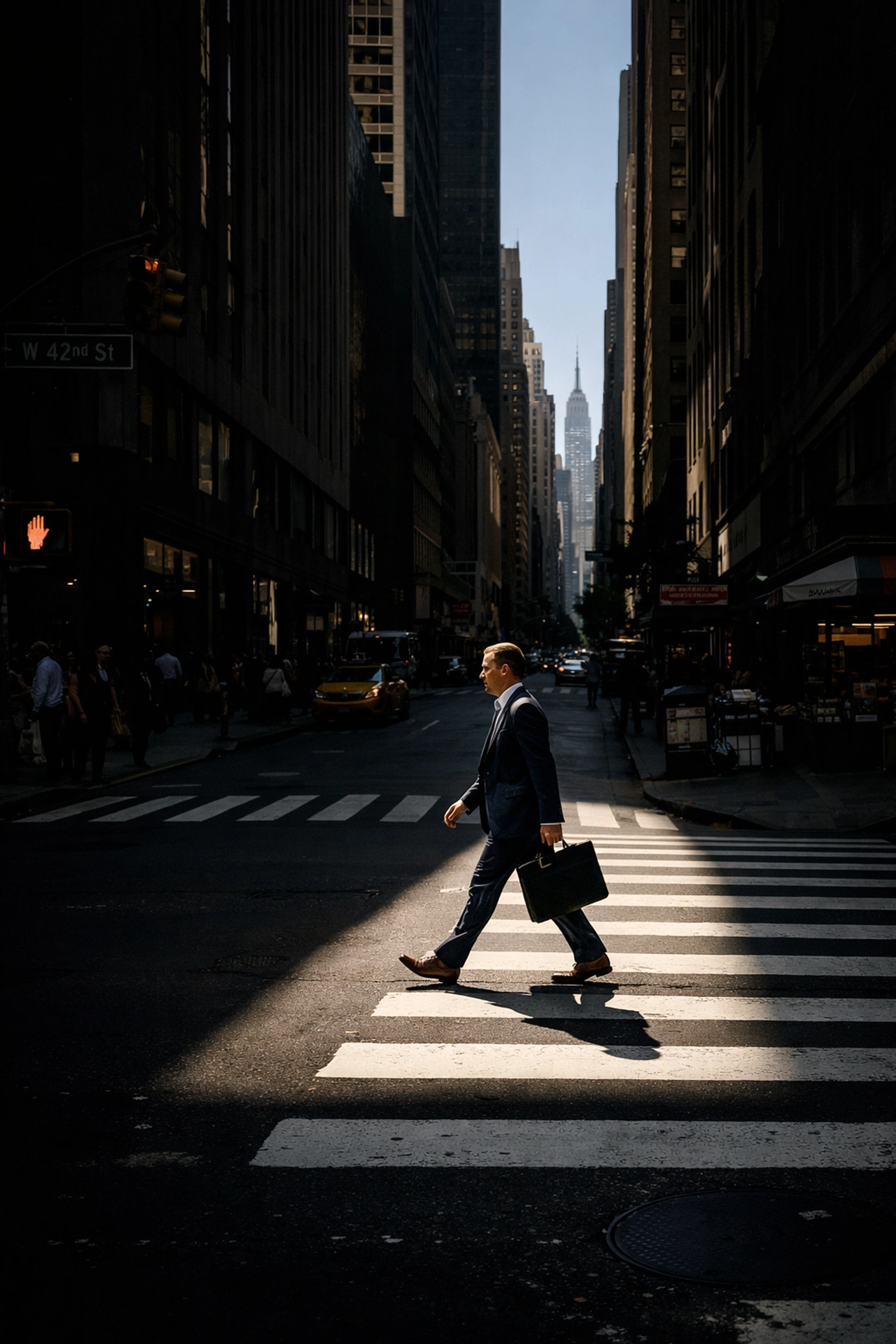
Wait for the "decisive moment": the concept popularized by Henri Cartier-Bresson. This is the split second where the elements of a scene align to tell a story. Maybe it's the way a shaft of light hits a commuter's face, or the perfect symmetry of two people walking in opposite directions.
To help you find these elusive moments, I’ve put together the New York City Photography Guide. It doesn't just show you where to stand; it teaches you how to see the city through a professional lens, ensuring your portfolio stands out from the noise.
Strategic Positioning: Letting the Shot Come to You
One of the most common mistakes photographers make in NYC is walking too much. While exploring is great, the best street photography often happens when you find a "stage" and wait for the actors to enter.
Identify a location with great light, interesting textures, or a compelling background: like a weathered brick wall in the West Village or the grand arches of Grand Central Terminal. Once you’ve framed your shot, stand still. Let the city move through your frame. Eventually, the right person, the right light, or the right action will enter the scene, and you will be ready to capture it. This patience is what separates a snapshot from a piece of fine art.
Transforming Street Shots into Fine Art
Once you’ve captured your raw moments, the journey isn't over. The way you process your images determines their final impact. In street photography, high-contrast black and white or moody, desaturated colors often work best to emphasize the textures of the city.
If you want to achieve my signature look: that blend of grit and elegance: you can explore my professional Lightroom Presets. For the most consistent, portfolio-ready results across changing NYC light, the Ultimate Lightroom Preset Collection gives you a complete, cohesive toolkit to keep your edits unified from subway shadows to neon-lit avenues. These tools are designed to elevate your raw files into museum-quality prints, highlighting the emotional depth of every shadow and highlight.
Take Your Skills to the Next Level
Reading about street photography is one thing; practicing it on the pavement is another. If you truly want to master the art of the street, there is no substitute for hands-on experience under the guidance of a pro.
I host exclusive NYC Photography Workshops where we dive deep into these techniques. We’ll walk the streets together, finding hidden gems and perfecting your ability to capture the city’s raw energy in real-time. Whether you are a beginner looking to understand your camera or a seasoned pro wanting to refine your eye for emotional storytelling, these tours provide an unparalleled educational experience.
With these considerations in mind, you are ready to conquer the streets. New York City is waiting for you to tell its story. Grab your camera, keep your eyes open, and don't be afraid to get a little grit on your lens.
For more tips and inspiration, keep exploring Edin Chavez Photography and check out my latest fine art collections at Edin Studios. Your journey into the heart of the city starts now.


