
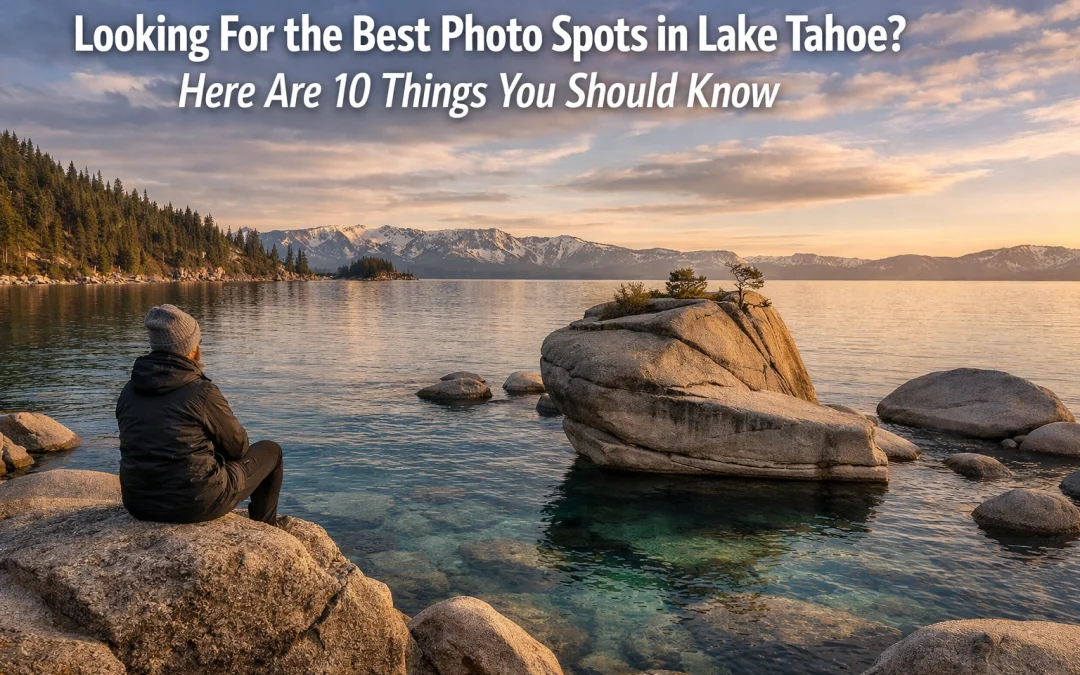
As you stand on the edge of the Sierra Nevada mountains, the crisp alpine air filling your lungs, you realize that Lake Tahoe isn’t just a destination: it’s a playground for your lens. Whether you are a seasoned pro or a hobbyist looking to capture your first masterpiece, the search for the best photo spots Lake Tahoe can feel overwhelming because of the sheer scale of the landscape. You are looking at 191 square miles of crystal-clear water, jagged granite peaks, and hidden coves that demand your attention.
To truly master landscape photography Lake Tahoe, you need more than just a camera; you need a strategy. You need to know when the light hits the boulders at Sand Harbor, how to navigate the steep descent to Bonsai Rock, and why the "Secret Cove" isn't just a name, but a specific window of opportunity. This guide is designed to empower you with the insider knowledge required to elevate your portfolio and ensure you don’t miss the shots that define this iconic location.
1. Emerald Bay is the Crown Jewel for a Reason
Just as the sun begins to peek over the eastern ridge, you’ll find that Emerald Bay becomes a theater of light. It is arguably the most photographed spot in the region, and for good reason. From the dedicated overlook, you have a perfect view of Fannette Island, the only island in the lake. To get the best results, you must arrive at least 45 minutes before sunrise.
The water here often stays calm in the early hours, acting like a giant mirror that reflects the surrounding peaks with stunning clarity. If you want to take your images to the next level, consider hiking down to the shoreline near Vikingsholm. Capturing the island from water level provides a sense of scale that the overlooks simply can’t match. For those looking to master the post-processing of these high-contrast sunrise shots, using the Ultimate Lightroom Preset Collection ensures your colors are as vibrant as the real thing.
2. Bonsai Rock Requires Precision Timing
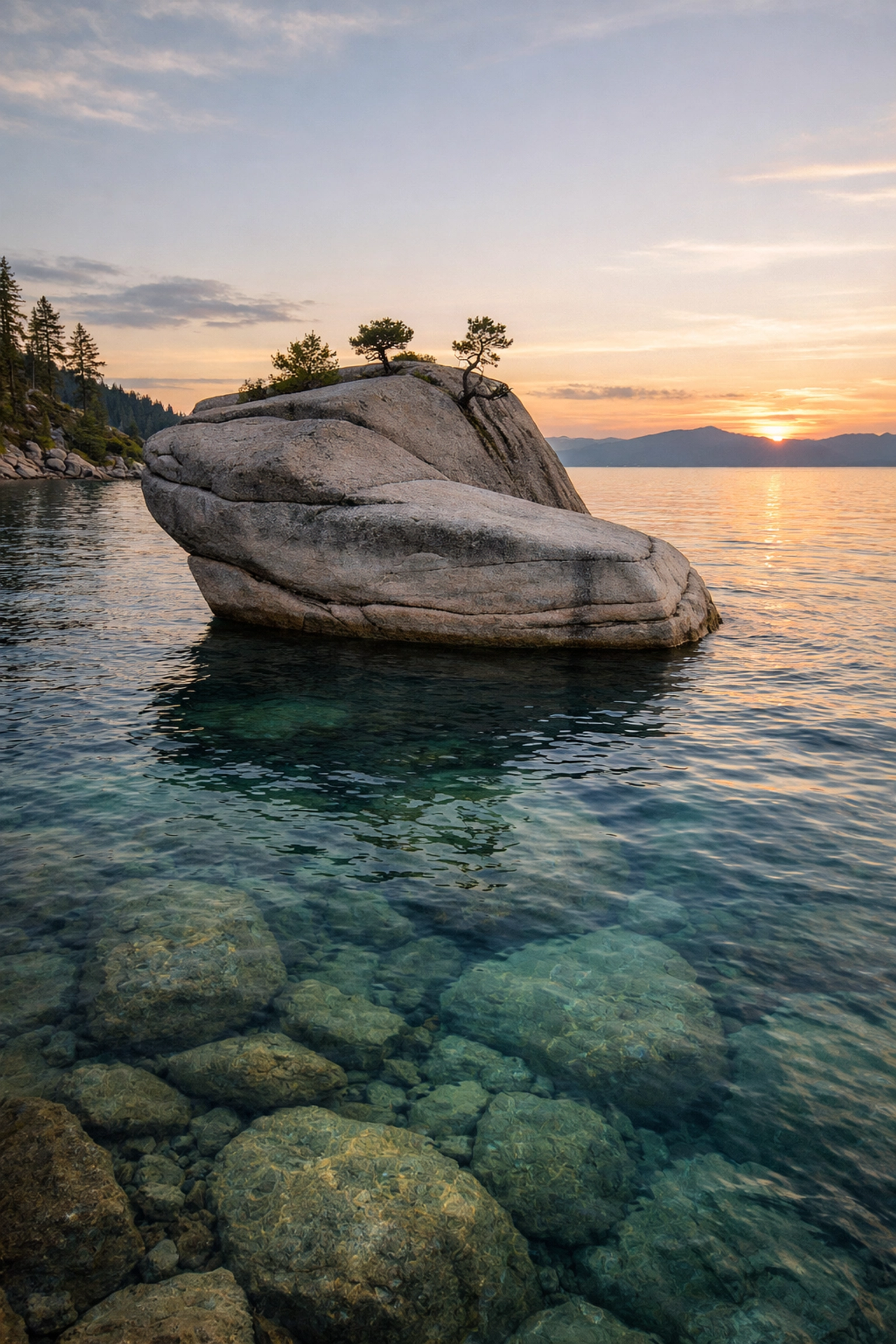
You have likely seen the images of a solitary granite boulder with four small trees growing from its top. This is Bonsai Rock, one of the most unique Lake Tahoe photography locations. Located on the East Shore, it offers a minimalist aesthetic that is hard to find elsewhere. However, reaching it involves a short but steep scramble down from the highway.
The best time to shoot here is during sunset. As the sun dips low, it illuminates the granite and glows through the turquoise water. If you are using a drone, midday is actually spectacular because the overhead light reveals the underwater rock formations surrounding the "bonsai" trees.
3. Secret Cove and the Turquoise Water Illusion
Many photographers visit Tahoe specifically for the Caribbean-like water. To capture this, you should head to Secret Cove. It is famous for its boulder-strewn shoreline and vibrant water colors. Because this area faces west, the afternoon light is your best friend.
When you are shooting at Secret Cove, a Circular Polarizer (CPL) is non-negotiable. This filter allows you to cut through the surface reflection, revealing the incredible rock textures beneath the water. Without it, you’re missing half the story. If you want to see how these professional-grade images look when printed on high-end materials, check out the work at Edin Fine Art.
4. Master the Altitude and Lighting Conditions
At over 6,200 feet, the light in Lake Tahoe is thinner and harsher than what you might experience at sea level. This means your shadows will be darker and your highlights will blow out faster. You need to adapt your technique to handle this high dynamic range.
| Location | Best Light | Difficulty | Essential Gear |
|---|---|---|---|
| Emerald Bay | Sunrise | Easy | Wide-angle lens, Tripod |
| Bonsai Rock | Sunset | Moderate | ND Filters, Sturdy boots |
| Cave Rock | Sunset | Easy | Mid-range zoom, Windbreaker |
| Sand Harbor | Golden Hour | Easy | CPL Filter, Waterproof shoes |
| Monkey Rock | Morning | Hard | Telephoto lens (for compression) |
By understanding these variables, you ensure that every shutter click counts. You can find more detailed breakdowns of these technical requirements in our Lake Tahoe Photography Guide.
5. Cave Rock Offers a 180-Degree Masterclass
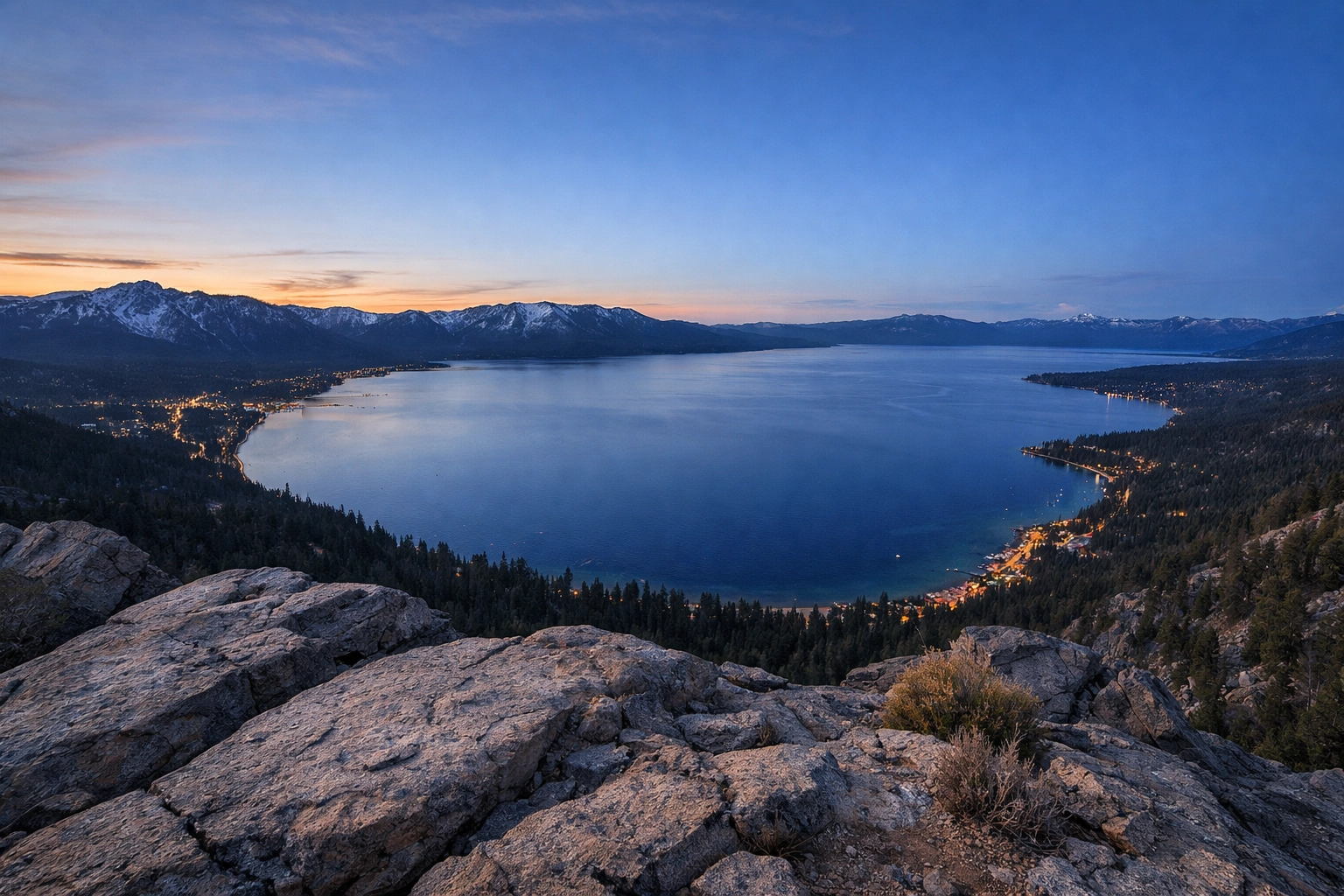
If you want a panoramic view of the South Shore, Cave Rock is your destination. A very short hike from the parking area leads you to a vantage point that feels like you’re hovering over the water. This spot is particularly effective for sunset photography. You can watch the sun disappear behind the mountains on the California side, casting long, dramatic shadows across the lake.
The wind can pick up quickly here, so ensure your tripod is weighted down. The "vibe" at Cave Rock is expansive and powerful; it’s the place to go when you want to capture the vastness of the Sierra Nevadas.
6. Sand Harbor and the Art of Composition
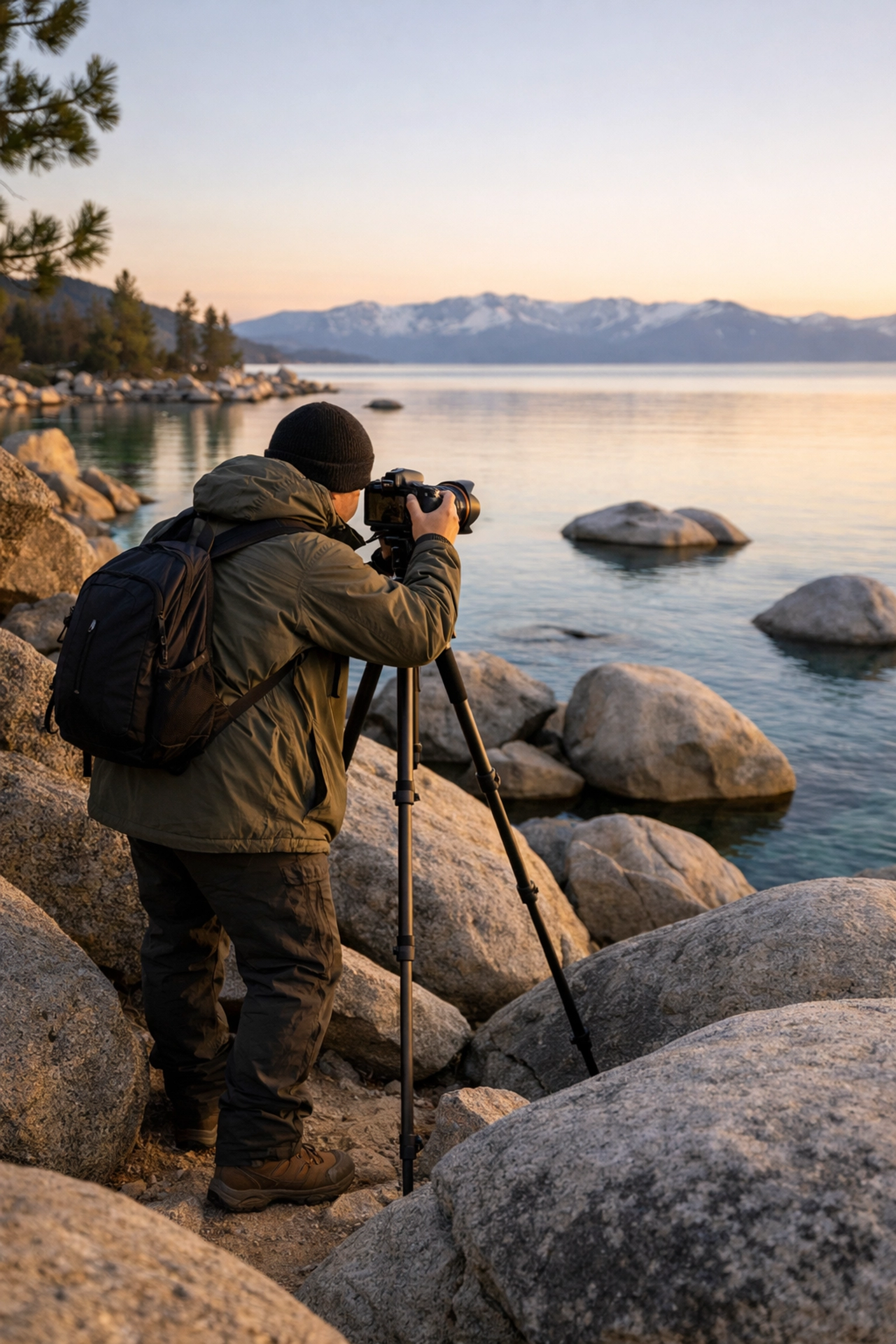
Sand Harbor is perhaps the most accessible of the best photo spots Lake Tahoe has to offer, but don't let the crowds deter you. The rock formations here are world-class. You’ll find smooth, bulbous granite stacks that look like they were sculpted by hand.
To avoid the tourists, visit during the shoulder seasons (spring or fall). During these times, you have the shoreline almost to yourself. Focus on using the rocks as leading lines that point toward the distant mountains. This technique creates a sense of depth that propels the viewer into the frame. For a deeper look at how to structure your shots, Edin Studios offers professional insights into fine art composition.
7. The Power of Long Exposures on the Shoreline
Lake Tahoe is known for its clarity, but sometimes the surface can be choppy. This is where your Neutral Density (ND) filters come into play. By using a 6-stop or 10-stop ND filter, you can extend your shutter speed to 30 seconds or more. This turns the splashing waves into a smooth, ethereal mist, making the granite boulders appear as if they are floating in a dreamscape.
This technique is especially effective at locations like Zephyr Cove or Skunk Harbor. It adds a level of professional polish to your landscape photography Lake Tahoe that sets your work apart from the thousands of snapshots taken every day.
8. Navigating the Seasonal Shifts
Your experience in Lake Tahoe will change drastically depending on the month.
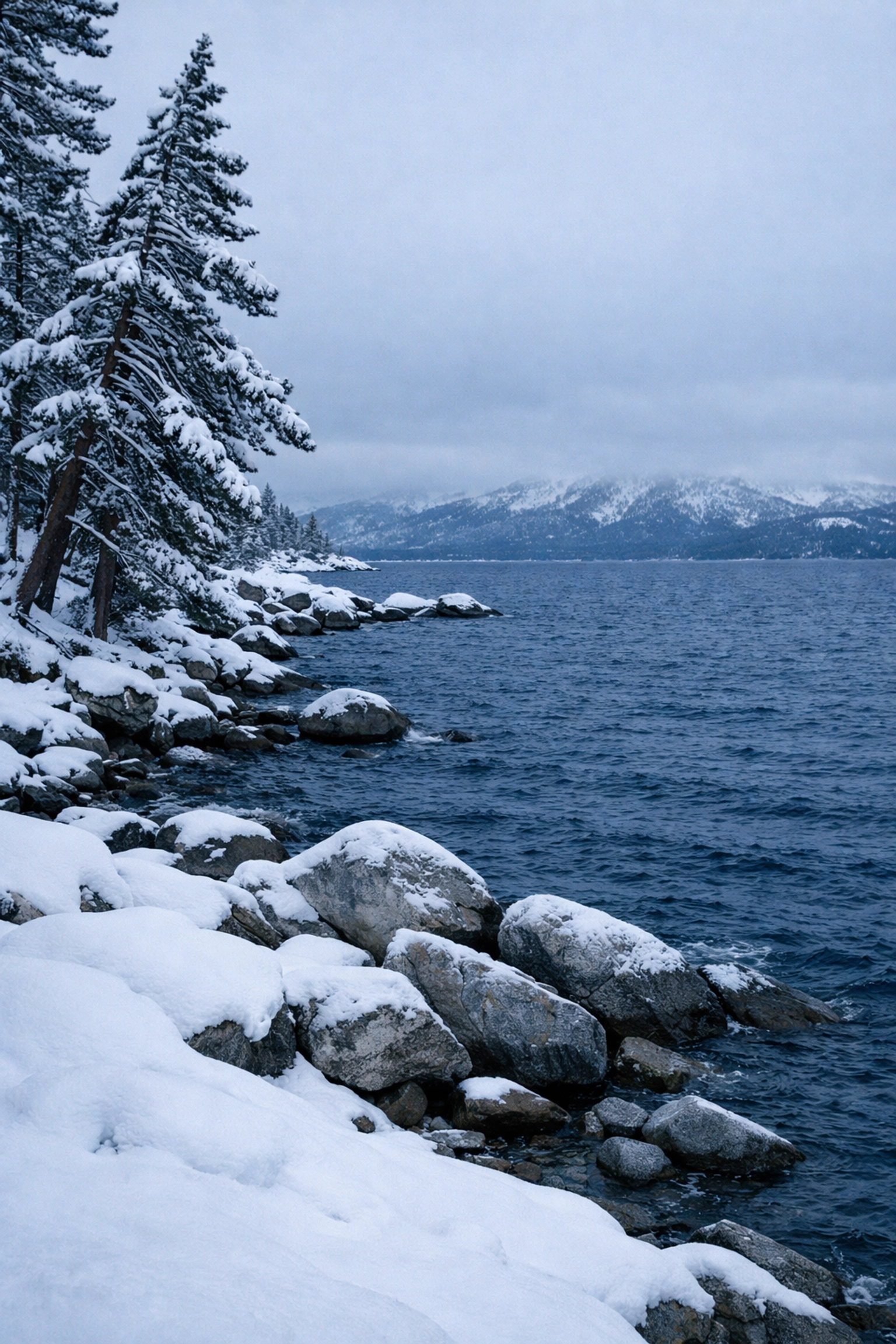
- Winter: The peaks are capped with snow, providing a high-contrast, black-and-white aesthetic.
- Spring: The waterfalls (like Eagle Falls) are at peak flow, offering incredible foreground interest.
- Summer: The water is at its most vibrant turquoise, perfect for "lifestyle" landscape shots.
- Fall: The aspens turn gold, particularly in Hope Valley just south of the lake.
Each season offers a unique opportunity to expand your portfolio. To keep your editing consistent across these changing colors, the Ultimate Lightroom Preset Collection is an essential tool in your digital darkroom.
9. Drone Photography: Know the Rules
While Lake Tahoe is a drone pilot's dream, you must be aware of the restrictions. Large portions of the shoreline are within State Parks where drone takeoff and landing are prohibited. However, there are many "National Forest" areas where you can legally fly.
Capturing Bonsai Rock or the East Shore from 200 feet up reveals patterns in the lakebed that are invisible from the shore. The sand channels and deep blue drop-offs create abstract compositions that are simply breathtaking. Always check the latest FAA and local regulations before you launch.
10. Why You Need a Dedicated Guide
You could spend weeks wandering the shores of Tahoe and still miss the best light. The difference between a "good" photo and a "fine art" photo often comes down to being in the exact right spot at the exact right minute. We have spent years scouting these locations, tracking the sun's path, and learning the nuances of the terrain.
Our Lake Tahoe Photography Guide is more than just a list of spots; it’s a tactical manual for your success. It includes GPS coordinates, parking tips, and specific gear recommendations for every major location around the lake. By integrating this knowledge into your workflow, you empower yourself to create the best work of your career.
Elevate Your Craft
Lake Tahoe is a place of infinite beauty, but it rewards the prepared. From the mirror reflections of Emerald Bay to the hidden granite gems of the East Shore, your journey through these Lake Tahoe photography locations will be one of the most rewarding experiences of your life. Take the time to plan, invest in the right tools, and respect the natural landscape.
Hence, whether you are shooting for a gallery or for your own personal collection, these tips provide the foundation you need. For more insights on how to elevate your work, explore our blog for a deep dive into hundreds of tutorials and guides.
With these considerations in mind, grab your gear, head to the mountains, and start capturing the magic of the Sierras. For more insights on how to elevate your work, explore our site for a deep dive into hundreds of tutorials and guides.


