
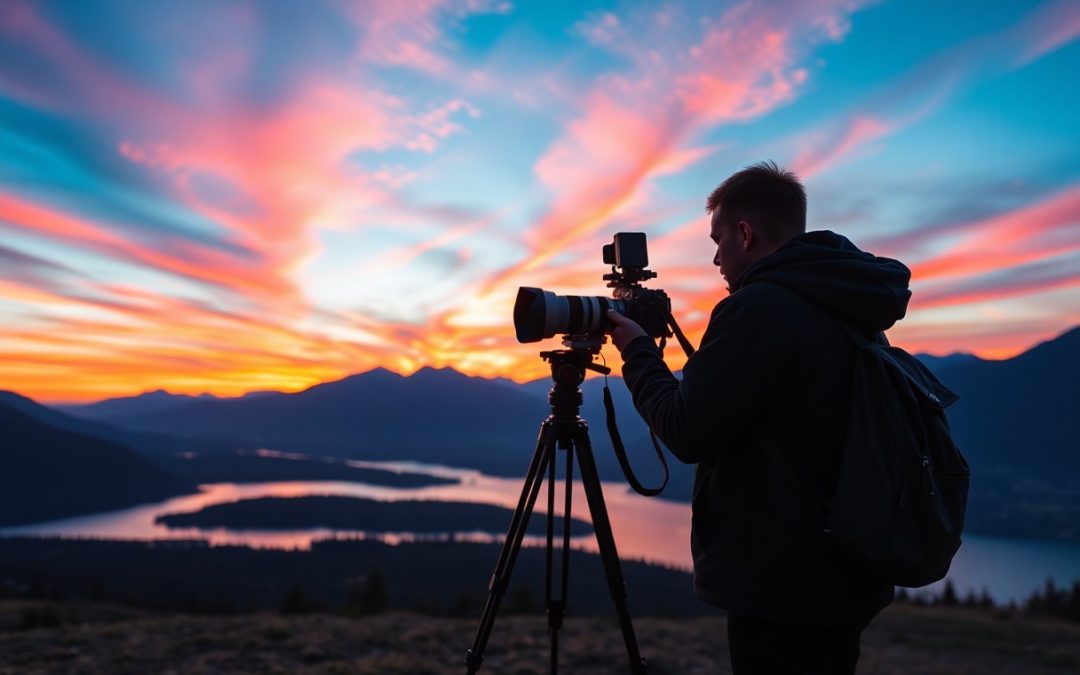
This guide equips you with dynamic techniques to elevate your photography game. As you explore these tips, you’ll learn how to harness natural light, compose stunning shots, and utilize sophisticated editing tools. Whether you’re an aspiring photographer or looking to refine your skills, these insights will empower you to transform your shots into breathtaking visuals. Get ready to unlock your creative potential and captivate your audience with every frame!
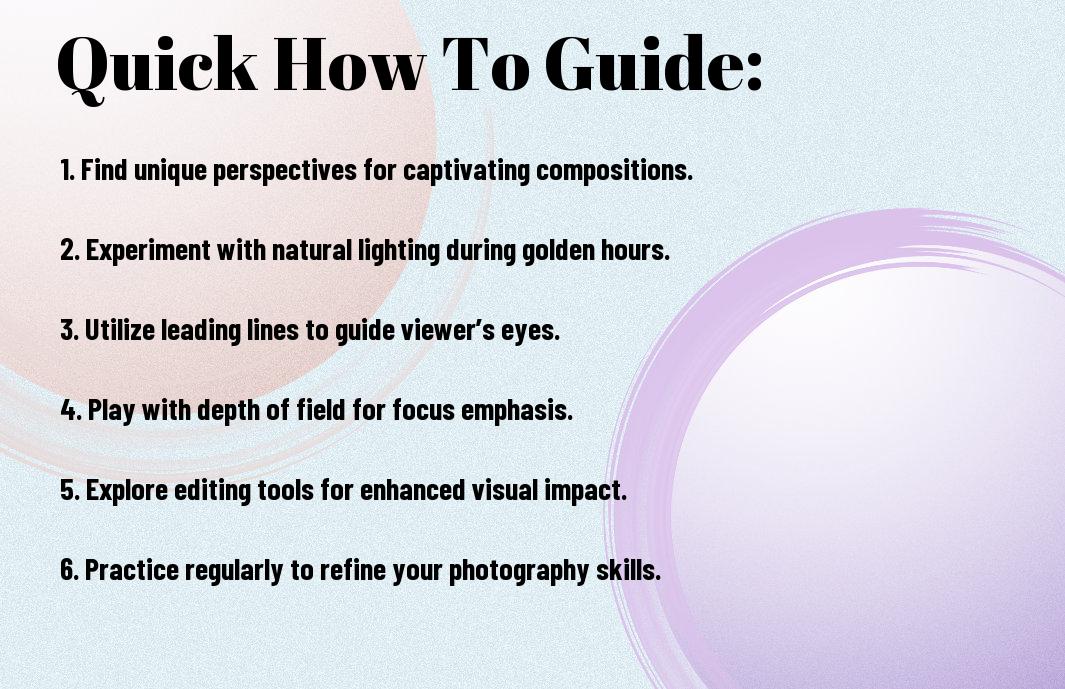
Understanding the Basics
While submerging into photography can feel overwhelming, mastering the fundamentals is your first step towards capturing breathtaking images. Familiarizing yourself with crucial concepts such as exposure, light, and composition will empower you to elevate your photography skills. Building a solid foundation will allow you to experiment with your creativity and achieve stunning results in every shot you take.
Essential Camera Settings
Now that you understand the basics, it’s time to fine-tune your camera settings. Focus on the trio of exposure settings: aperture, shutter speed, and ISO. By adjusting these parameters, you can control how much light enters your camera, how motion is captured, and how high-quality images remain clear and vibrant even in low-light conditions. Finding the right balance will set the stage for your successful shots.
Composition Fundamentals
Clearly, composition is what transforms a simple photograph into an engaging visual narrative. Understanding principles like the rule of thirds, leading lines, and framing will enable you to guide your viewer’s eye through the scene effectively. It’s crucial to compose your shots thoughtfully, as this harmonious arrangement allows your subject to stand out while enhancing the overall aesthetic of your image.
To improve your composition skills, start by practicing the rule of thirds—dividing your frame into a 3×3 grid and placing key elements along those lines or at their intersections. This technique creates balance and visual interest. Additionally, seek out leading lines—natural pathways that draw the viewer’s eye into the photograph. Experimenting with different angles and perspectives can further enhance your composition, providing a fresh and engaging take on your subject matter.
Lighting Techniques
Some of the most impactful moments in photography stem from mastering lighting techniques. You can transform ordinary scenes into extraordinary shots by understanding how to manipulate light. Whether you’re shooting in natural environments or using artificial sources, the right lighting can dramatically affect the mood and clarity of your images.
Natural Light Utilization
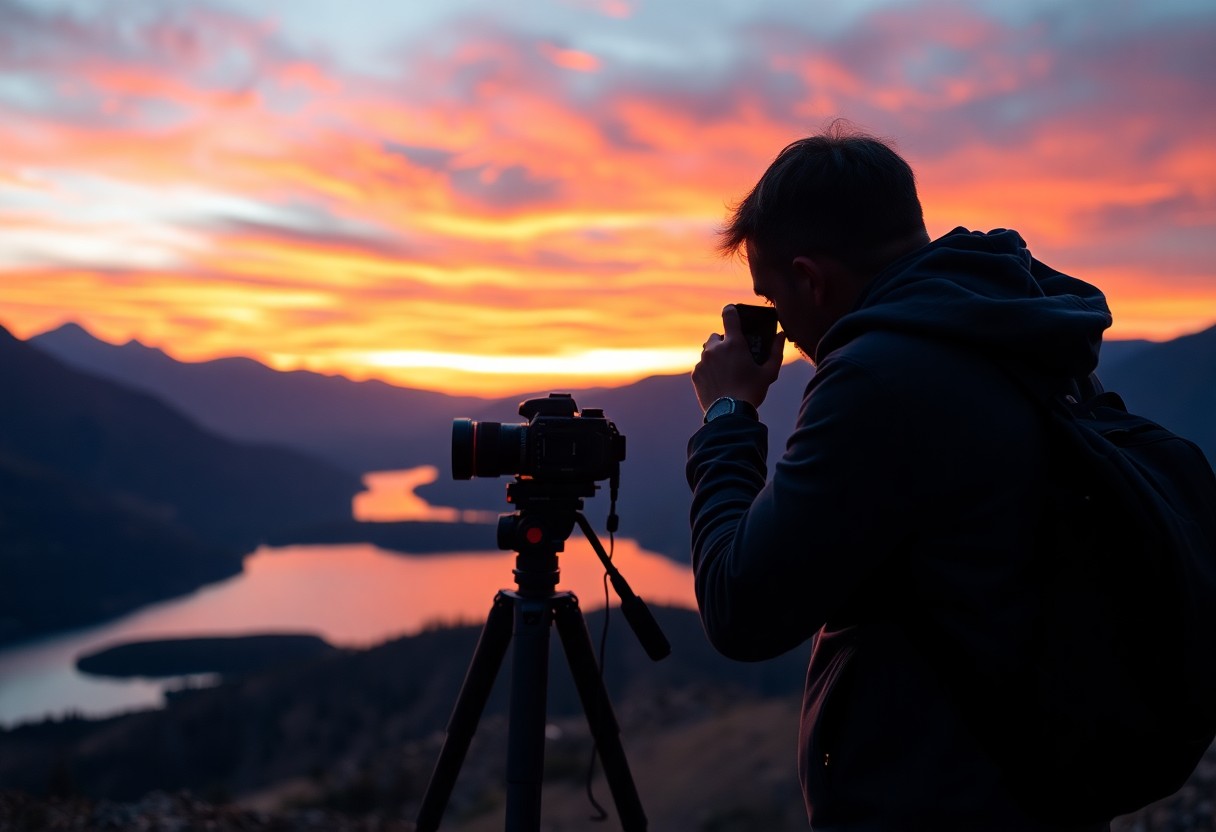
Utilization of natural light can elevate your photography significantly. Early morning and late afternoon, often referred to as the golden hour, provide soft, warm light that enhances textures and colors in your shots. By positioning yourself strategically relative to the light source, you can create stunning silhouettes, capture vibrant colors, and add depth to your compositions.
Using Flash Effectively
Effectively using flash can dramatically enhance your photography, especially in low-light situations. A well-timed flash can freeze motion, illuminate your subject, and create dynamic lighting effects that add interest to your images.
This powerful tool, when used thoughtfully, avoids harsh spots and unnaturally bright areas. You can bounce your flash off walls or ceilings to soften the light, leading to more flattering results. Additionally, utilizing diffusers or adjusting your flash settings will help blend the artificial light with natural sources, resulting in a more balanced and professional appearance in your photographs.
Choosing the Right Equipment
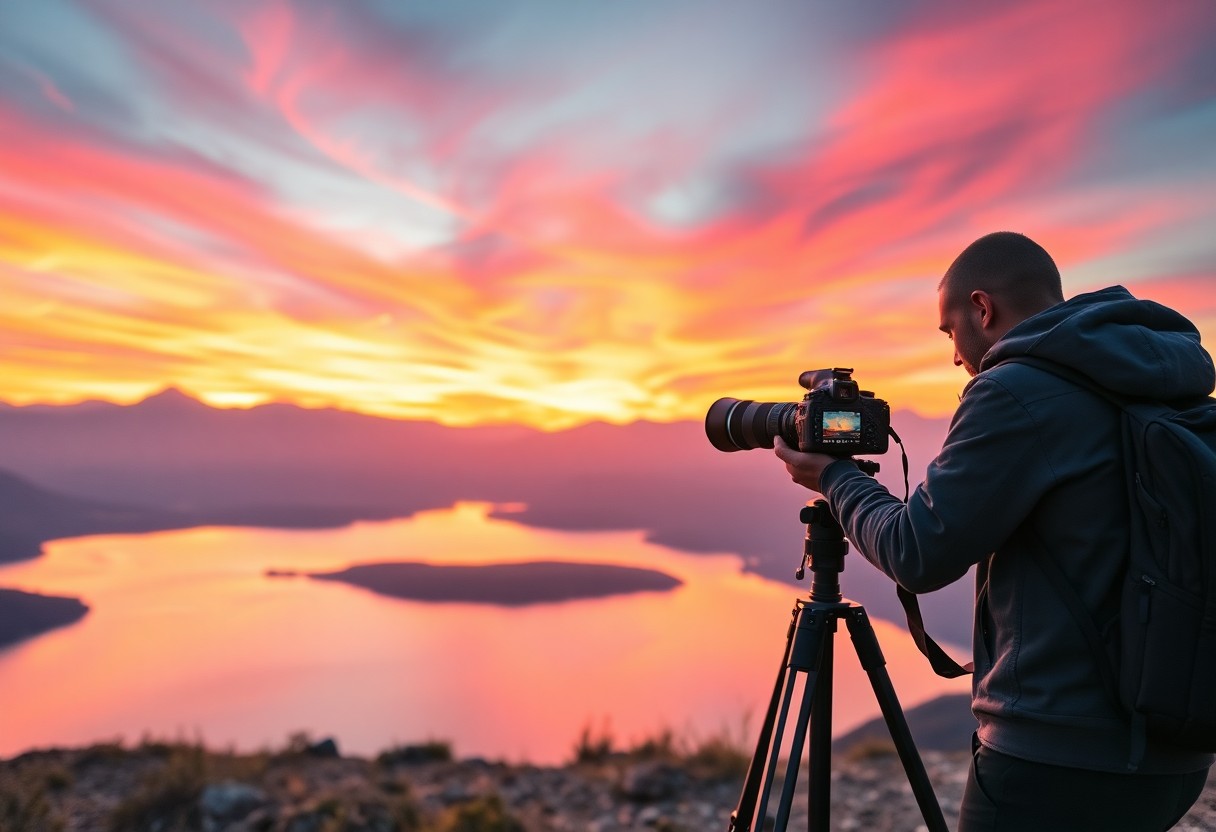
Now that you are ready to probe the world of photography, selecting the right equipment is vital for maximizing the quality of your shots. Your choice of camera, lenses, and accessories can significantly influence your photographic capabilities and creativity. Take time to evaluate your needs, budget, and the type of photography you want to pursue, as the right gear will empower you to capture stunning images that reflect your unique vision.
Essential Gear for Beginners
Essential pieces of equipment for beginners include a reliable camera, a versatile lens, a sturdy tripod, and a quality memory card. A DSLR or mirrorless camera offers flexibility and room for growth, while a standard zoom lens allows you to experiment with different compositions. A tripod ensures stability, especially in low light, and a fast memory card is key for continuous shooting.
Upgrading Your Photography Kit
Right when your skills start to develop, consider upgrading your photography kit to further improve your craft. Enhanced lenses, creative accessories, and advanced camera features can open new photographic opportunities and elevate the quality of your work.
Understanding when and how to upgrade your gear is about recognizing the gaps in your current setup. If you frequently find yourself limited by your lens or lack the ability to shoot in varying light conditions, it may be time to invest in a prime lens or a camera with superior low-light performance. Additionally, accessories like filters or external flashes can enhance your versatility significantly, allowing you to expand your creative possibilities and elevate your photography to the next level.
Creative Techniques
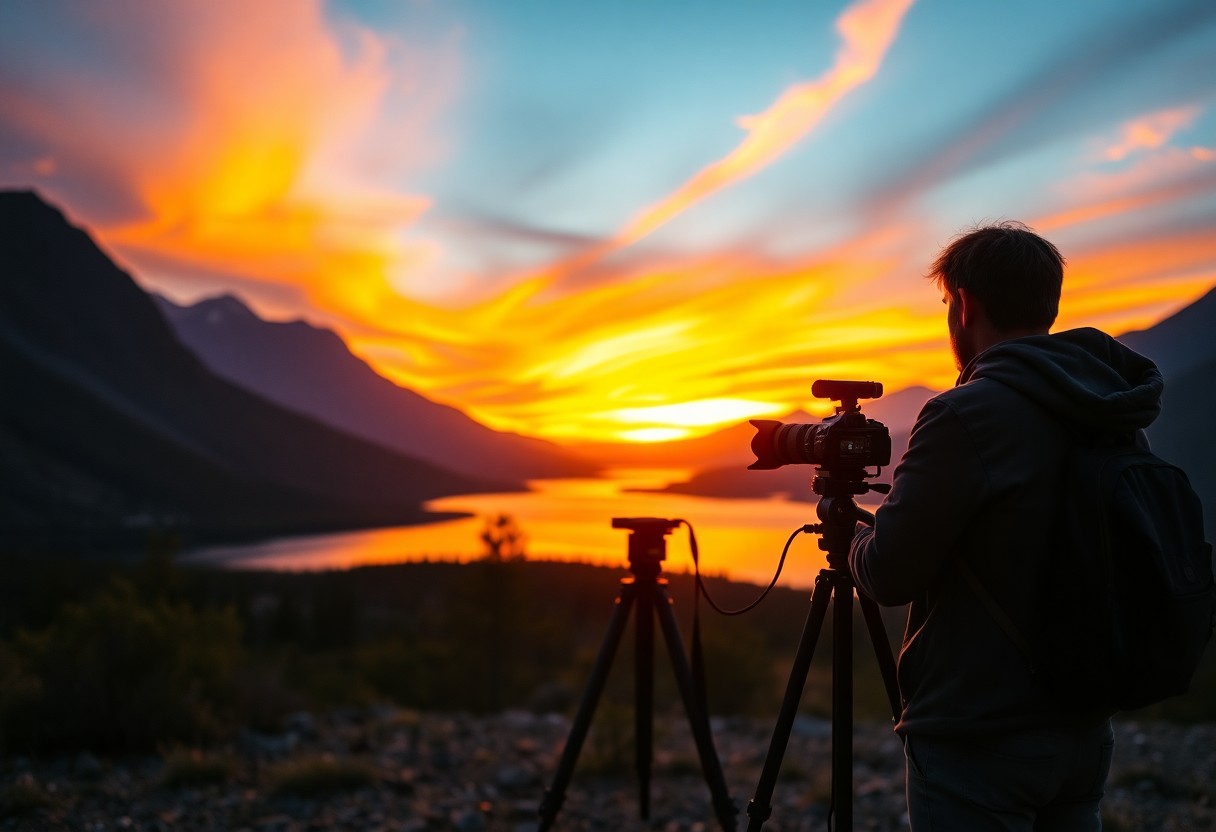
Despite the vivid scene in front of you, conventional methods can sometimes yield lackluster photos. Embracing creative techniques will breathe new life into your photography and help unlock those breathtaking shots you envision. Whether through manipulation of light or perspective, exploring these techniques will enhance your artistic expression and engage viewers with your unique visual storytelling.
Long Exposure Photography
Creative long exposure photography can transform ordinary scenes into dynamic works of art. Utilizing a slow shutter speed allows you to capture the passage of time, enabling you to produce mesmerizing effects such as smooth water flows or ghostly figures. To achieve this, you’ll need a sturdy tripod to prevent camera shake, as well as a neutral density filter to limit light intake. By experimenting with various settings, you’ll discover the enchanting possibilities that long exposure offers.
Experimenting with Angles
The art of photography is heavily dictated by perspective, and experimenting with angles can significantly elevate your images. Instead of always shooting from eye level, consider crouching low or climbing to a higher vantage point. This simple shift in viewpoint can provide unique framing, highlight interesting details, and evoke fresh emotions in your audience.
Understanding how different angles influence the mood and composition of your shots is important in creating engaging photographs. Allow your creativity to take charge as you move around your subject, seeking unconventional perspectives. The more angles you explore, the more you’ll uncover hidden aspects of your subject, resulting in images that resonate with viewers and showcase your artistic vision.
Post-Processing Tips
Keep your images captivating with effective post-processing techniques. Start by adjusting brightness and contrast to enhance details, and don’t shy away from experimenting with color correction. Here are some vital tips:
- Crop to improve composition.
- Apply sharpening to enhance textures.
- Utilize filters for mood enhancement.
- Save in multiple formats for versatility.
Recognizing the potential of post-processing can elevate your photography dramatically.
Editing Software Overview
Clearly, choosing the right editing software can significantly affect your workflow and outcomes. Options range from professional programs like Adobe Lightroom and Photoshop to user-friendly alternatives like Canva or Snapseed. It’s important to pick software that aligns with your skill level and editing goals.
Key Editing Techniques
Tips for optimal editing include exploring various corrections to enhance your images. First, focus on adjusting exposure and contrast to set a solid foundation. Color grading is another powerful technique that dramatically alters the mood of your shot. Additionally, don’t overlook the impact of cropping and straightening to tighten your composition.
Software offers a suite of tools that can transform your photography into art. Features like graduated filters can help in managing exposure in landscapes, while brush tools allow precise adjustments for specific areas. Experimenting with layers and masks leads to more intricate edits, which can make your images stand out in a saturated market.
Factors Influencing Your Shots
Unlike what many believe, various external elements can dramatically impact the quality of your photography. Consider these factors:
- Lighting conditions
- Weather and natural elements
- Your subject’s movement
- Lens and camera settings
Thou must consider these influences to capture breathtaking images.
Weather and Natural Conditions
Any photographer knows the importance of weather and natural conditions in shaping the final outcome of your shots. Overcast days can soften shadows and provide even lighting, while sunny days create bold contrasts and vivid colors. Embrace fog or rain, as these can add drama and a unique atmosphere to your images. Always check your local forecast and adapt your approach accordingly.
Time of Day Considerations
Any moment of the day can yield its own unique beauty, but understanding the golden hours can elevate your photography. Early mornings or late afternoons bathe scenes in warm, flattering light, enhancing textures and colors. The harsh midday sun can create stark shadows and less desirable contrasts, so consider how you want to portray your subject when planning your shoot.
Conditions during the golden hours produce softer light, resulting in stunning photographs that highlight depth and dimension. You will find that colors tend to be warmer and more saturated, drawing the viewer in. By scheduling your outdoor shoots around these periods, you allow your images to showcase the beauty of both your subject and their surroundings, giving you a significant advantage in achieving that breathtaking look.
Summing up
Taking this into account, by implementing these dynamic how-to tips, you can transform your photography skills and capture breathtaking images that stand out. Focus on understanding lighting, composition, and the effective use of your camera’s features. Experiment with different perspectives and techniques to enhance your artistic vision. As you practice and refine your approach, your shots will not only showcase stunning visuals but also reflect your unique style, turning every moment into a captivating work of art.


