Just as the crisp alpine air hits your lungs for the first time, you realize that Lake Tahoe isn’t just a body of water; it’s a high-altitude sanctuary for your camera. Whether you are a seasoned pro or someone who just picked up their first mirrorless kit, this place will challenge you and reward you in equal measure. But before you start clicking away, you need to know that capturing the "Big Blue" isn't as simple as showing up and pointing your lens at the horizon.
As you plan your journey through the Sierra Nevada, you’ll find that Lake Tahoe photography locations are as diverse as they are stunning. From the granite boulders of the east shore to the dramatic vistas of Emerald Bay, your creative options are limitless. However, navigating the logistics, the lighting, and the crowds requires a bit of insider knowledge. That’s why I’ve pulled together these 10 essential tips and locations to ensure your landscape photography Lake Tahoe expedition is nothing short of legendary.
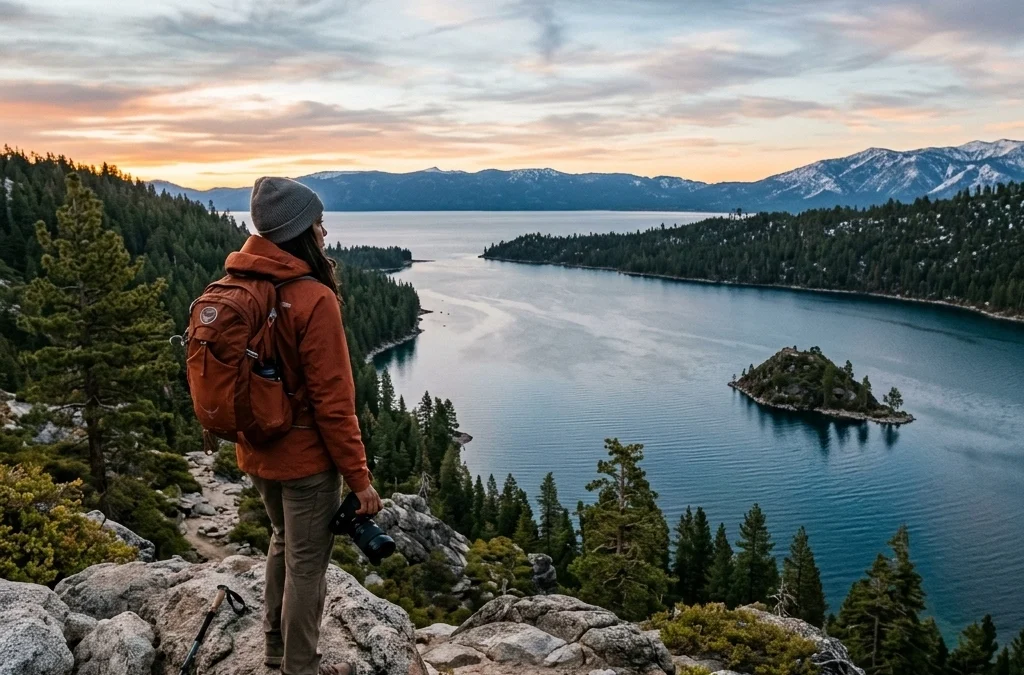
1. Emerald Bay is the Unrivaled Crown Jewel
When you first stand at the overlook of Emerald Bay, your jaw is going to drop. It’s arguably one of the most photographed locations on the planet, and for good reason. The center of the bay features Fannette Island, the only island in Lake Tahoe, topped with a stone "tea house" that looks like something out of a storybook.
To get the shot that everyone else misses, you’ll want to arrive well before sunrise. As the light begins to creep over the mountains to the east, the bay often transforms into a perfect mirror. Your goal is to capture the symmetry of the peaks reflected in the emerald-tinted water. If you're feeling adventurous, hike down to the shore to get a low-angle perspective that emphasizes the clarity of the water against the steep, pine-covered cliffs.
2. Bonsai Rock is Your Zen Master
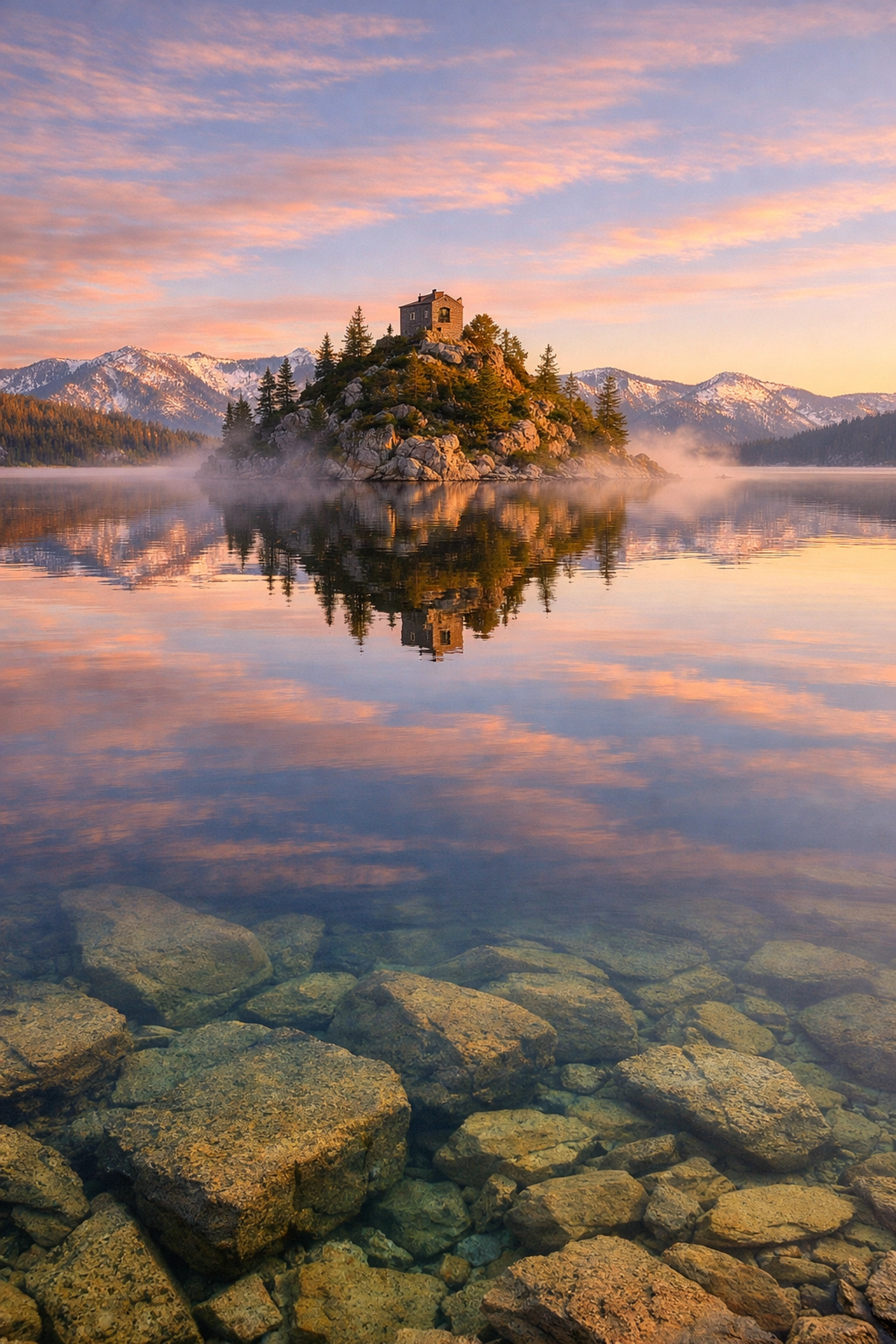
If you are looking for the best photo spots Lake Tahoe has to offer for long exposures, Bonsai Rock is your destination. Located on the east shore, this iconic granite boulder features four tiny trees growing out of its crevices, looking like a natural bonsai arrangement.
Your experience here will vary wildly depending on the time of day. During a calm sunset, the water around the rock becomes translucent, revealing a field of underwater boulders that create incredible foreground interest. By using a solid neutral density filter, you can smooth the water to look as smooth as butter, making the rock and its tiny trees pop against the colorful sky. For those who want to take their editing to the next level after the shoot, check out the Ultimate Lightroom Preset Collection to bring out those subtle Sierra tones.
3. Sand Harbor Offers Crystal Clear Perfection
Sand Harbor is widely known for having the most vibrant turquoise water in the entire lake. When you walk along the boardwalk or the shoreline, the water is so clear you’ll swear the boats are floating in mid-air. This location provides a robust set of options for both wide-angle landscapes and intimate detail shots of the rock formations.
Because Sand Harbor is a state park, it gets crowded fast. Your best bet is to visit during the shoulder season or hit the gates right when they open. The east shore’s granite boulders are perfect for leading lines, directing your viewer’s eye right into the deep blue of the lake. This is a prime spot for anyone following our Lake Tahoe Photography Guide, as it allows for multiple compositions within a short walking distance.
4. Understanding the Tahoe "Turquoise" Effect
Many photographers assume that sunrise and sunset are the only times to shoot. In Tahoe, that’s a mistake. If your goal is to showcase the "Caribbean of the Sierras" look, you actually want the sun to be higher in the sky.
When the sun is overhead, its light penetrates the water and reflects off the white granite sand at the bottom, creating that electric turquoise glow. This is the perfect time for drone photography or shooting from an elevated viewpoint like Monkey Rock. By integrating these midday sessions into your workflow, you ensure a well-rounded portfolio that captures the full spectrum of the lake’s personality.
| Location | Best Time | Primary Subject | Difficulty |
|---|---|---|---|
| Emerald Bay | Sunrise | Fannette Island & Reflections | Easy (Roadside) |
| Bonsai Rock | Sunset | Long Exposure & Granite Boulders | Moderate (Short Scramble) |
| Sand Harbor | Midday | Turquoise Water & Rock Formations | Easy (Paved Paths) |
| Cave Rock | Sunset | 180-Degree Lake Views | Moderate (Hike) |
5. Monkey Rock and the Double Lake View
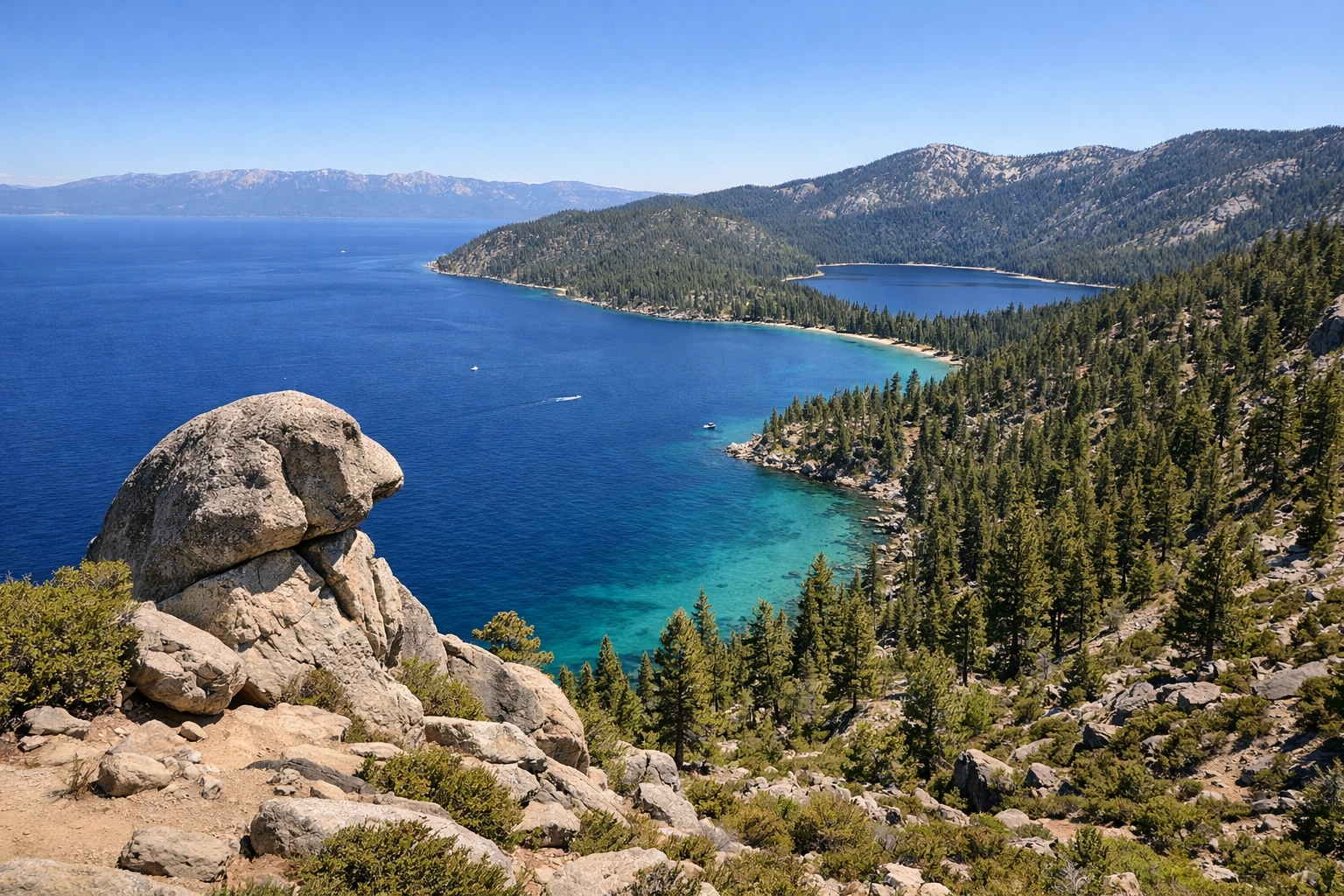
For a perspective that most tourists never see, you need to hike up the Flume Trail to Monkey Rock. As you reach the summit, you’ll be greeted by a rock formation that looks: you guessed it: exactly like a monkey. But the real prize is the view behind it.
From this vantage point, you can position yourself to see Marlette Lake in the foreground with the massive expanse of Lake Tahoe in the background. This "double lake" view is unparalleled and provides a sense of scale that is hard to capture from the shoreline. Your wide-angle lens will be your best friend here, allowing you to bridge the gap between the rugged trail and the distant horizon.
6. The Secret to Secret Cove
Secret Cove is a hidden gem on the east shore that requires a bit of a hike to reach, which helps keep the crowds at bay. This is where you’ll find a perfectly circular cove with some of the most dramatic rock arrangements in the region.
Your lens will love the contrast between the orange-tinted granite and the deep blue water. Because this spot is tucked away, it often remains calm even when the rest of the lake is choppy. This makes it an ideal spot for practicing your "Human-First" fine art style, where the emotion of the landscape takes center stage. For collectors looking for finished pieces that capture this ethereal mood, you can explore the gallery at Edin Fine Art.
7. Cave Rock: The Sunset Sentinel
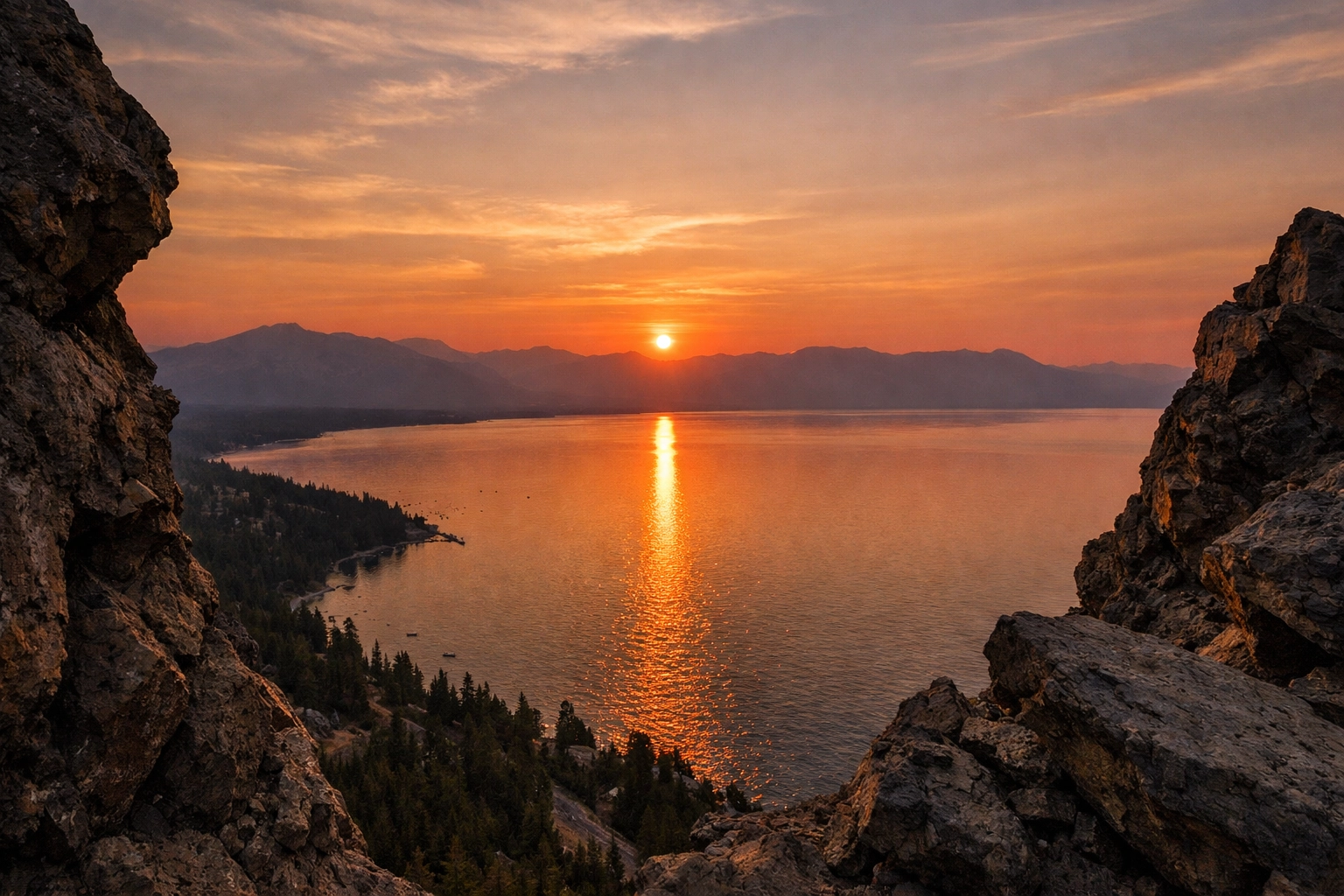
Standing on the south-eastern shore, Cave Rock is a volcanic remnant that towers over the highway. The hike to the top is short but steep, and it places you directly above the water for sunset.
As the sun dips below the mountains on the California side, the sky often erupts in shades of pink, purple, and gold. This elevated position allows you to capture the "path of light" reflecting across the surface of the lake. It’s a powerful location that demonstrates why Lake Tahoe photography locations are world-class. If you're looking to turn these moments into professional-grade prints, the team at Edin Studios can help you realize that vision.
8. Eagle Falls and the Power of Water
While the lake is the star of the show, don’t ignore the surrounding wilderness. Just across from Emerald Bay is Eagle Falls. In the spring and early summer, the snowmelt turns these falls into a roaring spectacle.
The lower falls offer a unique composition where you can frame the rushing water in the foreground with Emerald Bay in the background. It’s a complex shot that requires careful management of your depth of field. By using a tripod and a slower shutter speed, you can capture the motion of the falls while keeping the distant bay tack-sharp. This commitment to detail is what separates a snapshot from a piece of fine art.
9. Winter is a Secret Weapon
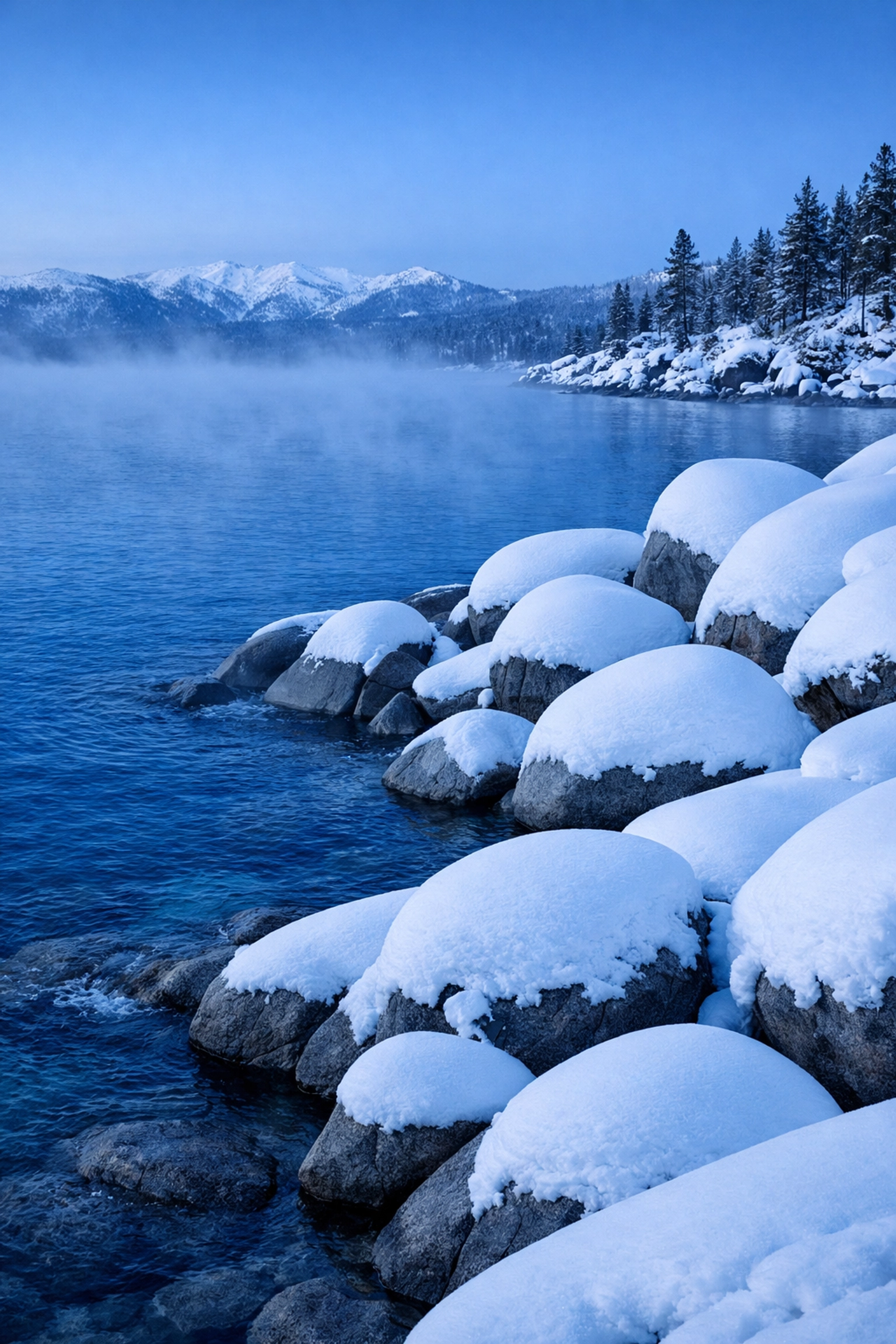
Most people visit Tahoe in the summer, but if you want truly unique imagery, you have to embrace the cold. When the Sierra Nevada is blanketed in snow, the landscape transforms into a high-contrast wonderland.
The steam rising off the relatively warm water during a freezing sunrise creates a mystical atmosphere that is "smooth as butter" for your sensor. The white snow acts as a massive natural reflector, filling in the shadows and giving your photos a clean, high-key look. This is the perfect time to consult your Lake Tahoe Photography Guide to find out which trails remain accessible during the winter months.
10. Respect the Environment and Your Craft
Lake Tahoe is a delicate ecosystem. As a photographer, you have a responsibility to keep these locations pristine. Stay on the trails, pack out what you pack in, and respect the natural beauty that empowers your work.
Your journey through Lake Tahoe should be about more than just checking spots off a list; it’s about connecting with the landscape. By taking the time to understand the light, the geology, and the history of the region, you elevate your photography from mere documentation to true art. Whether you are looking for the best photo spots Lake Tahoe has to offer or just a quiet place to watch the sunrise, this lake will never cease to inspire.
For more insights on how to elevate your work, explore our site for a deep dive into hundreds of tutorials and guides.
Hence, with these considerations in mind, you are now equipped to tackle the Sierras with confidence. The "Big Blue" is waiting for you: go out there and capture something incredible.