
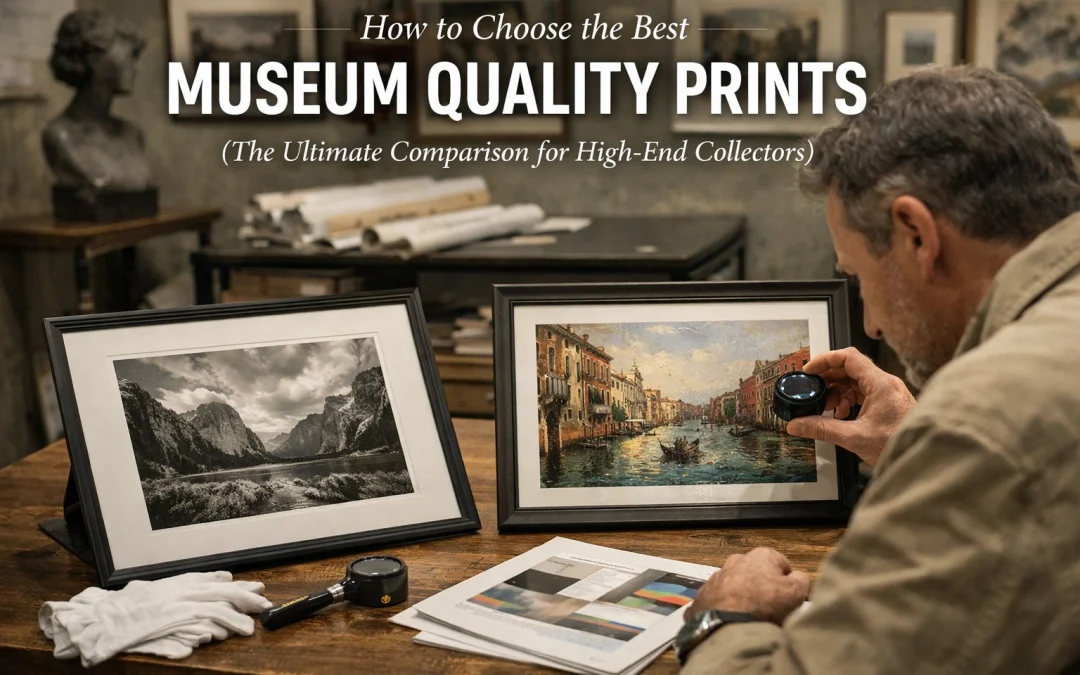
Just as a master sommelier can distinguish a vintage Bordeaux by its legs and bouquet, a high-end art collector knows that a photograph is only as good as the medium it lives on. When you are investing thousands of dollars into a piece of art, you aren't just buying a beautiful image; you are buying a legacy. You are looking for museum quality prints that will look just as vibrant and soul-stirring for your great-grandchildren as they do on your gallery wall today.
Choosing the right print is often the bridge between a simple decoration and a true investment. As you navigate the world of high-value art, you need to understand that not all "fine art" is created equal. From the chemical composition of the paper to the very particles of ink used, every detail dictates the longevity and value of your collection.
What Exactly Defines "Museum Quality"?
Many people use the term "fine art" loosely, but when we talk about museum quality prints, we are referring to a specific standard of archival excellence. This isn't your standard drugstore glossy print that fades after a summer in a sunny room. These are archival prints designed to resist degradation for 100 to 200 years.
For your collection to maintain its value, you must ensure the materials are acid-free and lignin-free. Lignin is the organic polymer found in wood pulp that causes paper to yellow and become brittle over time. By choosing 100% cotton rag or alpha-cellulose papers, you ensure that your investment remains pristine. This level of quality is what separates a hobbyist's output from the limited edition photography prints found in major galleries.

The Secret Sauce: Pigment vs. Dye Inks
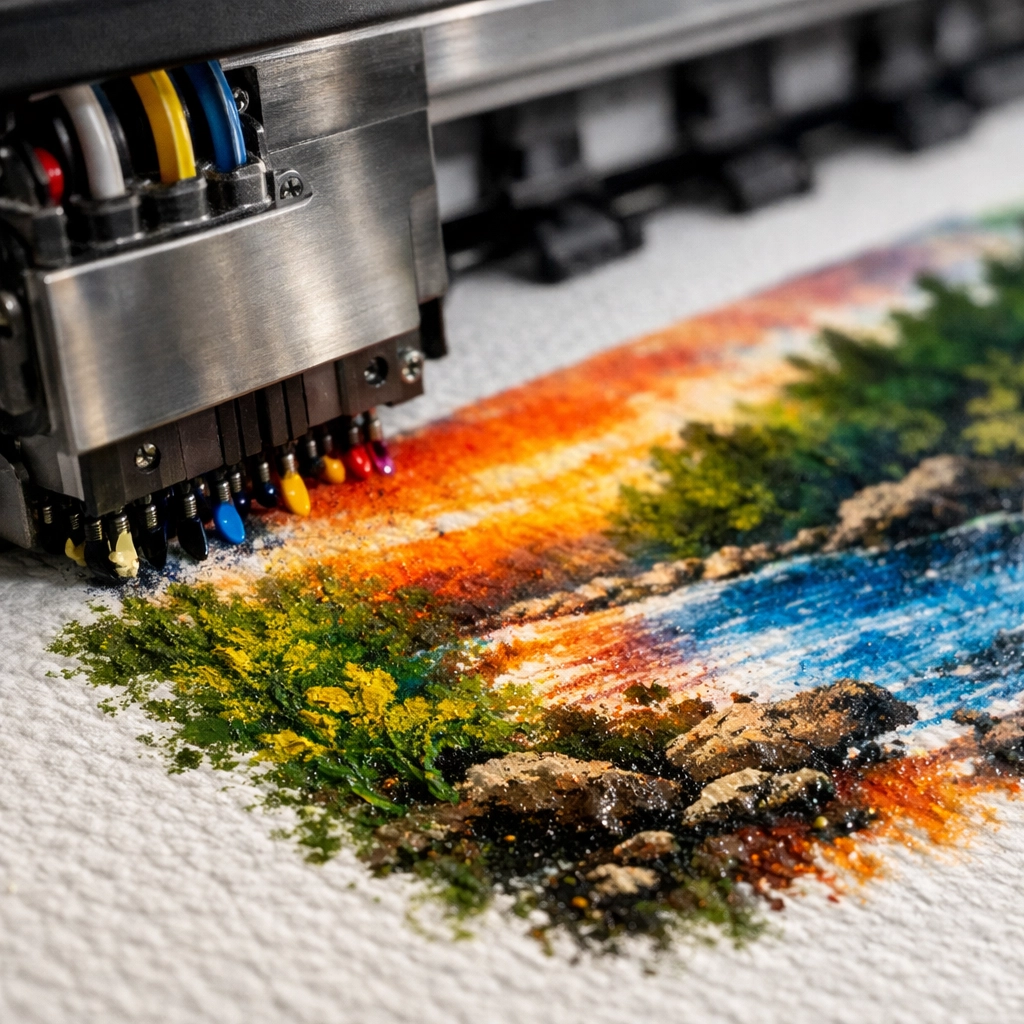
If you’ve ever wondered why some prints look like they have a "soul" while others look flat, the answer usually lies in the ink. As a collector, you should only ever settle for pigment-based inks.
Unlike dye-based inks, which are liquid and soak into the fibers of the paper (leading to bleeding and rapid fading), pigment inks consist of tiny, solid particles of color suspended in a liquid carrier. When these hit the paper, they sit on the surface, creating a depth and texture that is unmatched.
Leading Ink Systems
When you are vetting a gallery or a photographer, ask about their printing process. You want to hear names like Canon Lucia Pro or Epson UltraChrome. These professional systems use up to 12 different ink cartridges, including multiple shades of black and gray. This ensures your print has:
- Deep Black Density: Incredible detail in shadow areas.
- Wide Color Gamut: The ability to reproduce 98% of the Pantone spectrum.
- Smooth Gradations: Seamless transitions in skies and skin tones without that annoying "banding" effect.
Before you finalize your next acquisition, remember that your editing process also matters. If you are a creator yourself looking to achieve this high-end look, using the Ultimate Lightroom Preset Collection can help you dial in those rich tones before the file ever hits the printer.
Paper Selection: The Texture of Luxury
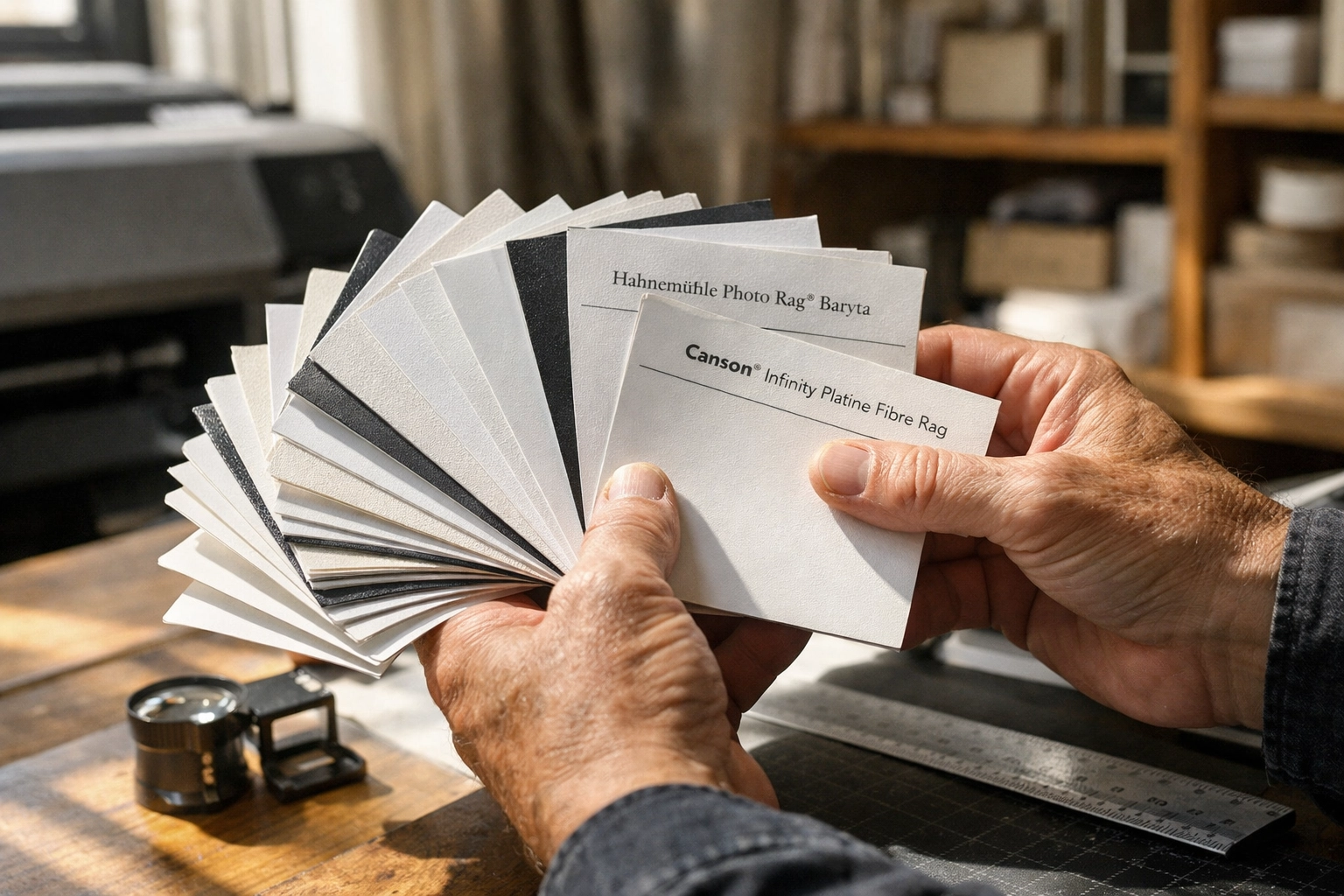
The paper you choose is the foundation of your art. It’s a tactile experience. When you run your hand over a high-end print (with white gloves on, of course!), you should feel the "tooth" of the material. For high-end collectors, the weight, or grammage, should be at least 300gsm.
| Paper Type | Material Base | Best For |
|---|---|---|
| Cotton Rag | 100% Cotton | Fine art, portraits, and longevity. Smooth as butter. |
| Baryta | Alpha-cellulose with Barium Sulphate | Black and white photography; mimics darkroom prints. |
| Metallic | Film-based | Landscapes with water or high-contrast urban scenes. |
| Alpha-Cellulose | Refined Wood Pulp | High-quality archival alternative to cotton; very durable. |
For those looking to capture the raw beauty of nature, such as the vibrant greens of the Florida swamplands, your paper choice is vital to translate that humidity and life into a physical form. If you’re ever in that neck of the woods, check out the Everglades Photography Guide to see how we capture these high-value shots.
Limited Edition Photography Prints and Value
As a collector, you aren't just looking for beauty; you are looking for rarity. This is where limited edition photography prints come into play. When a photographer limits the number of prints made from a single file, the scarcity drives the value.
However, a "limited edition" is only as good as the paperwork backing it up. This is why a certificate of authenticity for art prints is non-negotiable. This document should include:
- The name of the artist.
- The title of the work.
- The edition number (e.g., 5 of 25).
- The date of printing and the materials used.
- A holographic seal or a signature that matches the print.
Without this, you are just buying a poster. With it, you are buying a documented asset. If you are an artist learning how to sell fine art photography prints, mastering the art of the certificate is just as important as mastering the shutter.
The Comparison: Acrylic vs. Metal vs. Paper
While traditionalists love paper, modern collectors often look toward Acrylic and Metal for a contemporary edge.
- Acrylic Prints: These offer a "3D" depth. The print is face-mounted to a thick sheet of polished acrylic, which refracts light and makes colors pop. It’s the ultimate statement piece for a modern loft.
- Metal (Sublimation) Prints: These are incredibly durable and sleek. The ink is heat-infused into a coating on an aluminum sheet. They are scratch-resistant and don't require framing, which is a huge plus.
- Fine Art Paper: Still the gold standard for museums. When framed with museum-grade glass (like Tru Vue Optium), it provides a classic, timeless elegance that metal and acrylic can't quite replicate.
How to Verify the Quality Yourself
You don't need to be a scientist to check if a print is high quality. Follow these steps when you receive your next piece:
- The "Loup" Test: Use a magnifying glass. You should see crisp edges. If you see dots (like a newspaper) or fuzzy lines, it’s not a high-end giclée print.
- Highlight Separation: Look at the brightest parts of the image. Are there details in the clouds, or is it just "paper white"? A museum-quality print preserves detail in the highlights.
- Black Purity: Look at the shadows. They should be deep and "inky," not a washed-out charcoal gray.
If you are planning a shoot in a location like Miami to create your own high-value series, make sure you use the Miami Self-Driving Photography Guide to find the locations that offer the best lighting for these high-contrast prints. While you're there, you might even consider a Private Miami Photography Tour to ensure you’re getting gallery-ready shots.
Protecting Your Investment
Once you have acquired your masterpiece, the work isn't over. Lighting is the silent killer of archival prints. Even the best pigment inks will eventually succumb to direct UV rays. Always hang your collection away from direct sunlight and consider using LED gallery lighting that doesn't emit UV or high heat.
Furthermore, ensure your framer uses "T-hinge" mounting with acid-free tape. Never, ever let a framer dry-mount a limited edition print to a foam board. Doing so destroys the resale value and the archival integrity of the piece.

Final Thoughts for the Discerning Collector
Investing in fine art is a journey of passion and precision. By insisting on pigment inks, archival papers, and proper certification, you ensure that your collection is not only a visual delight but a financial asset. Whether you are browsing Edin Studios for your next piece or you are out in the field capturing the world yourself, the standard should always be excellence.
For more insights on how to elevate your work, explore our site at Edin Chavez Blog for a deep dive into hundreds of tutorials and guides. Remember, the difference between a picture and a piece of art is the intention and the quality of the finish.
Hence, with these considerations in mind, you are now equipped to build a collection that stands the test of time. Don't settle for "good enough" when "museum quality" is within your reach. Reach out to us at Edin Fine Art if you have questions about starting your high-end collection today.


