

You’ve likely stood in a high-end gallery, mesmerized by a landscape so vivid you felt the humidity on your skin, only to glance at the price tag and feel a sudden jolt of electricity. You might find yourself wondering: "Is this just a fancy piece of paper, or am I looking at a generational investment?"
As a collector or a curator, understanding the anatomy of museum quality prints is the difference between buying a temporary decoration and acquiring a piece of history. In the world of fine art photography, quality isn't just a buzzword: it’s a rigorous technical standard that ensures your investment looks as stunning in a century as it does the day you hang it on your wall.
At Edin Chavez Blog, we believe that art should be an experience that lasts. Whether you are browsing for your next centerpiece at Edin Fine Art or you are a photographer learning the ropes, knowing how to spot high-value work is your greatest asset.
What Does "Museum Quality" Actually Mean?
When you hear the term archival prints, you aren't just hearing marketing fluff. It refers to a specific combination of materials and processes designed to resist the ravages of time. While a standard print from a big-box pharmacy might start yellowing or fading within five years, a true museum-quality print is engineered to last 100 to 200 years without significant degradation.
The secret sauce lies in the chemistry. Most consumer prints use dye-based inks on acidic, wood-pulp paper. Over time, the acid eats the paper, and the dyes break down under UV light. In contrast, museum-grade work utilizes pigment-based inks and acid-free, 100% cotton rag paper.
Think of it like this: Dyes are like food coloring: vibrant but fleeting. Pigments are like tiny, crushed gemstones suspended in a liquid: they sit on top of the paper fibers, offering a depth of color and stability that simply can't be matched.
The Three Pillars of Value
| Feature | Standard Print | Museum Quality Print |
|---|---|---|
| Ink Type | Dye-based (fades quickly) | Pigment-based (archival stability) |
| Paper Base | Wood pulp (acidic, yellows) | 100% Cotton Rag/Alpha Cellulose (acid-free) |
| Longevity | 5–10 years | 100+ years |
| Color Depth | Limited range, flatter blacks | Extreme tonal range, deep "D-Max" blacks |
The Prestige of Limited Edition Photography Prints
In the fine art world, scarcity is the engine of value. When you invest in limited edition photography prints, you aren't just buying the image; you’re buying exclusivity.
As a collector, you should always look for the edition number. A print labeled "1/10" carries significantly more weight than one from an "Open Edition." Once those ten prints are sold, the artist legally and ethically cannot produce that specific size and format again. This creates a secondary market where your piece can appreciate in value over time.
When I’m out in the field: perhaps scouting for the perfect shot using my Ultimate Lightroom Preset Collection to visualize the final mood: I’m always thinking about how that single moment in time will eventually live as a limited piece of art. If you're looking to see how these concepts translate into breathtaking visuals, head over to Edin Studios to see the portfolio in action.
How to Spot High-Value Fine Art Photography
You don't need a magnifying glass and a lab coat to tell if a print is high-quality, but you do need an eye for detail. Here is your checklist for evaluating any piece you’re considering for your collection.
1. The "Black Hole" Test (D-Max)
Look at the darkest areas of the photograph. In low-quality prints, the blacks often look like a muddy charcoal or a dark grey. In a high-value print, the blacks should be deep, "inky," and rich. This is known as high D-Max. Even in those deep shadows, you should still be able to see subtle textures: that’s the mark of expert color management.
2. Texture and "Tooth"
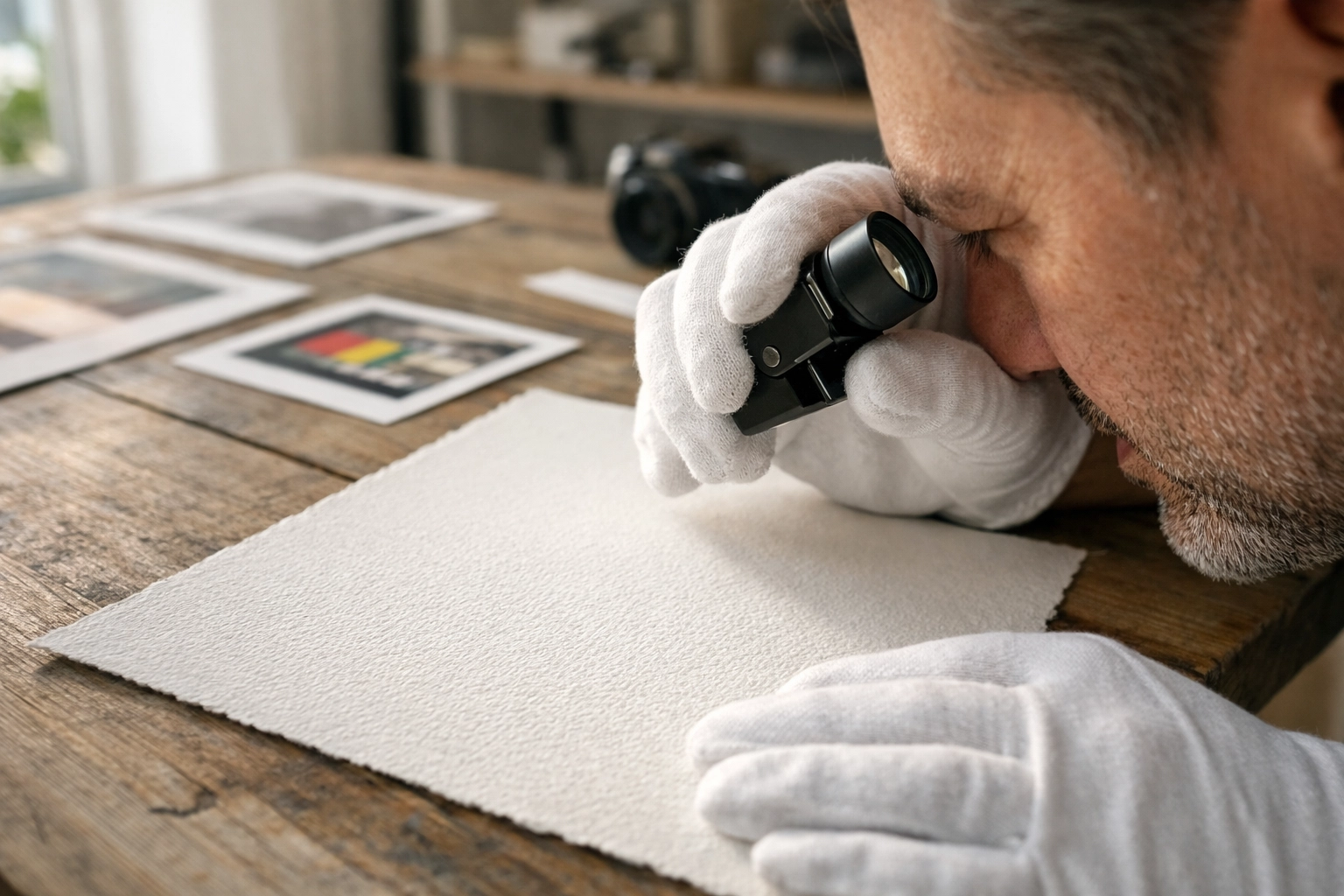
Run your eyes across the surface of the paper (but don't touch it with your bare hands!). High-quality archival paper, like Hahnemühle or Canson Infinity, has a beautiful "tooth" or texture. It should feel substantial, not like a flimsy flyer. If it’s 100% cotton rag, it will have a matte or soft satin finish that absorbs light rather than reflecting it harshly.
3. Resolution and Sharpness
Get close: uncomfortably close. A museum-quality print is typically produced at 300 DPI (dots per inch) or higher. You should see crisp lines and smooth color transitions. If you see "banding" (visible lines in the sky) or pixelation (jagged edges), walk away. That print wasn't prepared for large-scale fine art standards.

The Golden Ticket: The Certificate of Authenticity for Art Prints
If you are buying high-value art and it doesn't come with a certificate of authenticity for art prints, you’re essentially buying a car without a title.
This document is your proof of provenance. A proper COA should include:
- The title of the work and the artist’s name.
- The edition number (e.g., 5 of 25).
- The date of printing and the type of materials used (e.g., "Pigment on Hahnemühle Photo Rag").
- The artist's original signature.
- Often, a holographic security seal that matches a seal on the back of the print.
Without this, the resale value of the piece plummets. It’s the artist’s promise to you that the work is exactly what they say it is.
For the Creators: How to Sell Fine Art Photography Prints
If you're on the other side of the lens and wondering how to sell fine art photography prints, the jump from digital files to physical products can feel like a mountain. But here’s the truth: collectors aren't just buying your "eye"; they are buying your commitment to quality.
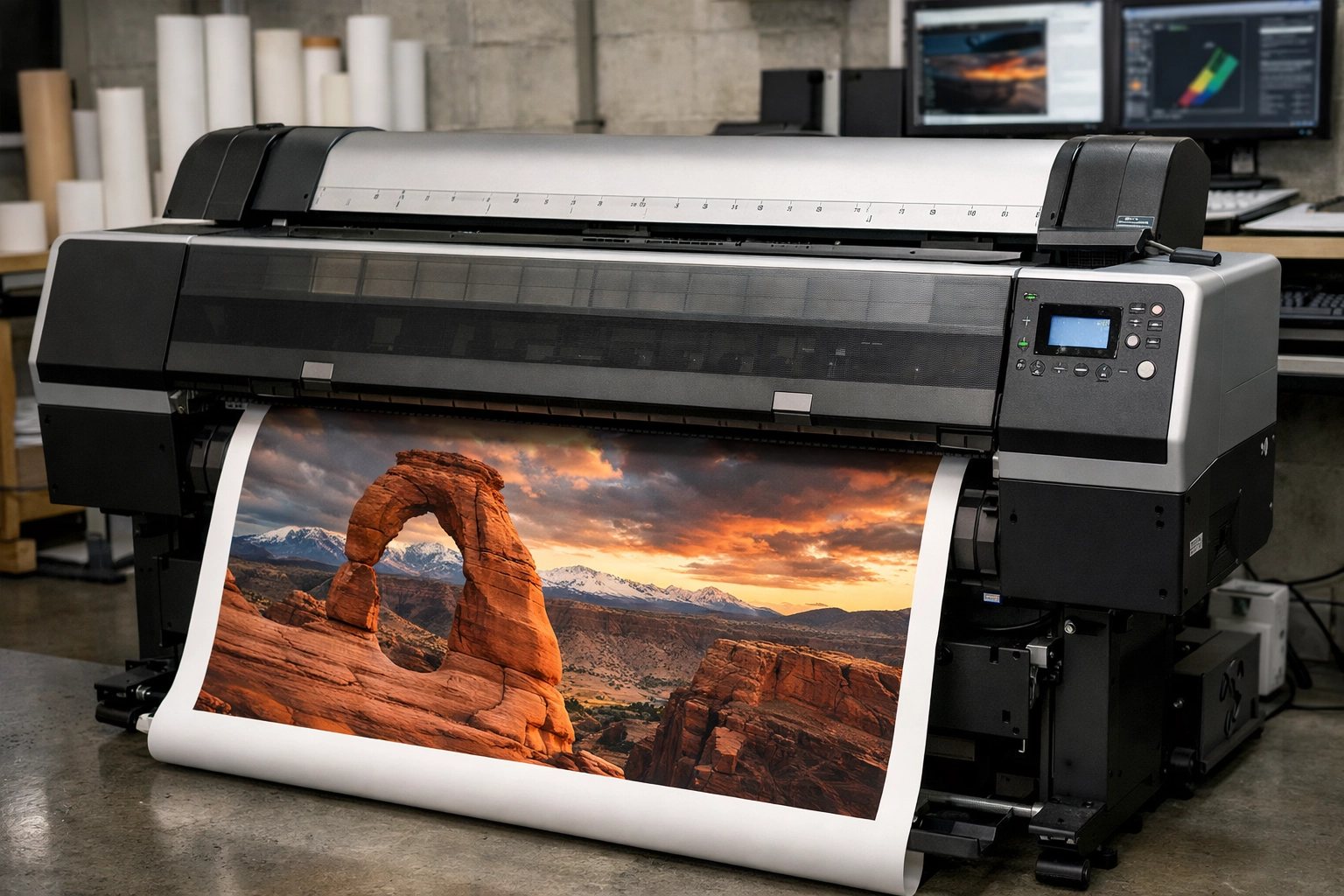
You cannot sell a premium product if you are cutting corners on production. You need to partner with a professional lab that specializes in giclée printing. Your workflow needs to be calibrated from your monitor to your printer to ensure what you see is what they get. If you want to dive deeper into the business side of things, our guide on The Business of Photography covers exactly how to transition from a hobbyist to a pro who commands gallery prices.
Why Modern Collectors are Choosing Giclée
You’ve probably heard the word "Giclée" (pronounced zhee-klay) tossed around. It sounds fancy because it's French, but it actually means "to spray." This refers to the way high-end inkjet printers apply millions of microscopic droplets of pigment to the paper.
This technology has revolutionized fine art. It allows for a level of detail and color accuracy that old-school darkroom prints often struggled to achieve consistently. For a collector, a giclée print means you are getting the absolute closest representation of the artist's original vision.
Preserving Your Investment
Once you’ve acquired a museum-quality piece, your job isn't over. To maintain its value, you need to treat it with respect.
- Framing: Always use UV-protective glass or acrylic. Even archival inks have a limit when it comes to direct, harsh sunlight.
- Matting: Ensure your framer uses acid-free mat board. Using cheap, acidic mats will cause "mat burn": a yellow stain that creeps from the edges of the photo inward.
- Environment: Keep your art away from high-humidity areas (like bathrooms) and extreme temperature fluctuations.

Elevate Your Vision
Whether you are a seasoned curator or someone just looking to buy their first "real" piece of art, the world of fine art photography is incredibly rewarding. There is something profoundly different about seeing a masterfully captured image printed on high-end paper versus seeing it on a glowing smartphone screen. It has soul. It has presence.
If you’re ready to start your journey into high-end collecting or want to see the gold standard of what we’ve discussed today, I invite you to explore the limited edition collections at Edin Fine Art. Each piece is a testament to the archival standards we've covered here.
For more insights on how to elevate your work, explore our site for a deep dive into hundreds of tutorials and guides at Edin Chavez Blog.
With these considerations in mind, you are no longer just a spectator in the gallery; you are an informed collector with the eye of a pro. Happy hunting!


