
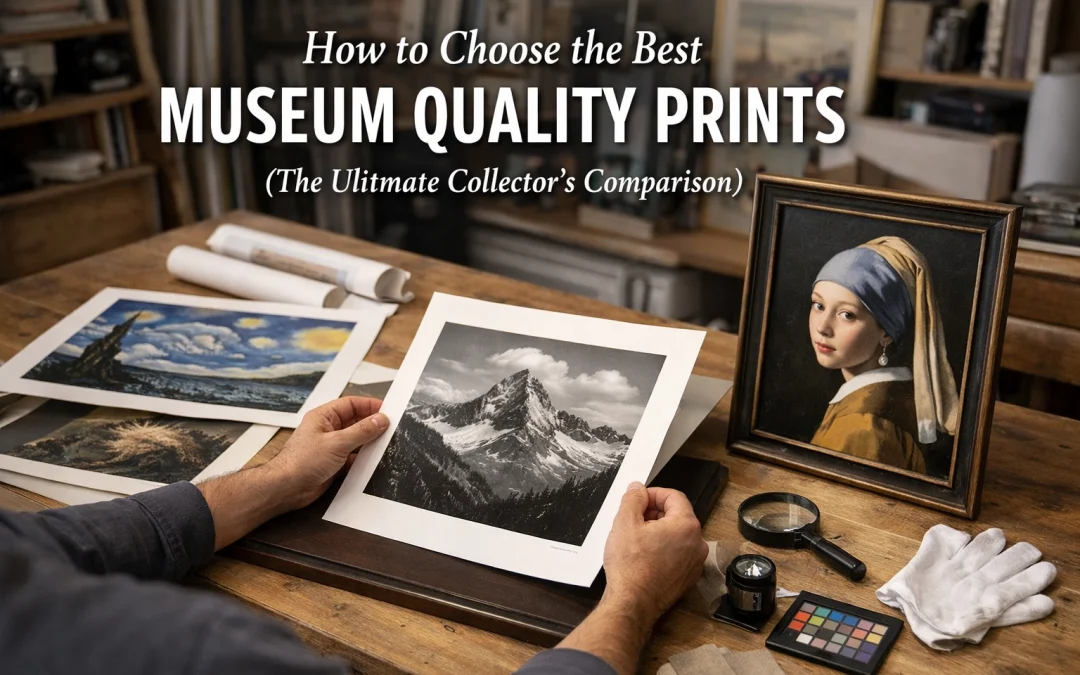
Just as a vintage Ferrari deserves a climate-controlled garage rather than a gravel driveway, your investment in fine art deserves a medium that won't give up the ghost in a decade. If you are starting your journey into art collecting, or perhaps you're a seasoned curator looking to refine your eye, understanding the anatomy of museum quality prints is the difference between owning a piece of history and owning a piece of fading paper.
Many people think a "print is just a print," but in the world of high-value art, that’s like saying a photocopier produces the same result as a master painter's brush. When you step into the world of Edin Fine Art, you aren't just looking at images; you are looking at archival legacies. In this guide, I’m going to pull back the curtain on what actually makes a print "museum quality" and how you can ensure your collection stands the test of time.
The Anatomy of Archival Excellence
When you hear the term archival prints, it isn't just marketing fluff designed to make the price tag look prettier. It refers to a specific set of scientific standards. For a print to be considered museum-grade, every component, from the substrate to the chemistry of the ink, must be chemically stable.
The Substrate: Cotton is King
Forget the standard wood-pulp paper you find in your office printer. That stuff is acidic, and over time, acid is the enemy of art. It causes yellowing, brittleness, and eventually, the disintegration of the image.
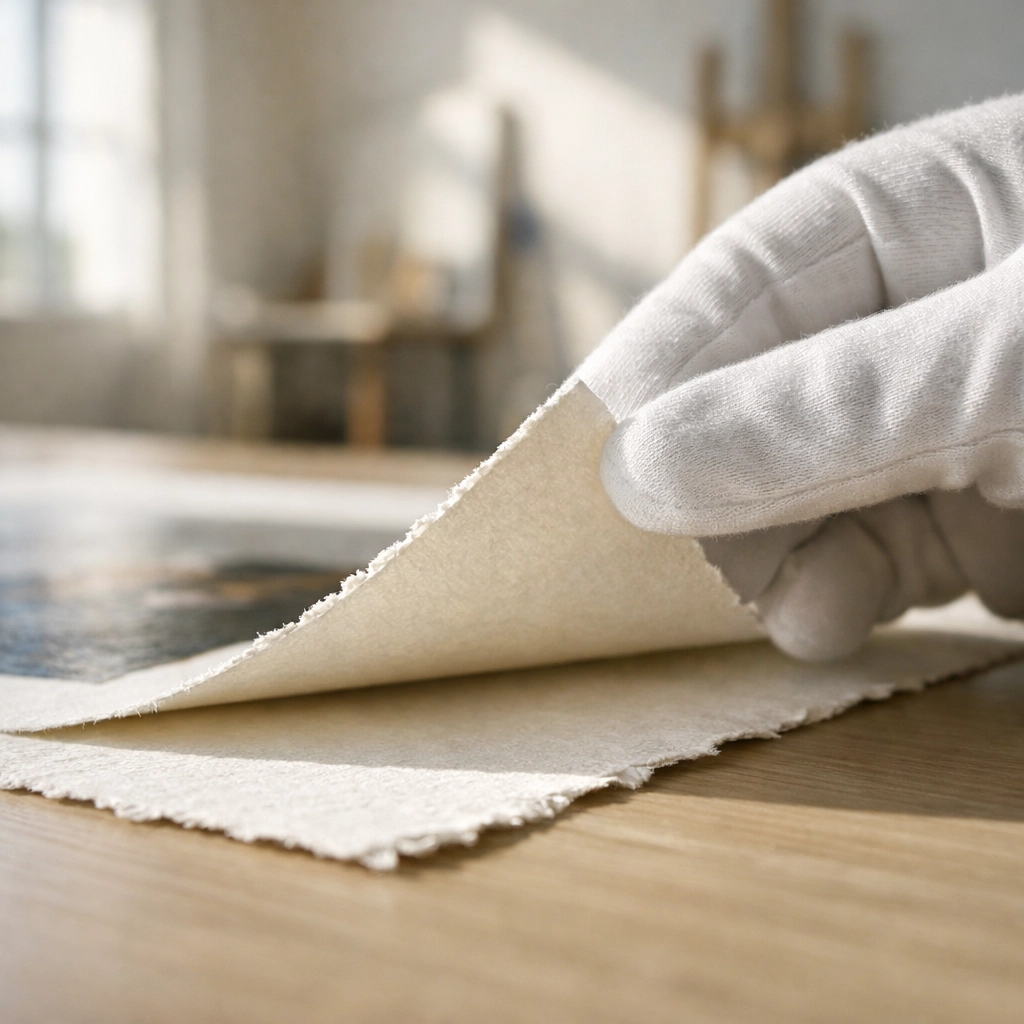
To protect your investment, you must insist on acid-free, lignin-free substrates. Typically, this means 100% cotton rag paper. These fibers are naturally robust and don't require the harsh chemical treatments that cheaper papers do. When you run your fingers (carefully, please!) across a high-end print, you can feel the weight and the texture of the cotton. It’s tactile, it’s heavy, and it’s built to last for 100 to 200 years without breaking a sweat.
Pigment vs. Dye: The Color War
If you’ve ever left a receipt on your car dashboard and watched the text vanish in two days, you’ve seen the weakness of dye-based inks. Most consumer printers use dyes because they are cheap and vibrant. However, for limited edition photography prints, vibrancy doesn't mean a thing if it isn't lightfast.
Museum quality prints utilize pigment-based inks. Think of pigments as tiny solid particles of color suspended in a liquid. Unlike dyes, which soak into the fibers and are susceptible to oxidation and UV degradation, pigments sit on the surface and are incredibly resistant to fading. This ensures that the deep teals and fiery oranges you fell in love with stay exactly as the artist intended for generations.
Before you commit to a purchase, you should always verify the ink composition. If it’s not pigment-based, it’s not museum quality. It’s that simple.
The Technical Specs Collectors Must Know
As a collector, you don't need to be a master printer, but you do need to know how to spot a "fake" high-end print. There are three technical pillars you should always examine before clicking "buy" or signing that check.
1. Resolution and DPI
Have you ever looked at a large-scale print and noticed it looks a bit "crunchy" or pixelated around the edges? That’s a resolution fail. A true museum-grade print is produced at a minimum of 300 DPI (dots per inch). This high density ensures that even the smallest details, a single leaf in a forest or the texture of a wave, are rendered with surgical precision. If you are buying a large-format piece, check for sharpness at a close distance. If it’s blurry, walk away.
2. Color Management and Gamut
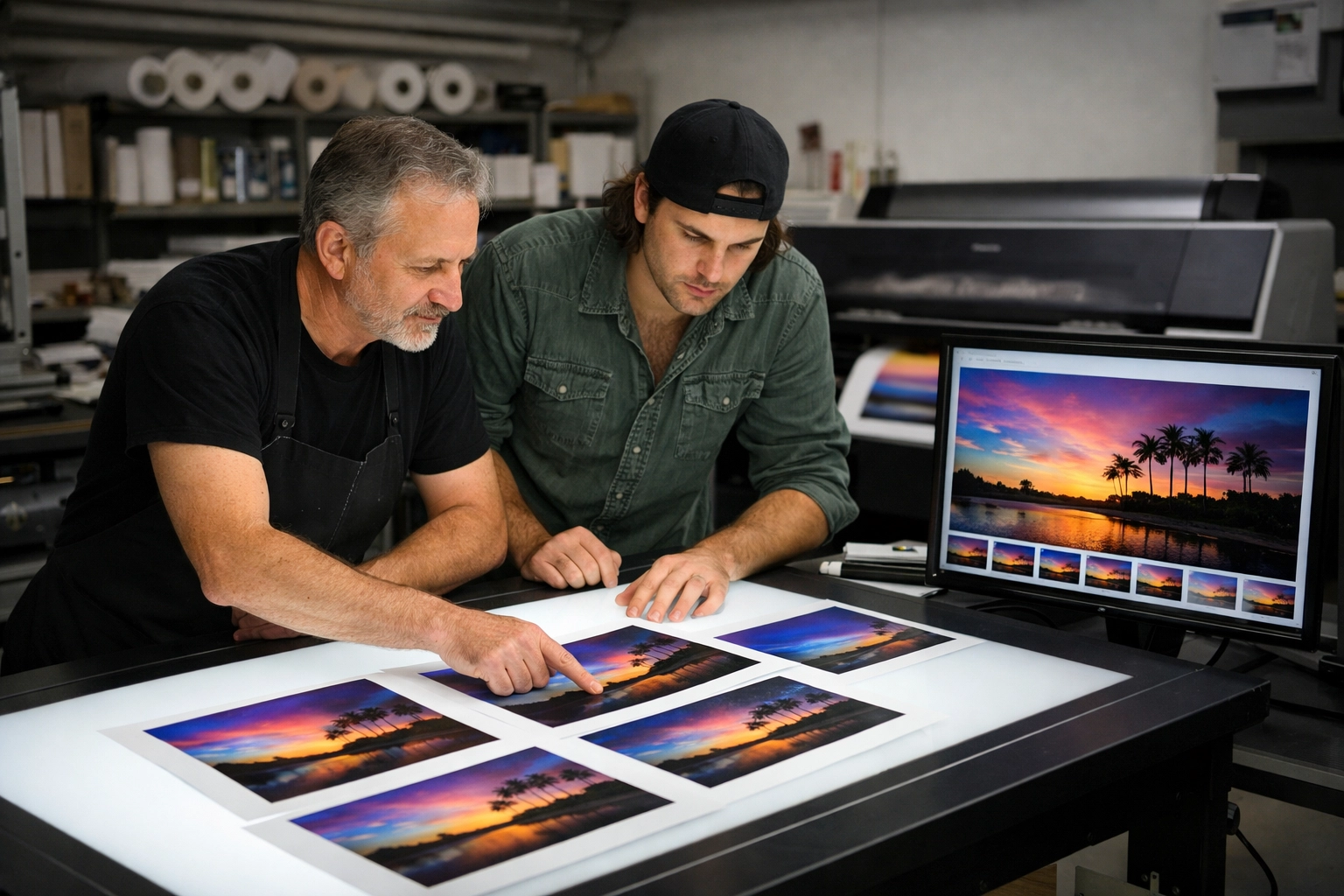
The artist's workflow is just as important as the printer they use. To get the best results, we often use the Ultimate Lightroom Preset Collection to ensure the raw files are processed with the highest tonal range possible. A museum-quality workflow involves a calibrated "closed-loop" system. This means what the photographer sees on their monitor is exactly what the printer spits out. You want to see smooth gradations in the sky, no "banding" or weird digital lines where colors shift.
3. Black Density (D-Max)
This is the secret sauce of fine art photography. "D-Max" refers to the deepest black a printer and paper combination can achieve. In high-value photography, you want blacks that feel like a bottomless pit, rich, dark, and full of subtle shadow detail. If the blacks look gray or "washed out," the print lacks the dynamic range required for museum standards.

The Collector’s Comparison Matrix
To help you make an informed decision during your next gallery visit or online browse at Edin Studios, I’ve put together this quick comparison. This will help you distinguish between a decorative piece and a true investment.
| Feature | Standard Photo Print | Museum Quality Print |
|---|---|---|
| Ink Type | Dye-based | Pigment-based (Archival) |
| Longevity | 5–15 years before fading | 100–200+ years (Certified) |
| Paper Base | Acidic wood pulp / Plastic | Acid-free 100% Cotton Rag |
| Surface Detail | High gloss / Reflective | Varied (Matte, Luster, Baryta) |
| Value Retention | Negligible | High (Appreciates with artist) |
| Documentation | None | Certificate of Authenticity |
The Power of the Limited Edition
Why do collectors scramble for limited edition photography prints? It’s not just about the quality; it’s about the scarcity. When an artist like Edin Chavez releases a limited run, they are making a legal and professional promise that only a set number of those prints will ever exist in that size and format.
Once a limited edition sells out, the market value of those existing prints often climbs. This is why the "how" of the printing matters so much. If you buy a limited edition that fades in ten years, your investment has vanished. But a museum-quality limited edition is a tangible asset. It’s a piece of the artist's legacy that you own exclusively.

Don’t Forget the Paperwork: The Certificate of Authenticity
I cannot stress this enough: your print is only as good as the paper that proves what it is. A certificate of authenticity for art prints (COA) is your golden ticket. This document should accompany every high-value purchase and include:
- The artist’s name and signature.
- The title of the work and the date it was captured/printed.
- The edition number (e.g., 2/25).
- The exact materials used (paper type and ink type).
- A hologram or unique serial number that matches the print.
Without a COA, you’re just buying a pretty picture. With it, you’re buying a verified collectible. When we discuss how to sell fine art photography prints with emerging artists, the COA is always the first thing we mention. It builds trust, ensures provenance, and protects the buyer.
For the Artists: How to Sell Fine Art Photography Prints
If you're on the other side of the lens and wondering how to break into the high-end market, your quality is your calling card. You cannot expect to charge premium prices for standard luster prints from a big-box lab.
To sell at a museum level, you need to invest in the process. This means:
- Sourcing a Master Printer: Unless you own a $5,000 wide-format pigment printer, find a boutique lab that specializes in archival work.
- Paper Selection: Sample different weights. Whether it's Hahnemühle or Canson, find a paper that complements your specific style.
- Consistency: Ensure your editing is top-tier. Using professional tools like the Ultimate Lightroom Preset Collection helps maintain a consistent look across your entire portfolio, which is vital for brand recognition.
Final Thoughts for the Discerning Buyer
Choosing the right print is an exercise in both emotion and logic. You fall in love with the image, but you buy the quality. By insisting on pigment inks, cotton rag papers, and proper certification, you aren't just decorating a room, you are preserving a moment in time.
Whether you are looking to start your collection with a piece from Edin Fine Art or you are looking to upgrade your home gallery, remember that quality is the only thing that never goes out of style. Don't settle for "good enough" when "eternal" is an option.
For more insights on how to elevate your work, explore our site for a deep dive into hundreds of tutorials and guides at https://blog.edinchavez.com/. And if you're ever in doubt, just ask yourself: "Will my grandkids be able to see these colors?" If the answer is yes, you’ve made the right choice.


