
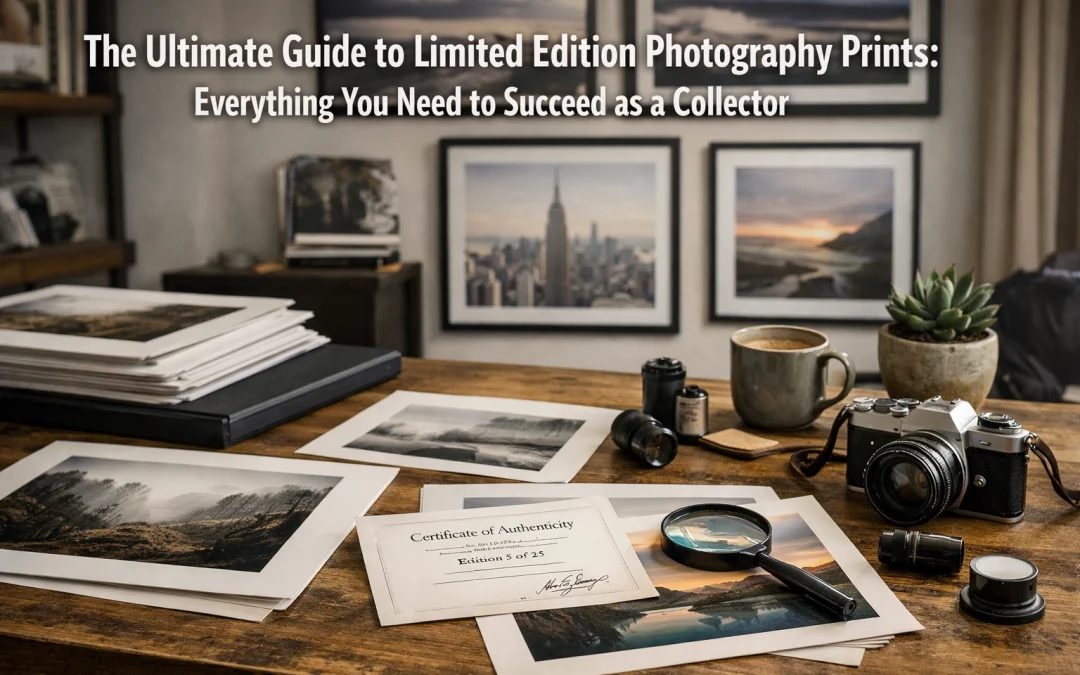
Just as a seasoned art collector walks into a high-end gallery in Chelsea or the Design District, you are likely looking for something that transcends a simple digital image. You want something tangible, rare, and enduring. Entering the world of fine art photography can feel like learning a new language, but once you understand the mechanics of limited edition photography prints, you unlock a world of investment and aesthetic pleasure that few other mediums offer.
At Edin Chavez Blog, we believe that collecting art should be an empowering journey. Whether you are looking to adorn your home with a stunning piece from Edin Fine Art or you are a curator looking for the next big acquisition, understanding the nuances of scarcity and quality is your first step to success. In this guide, we will break down exactly what makes a print a "high-value" asset and how you can navigate the market with confidence.
What Exactly Are Limited Edition Photography Prints?
In the simplest terms, a limited edition print is a photograph that is produced in a strictly predetermined quantity. Once that number is reached, the artist legally and ethically agrees never to produce that image in that specific format again. This creates the "scarcity" that drives the art market.
When you purchase limited edition photography prints, you aren't just buying paper and ink; you are buying a contract of exclusivity. Unlike "open editions," which can be printed infinitely and often lose their resale value quickly, limited editions are designed to appreciate over time. As the edition sells out, the remaining prints often increase in price, rewarding early collectors for their foresight.
For more insights on the creative process behind these works, you can check out Edin Studios to see how we bring these visions to life.
Decoding the Numbers: Edition Sizes and Artist Proofs
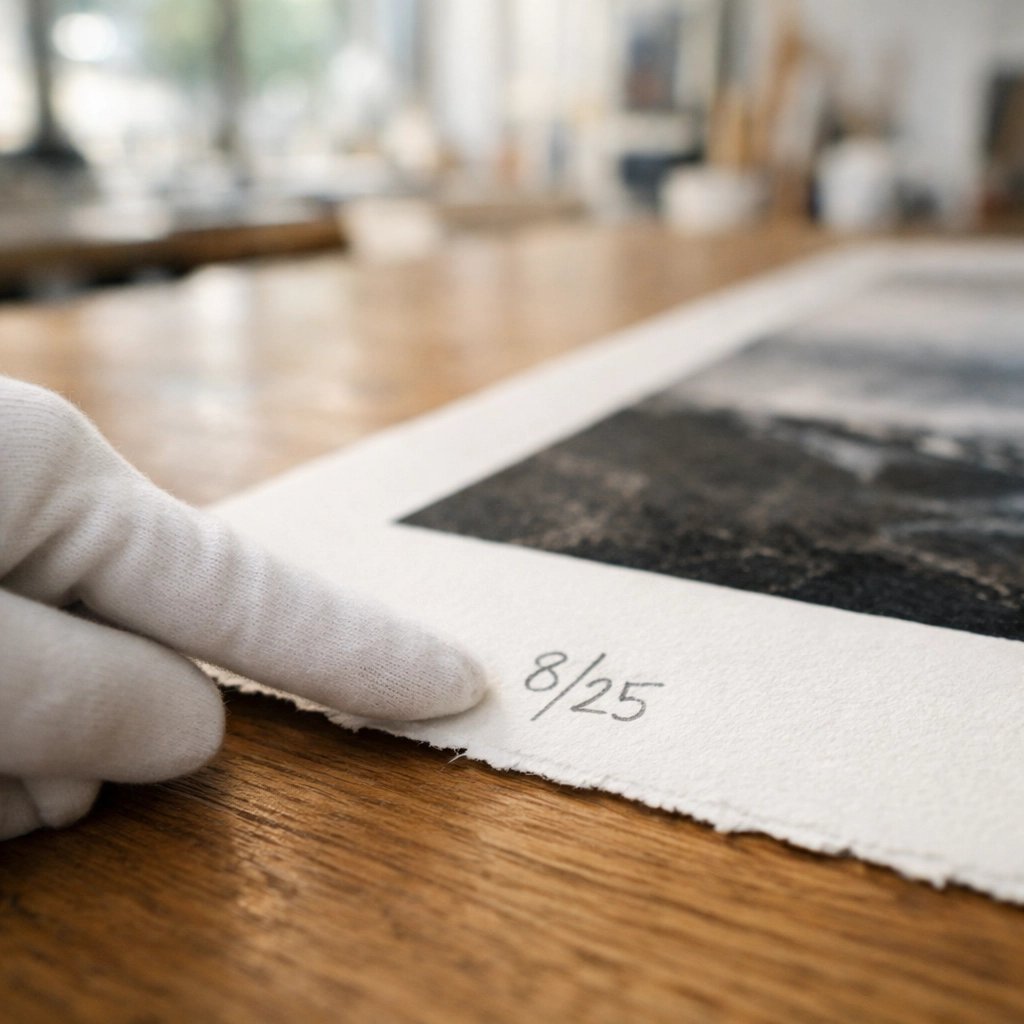
When you look at the bottom corner of a fine art print, you will usually see two numbers separated by a slash: for example, 5/25. This tells you that you are holding the 5th print out of a total edition of 25.
It is a common misconception among new collectors that the lower the first number, the more valuable the print. In reality, print 1/25 is worth exactly the same as 25/25. What truly matters is the second number: the total edition size.
| Edition Type | Typical Size | Rarity Level | Ideal For |
|---|---|---|---|
| 1 of 1 (Unique) | 1 | Ultimate | Museum-level curators and high-stakes investors. |
| Small Edition | 5 – 25 | Very High | Serious collectors focusing on long-term appreciation. |
| Medium Edition | 25 – 100 | Moderate | Art lovers wanting a balance of exclusivity and price. |
| Large Edition | 100 – 500+ | Low | Decor-focused buyers who value the artist but have a tighter budget. |
The Mystery of the Artist Proof (A.P.)
You might also encounter prints marked "A.P." or "Artist Proof." Traditionally, these were prints kept by the photographer to check color and quality. Today, they are often sold as a separate, even smaller edition. Because they are fewer in number (usually only 10% of the main edition size), they can often command a higher price on the secondary market. If you have the chance to snag an A.P. from a series like my Miami cityscapes, you are holding a piece of history.
Why Quality Matters: Museum Quality and Archival Standards
When you are investing hundreds or thousands of dollars, you want to ensure your print won't fade or yellow in five years. This is where museum quality prints come into play. A "museum quality" label isn't just marketing fluff; it refers to a specific standard of production.
Archival Prints: Built to Last
To be considered archival prints, the materials must be acid-free and chemically stable. We typically use heavy-weight cotton rag papers or specialized baryta surfaces that don't just look beautiful: they are engineered to last well over 100 years without significant degradation. The inks used are pigment-based, which offer much higher UV resistance than the dye-based inks found in standard consumer printers.
If you are looking to learn how to prep your own files for this level of quality, our Ultimate Lightroom Preset Collection is a great way to ensure your colors are dialed in before you ever hit "print."
The "Golden Ticket": Certificate of Authenticity for Art Prints
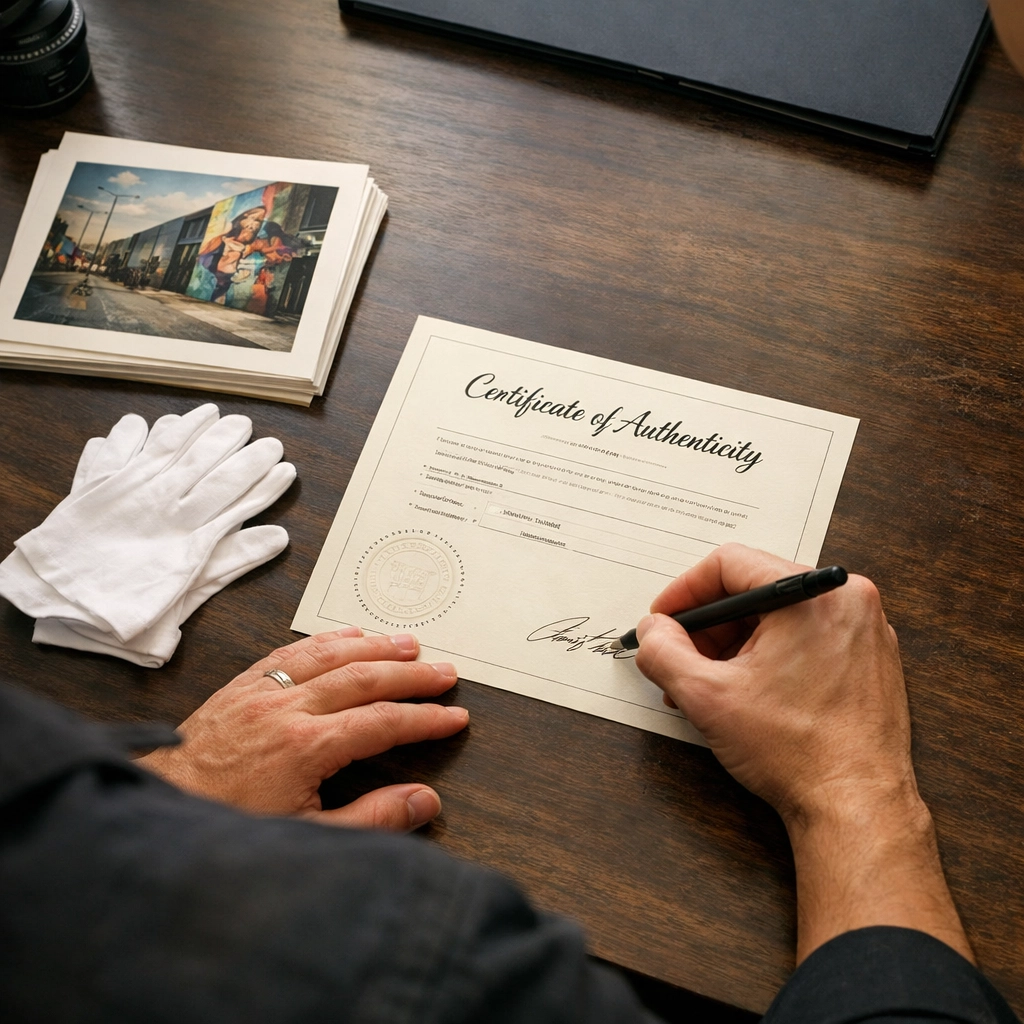
Never buy a limited edition print without a certificate of authenticity for art prints (COA). This document is your proof of purchase and your guarantee of the work's provenance. Think of it as the title to a car; without it, the value of the piece drops significantly.
A legitimate COA should include:
- Title of the Work: The official name of the photograph.
- The Edition Number: Your specific number (e.g., 12/50).
- The Artist’s Signature: Usually hand-signed in ink.
- Technical Specs: The type of paper, the ink, and the printing method used.
- Date of Printing: To track when the piece was physically created.
By maintaining a meticulous record of these documents, you make it much easier when the time comes to figure out how to sell fine art photography prints in the future. Collectors and auction houses will demand this paperwork before they even consider a transaction.
Where Location Meets Value: The Role of Subject Matter
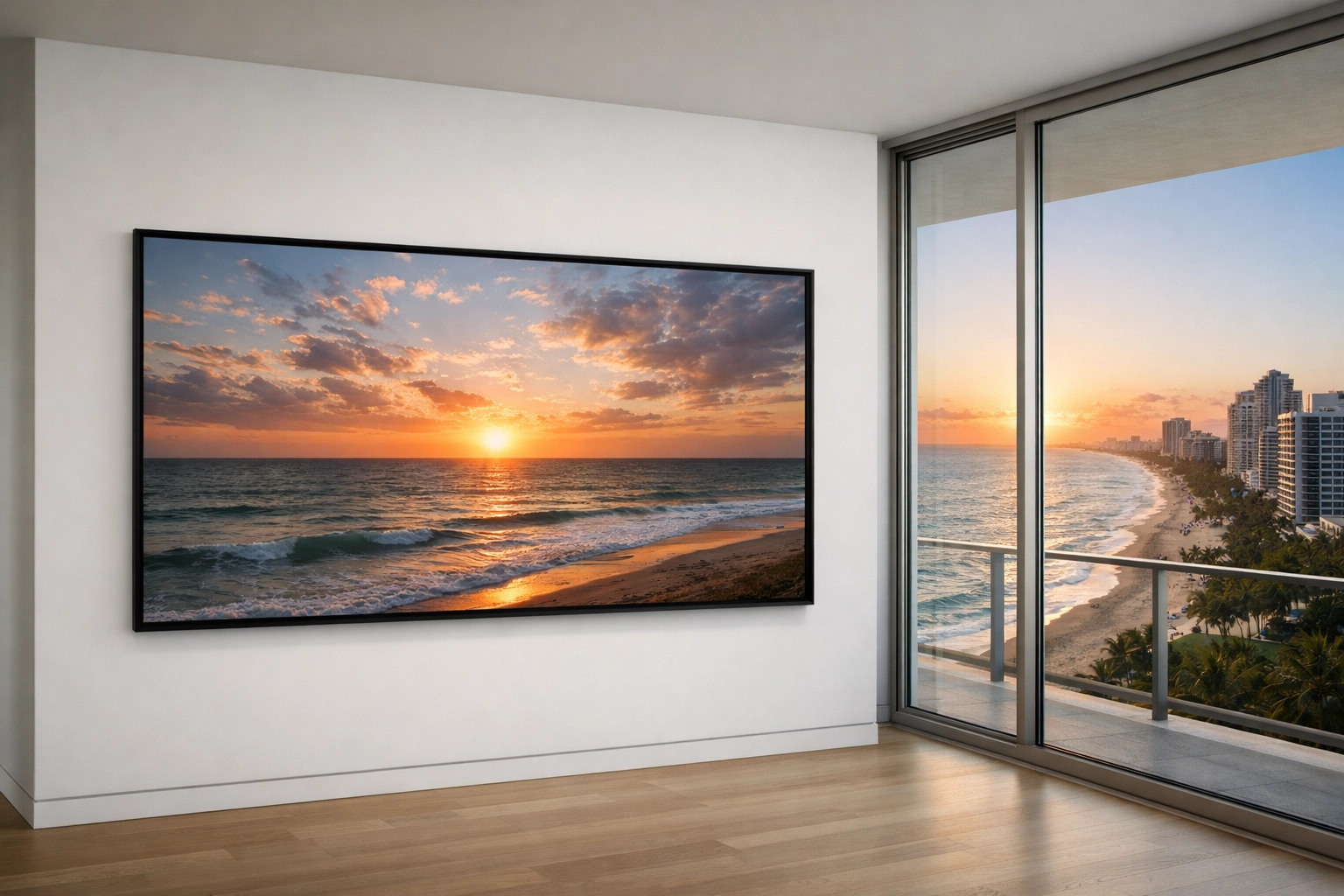
In the world of fine art, what you shoot is just as important as how you shoot it. Collectors often gravitate toward iconic locations or unique perspectives of world-famous landmarks. For example, a limited edition print of the Everglades or a rare perspective of New York City often holds value better because of the inherent interest in those locations.
If you are a photographer yourself looking to create high-value work, consider visiting locations that offer dramatic, timeless appeal. Whether it's the surfers at Miami Beach or the hidden gems of Greece, the story behind the image adds a layer of value that collectors love to talk about when they show off their pieces.
How to Sell Fine Art Photography Prints (The Collector's Perspective)
If you have reached a point where you want to rotate your collection or realize a profit on an investment, you need to understand the secondary market. Selling a high-value piece is different from selling a used camera on eBay.
- Galleries and Consignment: Some galleries will sell your piece for a commission. This is the slowest but often most profitable route because they have the right client base.
- Auction Houses: For very high-value, rare editions (like a sold-out series from a major artist), auction houses are the way to go.
- Private Sales: Building a network of fellow collectors can allow you to sell pieces directly, avoiding the heavy fees associated with galleries.
The key to a successful sale is always the condition of the print. Keep your archival prints framed behind UV-protective glass and away from direct sunlight. A pristine print with a COA will always sell faster and for more money.
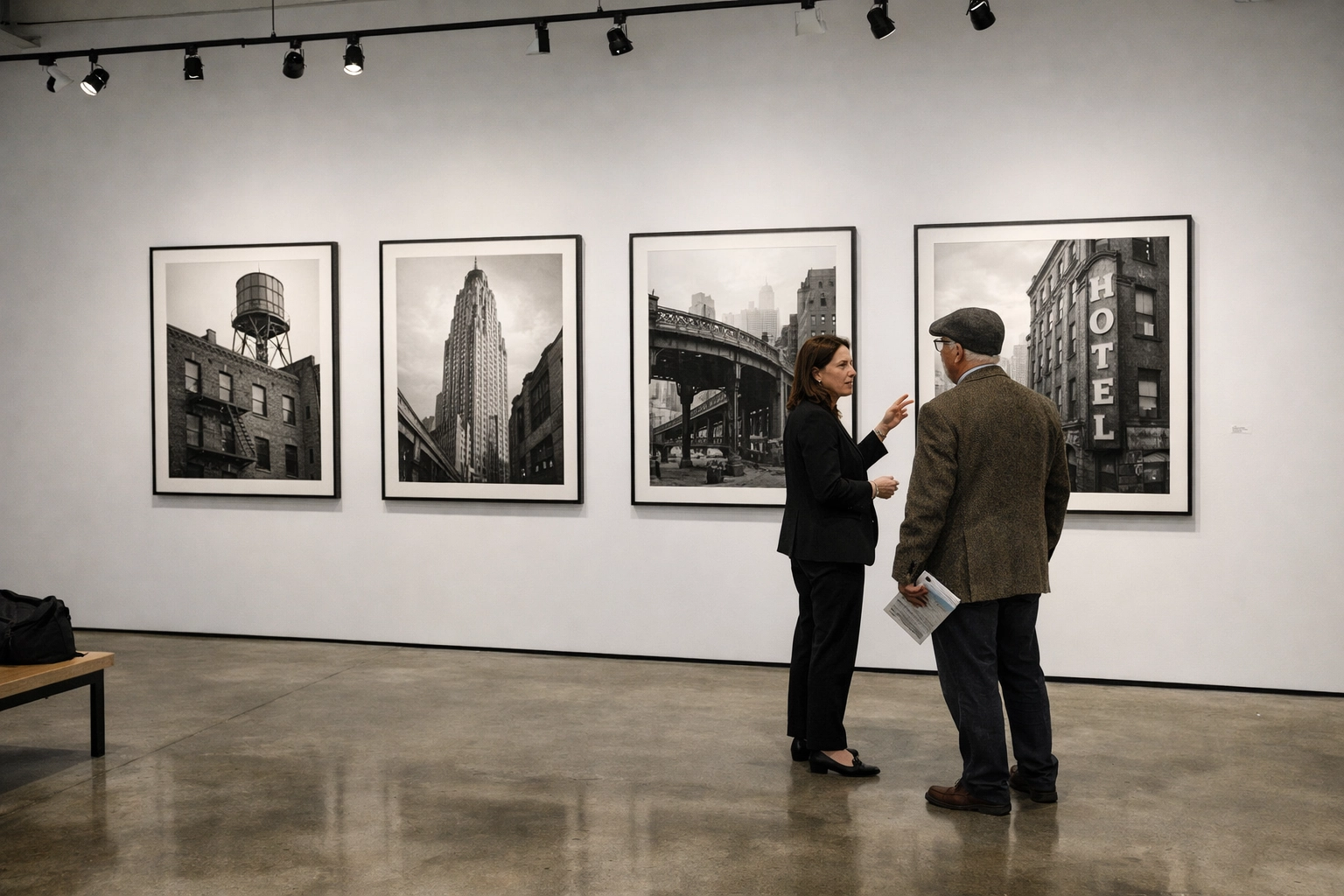
Your Collector’s Checklist: What to Ask Before Buying
Before you pull the trigger on your next piece of fine art, run through this mental checklist to ensure you are making a smart move:
- What is the total edition size? (Remember: smaller is usually better for investment).
- Is the print signed? (A signature on the print itself is often preferred over just a signed COA).
- What is the paper type? (Ensure it is acid-free and archival).
- Are there Artist Proofs? (Ask if they are available and what the price difference is).
- Is a COA included? (This is non-negotiable).
If you are ever in Florida and want to see how these prints look in person, I highly recommend checking out a Private Miami Photography Tour or using our Miami Self-Driving Guide to scout locations that produce these types of high-value images.
Final Thoughts for the Modern Collector
Becoming a collector of fine art photography is one of the most rewarding ways to engage with the visual arts. By focusing on limited edition photography prints, insisting on museum quality prints, and meticulously guarding your certificate of authenticity for art prints, you are not just buying a decoration: you are building a legacy.
Art has the power to transform a space and provide a window into a moment that will never happen again. As you continue to build your collection, remember that the most important factor is your connection to the work. Buy what you love, but buy it with the knowledge of a pro.
For more insights on how to elevate your work, explore our site for a deep dive into hundreds of tutorials and guides at Edin Chavez Blog.


