
Camera settings play a vital role in elevating your photography game, whether you’re a beginner or an experienced shooter. Understanding how to adjust settings like aperture, shutter speed, and ISO can significantly affect the quality of your images. In this guide, you’ll discover vital tips and techniques to master your camera, enabling you to capture stunning photos in any situation. Get ready to unlock your camera’s full potential and take your photography skills to new heights!
Understanding Camera Settings
As a photographer, comprehending the various camera settings at your disposal can significantly enhance your ability to capture breathtaking images. By mastering these settings, you’ll gain greater control over how light, movement, and depth affect your photos. This knowledge not only empowers your creative choices but also boosts your confidence behind the lens.
Types of Camera Settings
To get started, it’s vital to familiarize yourself with the fundamental camera settings. A basic understanding of each will lead to more informed photography decisions.
| Aperture | Controls depth of field and light entry |
| Shutter Speed | Determines how motion is captured |
| ISO | Affects the camera’s sensitivity to light |
| White Balance | Balances color temperature for accurate hues |
| Exposure Compensation | Adjusts exposure levels in tricky lighting |
Thou can create stunning images by manipulating these settings according to your photographic vision.
Key Factors Affecting Image Quality
You must consider several key factors that influence the overall quality of your images. Understanding these elements will help you improve your photography and create stunning visuals with greater ease.
- Lighting conditions
- Camera stability
- Lens quality
- Post-processing techniques
This combination of factors plays a significant role in achieving high-quality images.
Understanding how each of these factors impacts your photographs will enable you to make better decisions while shooting. You’ll discover that the interplay between light, lens choice, and stabilization techniques can greatly enhance your final product.
- Experimenting with different lighting sources
- Using a tripod for stability
- Choosing the right lens for the scene
- Editing images to enhance clarity and detail
This approach will elevate your photography skills and lead to more visually appealing results.
Step-by-Step Guide to Adjusting Camera Settings
If you want to take stunning photos, understanding how to adjust your camera settings is vital. Follow these simple steps to enhance your photography skills.
| Camera Setting | Adjustment Tips |
|---|---|
| Aperture | Control the depth of field by adjusting the f-stop number. |
| Shutter Speed | Adjust for motion capture and light exposure. |
| ISO | Set to control the sensor’s sensitivity to light. |
Aperture: The Basics
An aperture setting determines how much light enters your camera and affects the depth of field in your photos. A lower f-stop number creates a wider aperture, resulting in a blurred background, while a higher f-stop number narrows the aperture, increasing depth of field.
Shutter Speed: Timing is Everything
Everything in photography revolves around timing, and your shutter speed plays a key role in achieving the right exposure. Faster shutter speeds freeze motion, perfect for capturing action shots, whereas slower settings allow for longer exposures, ideal for low-light situations or light trails.
Camera settings for shutter speed require careful consideration based on your subject and environment. A high shutter speed (1/500 sec or faster) is preferable for sports or fast-moving subjects, while longer speeds (1/30 sec or less) can create artistic effects, such as blurring moving water or lights. Balancing shutter speed with aperture and ISO will help you achieve the best exposure for every shot.
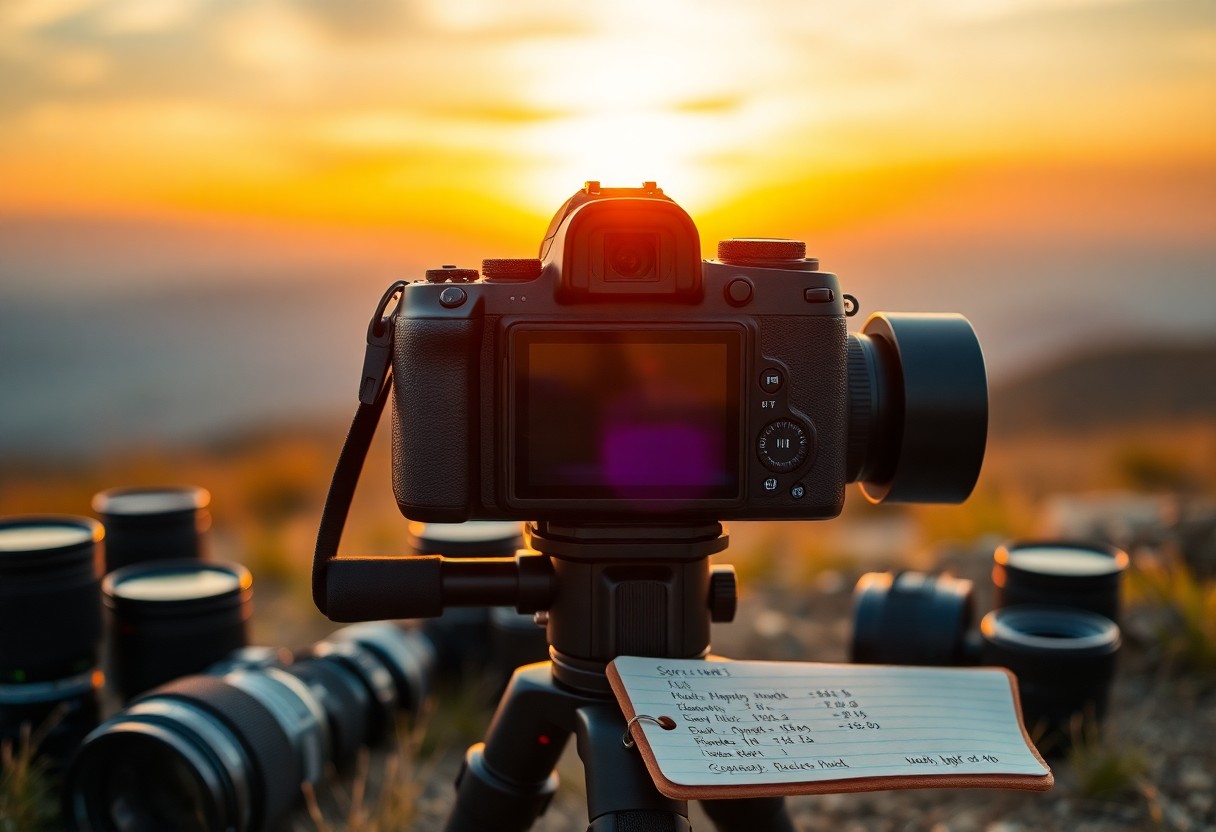
Tips for Capturing Stunning Photos
Keep your photography skills sharp by considering key aspects that elevate your shots. Focus on aspects like:
- Understanding exposure settings
- Choosing the right focal points
- Mastering depth of field
- Experimenting with angles and perspectives
- Paying attention to your background
Recognizing these factors will significantly enhance the quality of your photos.
Composition and Framing Techniques
For great photos, composition and framing play a pivotal role in capturing the viewer’s attention. Utilize leading lines, the rule of thirds, and balanced elements to create visually appealing images that tell a story effectively.
Utilizing Natural Light
On the path to stunning photography, natural light can be your greatest ally. Embrace soft, diffused light from the early morning or late afternoon to achieve beautiful, well-lit images.
It is imperative to adapt your shooting style based on the available light. Explore different angles and perspectives to leverage highlights and shadows, creating depth and contrast in your photos. Observe how various lighting conditions affect your subjects, and embrace overcast days for soft, even illumination. Experimenting with natural light will enhance your ability to capture stunning images effortlessly.
Pros and Cons of Different Camera Settings
All camera settings come with their own strengths and weaknesses. Understanding these can help you choose the right setting for your photography needs.
Pros and Cons of Camera Settings
| Pros | Cons |
|---|---|
| ISO allows better performance in low light. | Higher ISO can introduce noise. |
| Aperture controls depth of field effectively. | Wider apertures can lead to softer focus on edges. |
| Shutter speed freezes fast movements. | Slower speeds can blur motion unintentionally. |
| Exposure Triangle balances light effectively. | Manipulating all three can be complex. |
| Manual settings offer full creative control. | They require practice to master. |
| Smart modes are user-friendly for beginners. | They can limit creative expression. |
| Aperture can enhance overall image quality. | Requires understanding to optimize. |
| Shutter speed can capture dynamic scenes. | Inconsistent results without practice. |
| ISO can adapt to various light situations. | Not all cameras handle high ISO well. |
| Combining settings can create unique effects. | Can lead to overexposure without caution. |
Balancing ISO, Aperture, and Shutter Speed
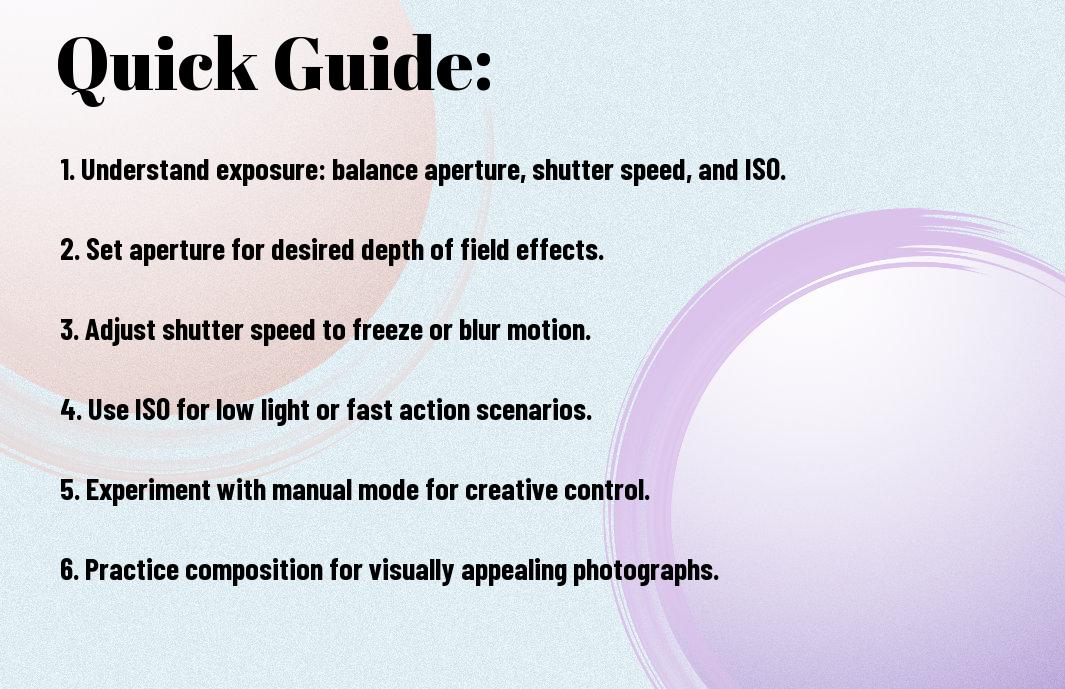
Aperture, shutter speed, and ISO work together to create a well-exposed image. Understanding how to balance these elements is key to mastering your camera. A wider aperture allows more light, while adjusting the shutter speed can freeze or blur motion based on the scene. Additionally, varying your ISO can enhance performance in different lighting situations. The right balance enhances clarity and artistic expression in your photos.
Evaluating Smart Modes vs. Manual Control
One of the decisions you’ll face as a photographer is whether to use smart modes or switch to manual control. Smart modes are designed to assist you in capturing better images automatically, which is great for those just starting out. However, manual control gives you the freedom to adjust settings based on your creative vision.
Different photographers find varying levels of success with smart modes versus manual settings. If you prefer convenience and are still learning the basics, smart modes can simplify the process. As you grow more confident and want to experiment, manual control allows you to express your creativity fully. Understanding when to use each can significantly impact your photography journey.
Common Mistakes to Avoid
Despite having the best camera and intentions, many photographers still encounter mistakes that can hinder their results. From mismanaging exposure to overlooking the impact of surroundings, these common missteps can lead to disappointing images. To elevate your photography, it’s vital to be aware of these pitfalls and how to sidestep them for stunning results.
Overexposing and Underexposing
Avoid letting your images fall victim to overexposure or underexposure, as these issues can easily compromise the quality of your photos. Use your histogram to monitor highlights and shadows, ensuring proper exposure for a balanced image that retains detail in both bright and dark areas.
Ignoring the Environment
Any great photograph considers the environment, as it plays a significant role in your composition and lighting. Failing to take into account elements such as time of day, weather, and background can result in unappealing images or undesirable distractions.
Common mistakes when it comes to ignoring your environment include not checking the light direction or choosing an uninteresting backdrop. Spend time observing your surroundings and adjust your shooting angle accordingly. Integrating elements like natural frames or interesting textures can also add depth and intrigue, transforming an ordinary scene into a captivating photograph. Engage with your environment to enhance your images and elevate your overall photography skills.
Advanced Techniques for Photography Enthusiasts
To elevate your photography skills, mastering advanced techniques is important. Here are some tips to help you enhance your photography:
|
Using Filters Effectively
Photography offers a plethora of options when it comes to using filters effectively. They can enhance colors, reduce glare, and allow for creative effects that transform your images. Consider using polarizing filters to eliminate reflections or neutral density filters for those long exposure shots that create a smooth, flowing effect in water or clouds.
Experimenting with Long Exposures
Long exposures can add a dramatic effect to your images by blurring motion or light over time. To achieve stunning results, use a tripod to stabilize your camera and set a low ISO to reduce noise.
Another way to excel in long exposures is to choose locations with dynamic elements, such as flowing water or moving clouds. By adjusting your shutter speed, you can capture beautiful motion blur while maintaining sharpness in the stationary elements of your scene. This technique is perfect for creating ethereal landscapes or mesmerizing cityscapes, allowing you to push your creativity further in every shot.
Conclusion
Now that you have explored the ultimate guide to camera settings, you are equipped with the knowledge to enhance your photography skills dramatically. By understanding exposure, aperture, shutter speed, and ISO, you can tailor your camera settings to capture stunning photos in any situation. Experiment with these techniques in different lighting conditions and subjects to discover what works best for your style. With practice and confidence in your settings, you’ll be able to transform your vision into breathtaking images that truly stand out.


