
Over time, you may find that your photography can start to feel stagnant or uninspired. To reignite your passion and elevate your skill set, exploring unique techniques can be a game changer. In this post, we will introduce you to eight innovative photography methods that can enhance your creative vision and help you capture stunning images. Get ready to step out of your comfort zone and discover new ways to express your artistic side with these exciting approaches.

Understanding the Basics of Creativity in Photography
While exploring photography, it’s crucial to grasp the basics of creativity that can elevate your work. Creativity is not just about having a good eye; it’s about experimenting, thinking outside the box, and finding unique perspectives. By understanding the fundamental principles of composition, lighting, and subject matter, you empower yourself to innovate and express your unique vision through your photographs.
The Role of Imagination
Any successful photographer harnesses the power of imagination to create compelling images. This imaginative spark allows you to see potential in everyday scenes and transform the mundane into the extraordinary. By tapping into your creativity, you can develop a distinctive style and narrative that resonates with your audience.
Breaking Conventional Norms
With the ever-evolving landscape of photography, pushing boundaries and breaking conventional norms can lead to remarkable outcomes. Embracing unconventional techniques and perspectives can result in striking imagery that captivates viewers and showcases your unique artistic voice.
Further, stepping outside traditional approaches means challenging yourself to experiment with various settings, angles, and post-processing methods. You can find freedom in unpredictability, allowing your creativity to flow unhindered. By moving away from the standard rules, you not only differentiate your work but also open doors to new ideas and inspiration, enhancing your overall photographic journey.

Unique Photography Techniques
Any photographer looking to expand their skills can benefit from experimenting with unique photography techniques. These methods not only enhance your creativity but also yield stunning results that can redefine your vision. Let’s research into eight fascinating techniques that you can try today to elevate your photography game.
Double Exposure
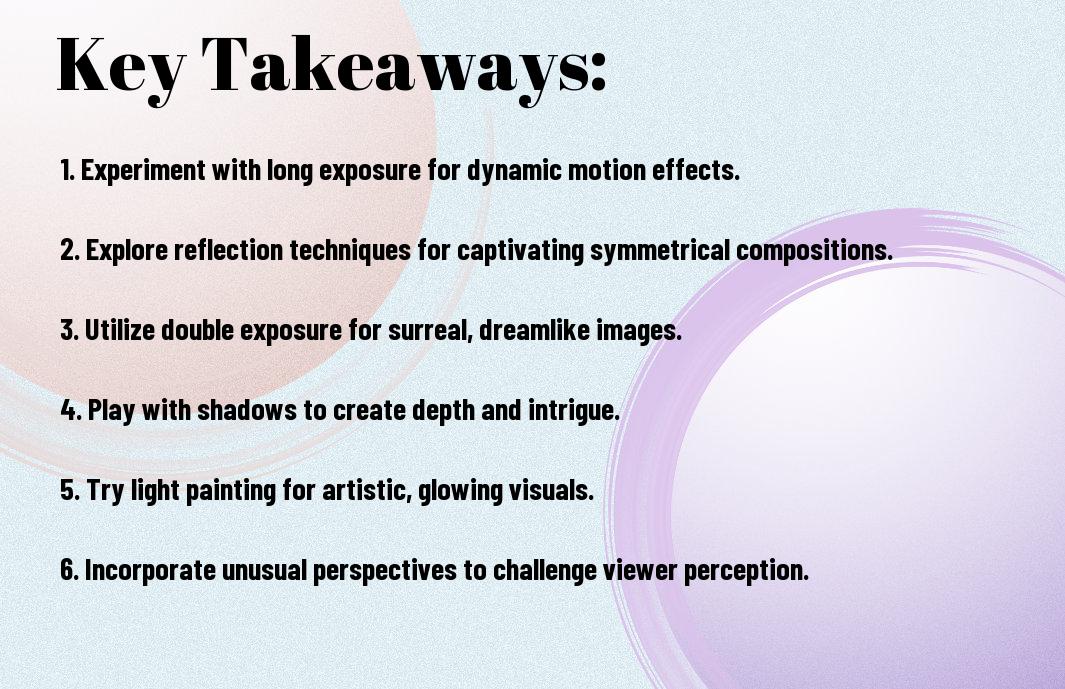
Below, you can explore double exposure photography, a creative technique that involves overlaying two images to create a single, ethereal photograph. It challenges your imagination and gives you the opportunity to tell stories through juxtaposition. You can achieve this effect using digital editing or by creatively exposing film. Start with simple combinations, such as silhouettes and landscapes, to master this technique.
Long Exposure
Above all, long exposure photography allows you to capture the passage of time, transforming motion into a mesmerizing visual experience. This technique is perfect for subjects like flowing water or city lights, showing movement in a unique way. Utilize a tripod and slow shutter speeds to create dreamy effects, revealing the beauty of your surroundings.
Plus, long exposure can also be used to create dramatic skies or capture light trails from moving vehicles. By manipulating the shutter speed, you can turn mundane scenes into magical photographs that resonate with viewers. Experiment with different settings and locations to discover the limitless potential this technique offers.
Light Painting
By using light painting, you can create captivating images that literally paint with light. This technique is done in low light conditions, using long exposure to capture moving light sources, like flashlights or sparklers. Get creative with the path and colors of light you use to produce stunning visual effects that can showcase your artistic side.
Exposure in light painting allows you to express your creativity without boundaries. By adjusting the exposure time, you can influence how the light interacts with your background, producing uniquely composed images. The beauty of light painting lies in experimentation; each shot is an opportunity to create something entirely different and personal.
Macro Photography
Photography at the macro level unveils the intricate details of small subjects, showcasing elements often overlooked. This technique requires specialized equipment or lenses to capture close-up shots of insects, flowers, or textures, revealing a new world of beauty. Pay attention to lighting and composition to achieve eye-catching macro images.
Macro photography enables you to explore the fine details that make subjects extraordinary. By getting up close, you can enhance textures and colors, revealing the hidden beauty in everyday objects. This technique encourages you to cultivate patience and an eye for detail, as the perfect shot often requires careful adjustments and observation.
Forced Perspective
Any photographer can have fun with forced perspective, a technique that plays with scale and distance to create optical illusions. By positioning subjects at varying distances, you can manipulate the viewer’s perception, making it appear as though large objects are interacting with smaller ones in unique and amusing ways.
This technique can lead to imaginative storytelling through your photographs. By strategically placing elements in your frame, you can create whimsical and humorous scenes that spark curiosity. Embrace creativity and experimentation, as the best forced perspective shots often come from unexpected angles and playful ideas.
Infrared Photography
With infrared photography, you can capture light not visible to the naked eye, resulting in surreal and ethereal images. This technique requires special filters or modified cameras that detect infrared light, transforming landscapes and subjects into dreamlike scenes with striking contrasts and unusual colors.
Due to the unique tonal range and color palette of infrared images, your photographs can evoke a sense of otherworldliness. You can achieve outstanding results in outdoor settings, turning greenery into vibrant white foliage and creating visually stunning effects that challenge conventional color perception. Exploring infrared photography can breathe new life into your artistic expression and expand your creative toolbox.

Experimenting with Composition
Once again, stepping outside of traditional framing can open up new avenues for creativity in your photography. By intentionally altering your composition, you can draw attention to your subject in unexpected ways. Challenge yourself to break the mold and try unconventional angles, perspectives, or arrangements. Your unique approach will not only enhance your skills but also allow you to express your artistic vision in a fresh light.
Rule of Thirds
With the Rule of Thirds, you can significantly enhance the balance and interest in your images. By dividing your frame into a 3×3 grid, you can position your subject along the intersecting lines or at their junctions. This technique encourages a more dynamic composition, guiding the viewer’s eye and making the image more engaging.
Leading Lines
At the heart of captivating photography lies the concept of leading lines, which helps direct the viewer’s gaze throughout the frame. By incorporating natural lines, such as roads, rivers, or architectural elements, you establish a visual pathway that draws attention to key subjects or points of interest in your photography.
Experimenting with leading lines can transform a simple shot into a compelling narrative. As you explore different environments, look for elements that can guide your viewer’s eye. These lines not only create depth and perspective but also enhance the sense of movement in your images. Try shooting from multi-dimensional angles to maximize the impact of your leading lines, allowing them to tell a story within your composition.
The Impact of Color and Light
Unlike other art forms, photography relies heavily on the interplay of color and light. These elements can transform the mood of your images, drawing viewers in and evoking specific feelings. Understanding how to manipulate color and light will enable you to create stunning compositions that resonate emotionally. Whether through soft pastels or dramatic contrasts, the way you utilize color and light can significantly elevate your photography.
Color Theory in Photography
After grasping the principles of color theory, you can enhance your photographic storytelling. Color theory fundamentals, such as complementary and analogous color schemes, provide you with powerful tools to create harmony or tension within your images. Learning to apply these concepts will help you craft visually engaging photographs that resonate with your audience.
Natural vs Artificial Light
Artificial light can drastically reshape your photography approach by providing control and consistency. While natural light is often preferred for its softness and dynamic nature, artificial light sources, like flashes and continuous lights, allow you to create specific atmospheres and achieve desired effects regardless of the time of day or environmental conditions.
Due to its versatility, artificial light can be used in various scenarios — from portrait shoots to product photography. It offers the opportunity to experiment with different angles and intensities, allowing you to highlight specific elements in your composition. While natural light changes constantly, your mastery of artificial light can enable you to maintain creative freedom in any shooting environment.
Post-Processing Techniques
Now that you’ve captured your images, the next step is to refine them through post-processing. This is where your creative vision can really shine, as you enhance colors, adjust exposure, and add artistic effects. Learning various post-processing techniques not only improves your images but also helps you develop your unique style. Dive into editing with the right tools and techniques, and watch your photography transform.
Editing Basics
To get started with post-processing, familiarize yourself with the crucial editing tools found in software like Adobe Lightroom or Photoshop. These programs allow you to make basic adjustments such as cropping, color correction, and exposure adjustments. Understanding these foundational tools will set the stage for more advanced editing later on.
Advanced Editing Tips
Editing can elevate your photography to the next level. The following tips will help you refine your skills and produce stunning images that captivate your audience:
| Tip | Description |
|---|---|
| 1. Use Presets | Streamline your workflow by utilizing presets to apply consistent styles. |
| 2. Layer Editing | Utilize layers to make non-destructive adjustments without altering the original image. |
| 3. Fine-tune Curves | Adjust tonal ranges with curves for more precise control over contrast and brightness. |
| 4. Experiment with Filters | Apply filters creatively to enhance certain elements or create mood. |
The key to mastering advanced editing is practice and exploration. As you gain confidence, don’t hesitate to push the boundaries of your creativity:
- Combine multiple techniques to create unique looks.
- Take advantage of blend modes to produce interesting effects.
- Use selective adjustments to highlight specific areas of your image.
- Study inspiration from other photographers’ post-processing styles.
As you continue to experiment with these advanced techniques, you’ll discover your own editing style and refine the way you express your creativity in photography.
Finding Your Unique Style
Despite the abundance of photographic styles and techniques available, discovering your unique style is an important step in unleashing your creative potential. It allows you to express your individuality and storytelling ability through your images, setting you apart in the competitive world of photography. Embrace experimentation with different subjects, lighting, and editing styles to hone in on what resonates with you the most.
Analyzing Influences
Your photography is often shaped by the influences around you, including other photographers, art movements, and even your personal experiences. Take time to analyze the work of those who inspire you; consider what attracts you to their photography and how it might integrate into your own style. Use this insight to cultivate a vision that reflects your unique voice while also paying homage to your influences.
Developing a Signature Look
Around your evolving style lies the opportunity to develop a signature look, which speaks volumes about your artistic vision. This might involve consistent use of specific colors, editing techniques, or compositional elements that unify your work. Your signature look helps viewers instantly recognize your photographs and builds a personal brand that showcases your creativity.
Another way to refine your signature look is by conducting ongoing experiments with various techniques and styles. Play with different photography genres, such as portraiture, landscape, or street photography, to discover how each influences your aesthetic. Focus on the elements that resonate with you and integrate them into your body of work. As you continue to explore, don’t shy away from evolving; allow your signature look to adapt and grow, reflecting your journey as an artist.
Summing up
Ultimately, unlocking your creativity in photography is about experimentation and trying out unique techniques that push your boundaries. By applying the eight methods discussed, you can discover new perspectives and enhance your skills. Embrace the challenge, allow yourself to think outside the box, and you may just uncover a style that resonates with you. Keep practicing, and let your imagination guide your lens as you launch on this exciting journey of creativity in photography.


