

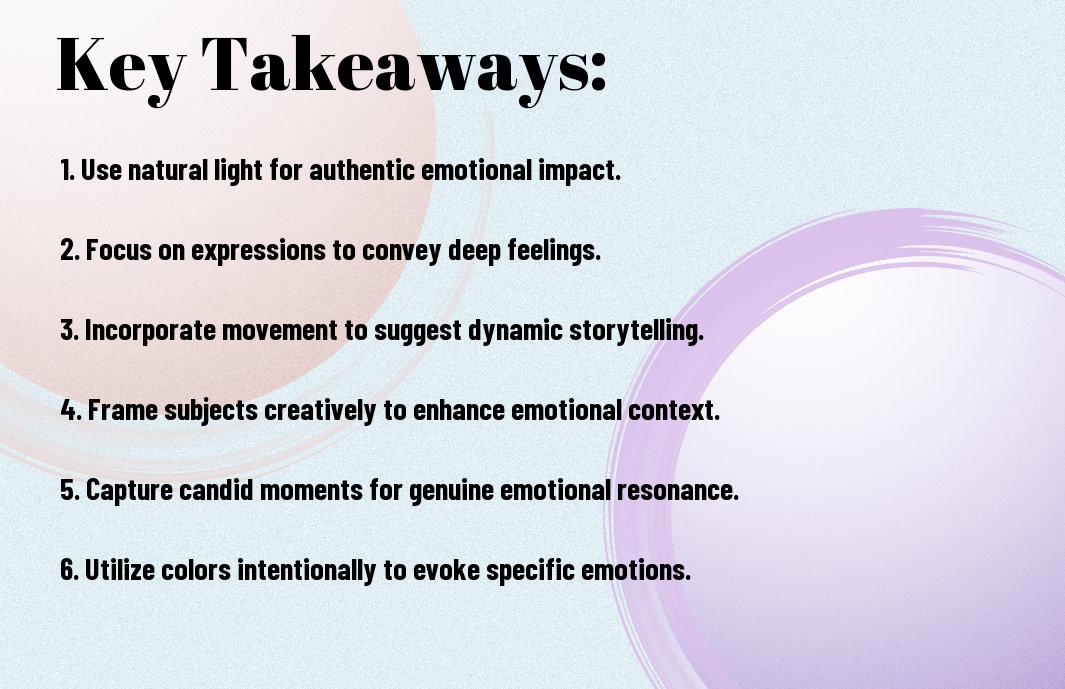
Photography is more than just a technical skill; it’s an art form that allows you to convey powerful emotions and narratives through your lens. By understanding and implementing specific techniques, you can elevate your images from simple snapshots to compelling stories that resonate with viewers. In this blog post, you’ll discover five crucial tricks that will help you capture genuine emotions and create captivating photographs that speak volumes.

Understanding Emotion in Photography
Before you can effectively capture emotions through your lens, it’s vital to grasp what emotion means in photography. It’s not merely about a subject’s facial expression; it encompasses the mood, connection, and story behind that moment. Understanding this will allow you to create more impactful images that resonate with your audience.
The Importance of Emotion
After mastering technical aspects, infusing emotion into your photography elevates your work from ordinary to extraordinary. Emotion allows viewers to connect with your images on a deeper level, forging an emotional bond that enhances storytelling. Capturing emotion can turn a simple picture into an unforgettable narrative.
Types of Emotions to Capture
At this point, it’s crucial to recognize various emotional types that can enhance your photography. Consider the following types of emotions:
| Happiness | Joyful moments of celebration or achievement. |
| Sorrow | Expressions of sadness and raw vulnerability. |
| Anger | Intense emotions conveyed through body language. |
| Surprise | Unanticipated reactions that capture spontaneity. |
| Calm | Serenity that can evoke feelings of peace. |
Consequently, recognizing these emotions enables you to better compose your shots. Consider incorporating the following elements:
- Expressions and body language
- Lighting and shadows to enhance mood
- Environmental context that complements feelings
- Composition techniques that direct focus to emotions
- Timing to capture fleeting moments
Recognizing these aspects can significantly impact the emotional weight of your photographs, leading to more compelling storytelling through your lens.

Composition Techniques
Any photograph can be enhanced through careful composition techniques. By understanding how to structure your image, you can effectively convey emotion and guide the viewer’s eye to the focal point of your story. Composition is not just about framing; it’s about creating a visual path that draws the viewer into the narrative you’re capturing.
Rule of Thirds
Above all, the rule of thirds is a fundamental principle that can elevate your photography. By dividing your frame into a grid of nine equal parts, you can strategically place your subject along these lines or at their intersections, creating a balanced and dynamic composition that captivates the viewer’s attention.
Leading Lines
Composition techniques like leading lines are important for building depth and directing the viewer’s gaze throughout your image. By incorporating natural lines—such as roads, fences, or rivers—you create pathways that draw the eye toward your main subject, making the photograph more engaging and immersive.
Hence, using leading lines effectively can transform an ordinary photo into a compelling story. These lines provide visual cues and help establish context, guiding the viewer’s eye to key elements within your frame. When you position your subject at the end of a leading line, you establish a connection, making the photograph both powerful and timeless.
Playing with Light
Despite the technical complexity of photography, the interplay of light can be your most powerful storytelling tool. Mastering how light interacts with your subject can evoke emotion, enhance atmosphere, and create depth within your frame. Whether you’re shooting during the golden hour or manipulating artificial sources, understanding how to harness light effectively will add layers of meaning to your images, transforming simple snapshots into compelling narratives that resonate with your audience.
Natural vs. Artificial Light
Behind every striking photograph lies a choice between natural and artificial light. Natural light, with its soft, warm qualities, often brings an innate warmth and depth, making it ideal for capturing candid moments and landscapes. In contrast, artificial light allows you to create your own atmosphere, providing control over the mood and emphasizing particular elements in your scene. Balancing these light sources can help you craft stories that reflect your unique perspective and vision.
Using Shadows to Evoke Emotion
An effective way to convey emotion in your photography is by utilizing shadows. Shadows can add a sense of mystery, underscore isolation, or even enhance drama in a composition. When strategically placed, they can guide the viewer’s eye or create a stark contrast that heightens emotional impact. By manipulating the direction and intensity of light, you can sculpt shadows that speak volumes about your subject, ultimately enriching the narrative quality of your images.
In addition to adding depth, shadows can also evoke a range of emotions by suggesting tension or serenity, depending on your intent. For instance, long shadows during sunset can impart a feeling of nostalgia, while harsh, angular shadows might communicate unease or anxiety. Experimenting with shadow play not only enhances visual intrigue but also invites your audience to interpret your work on a deeper emotional level, making your storytelling more profound.

Subject Selection
Many photographers underestimate the power of subject selection in storytelling through images. Choosing the right subject can shape the emotional depth of your photographs and convey the narrative you wish to express. By focusing on individuals, objects, or scenes that resonate with the story you want to tell, you can create compelling imagery that captures attention and evokes feelings in the viewer.
Portraits and Expressions
Before you snap a portrait, consider the expressions of your subject. A genuine smile or a fleeting frown can convey a wealth of emotion and connection. Capture the unique character of your subject through their facial expressions, as these can often reveal more about their story than words ever could.
Candid Moments
Before planning your next shoot, think about the beauty of candid moments. These spontaneous occurrences often offer the rawest emotions and the most authentic storytelling. By keeping your camera ready in everyday situations, you can frame moments that illustrate real-life experiences and emotions naturally unfolding.
Selection of candid moments requires a keen eye and quick reflexes. Pay attention to your surroundings, looking for interactions, feelings, and narratives that unfold naturally. Times when people are engaged in their activities or having genuine conversations are prime opportunities to capture emotion. Instead of posed scenes, immerse yourself in the environment and let the story reveal itself, allowing you to document life as it happens.
Post-Processing Tips
Once again, the editing phase is where you can truly elevate your photographs. Use these tips to enhance your storytelling:
- Adjust contrast and brightness for dramatic effect
- Crop to focus on key emotions
- Apply vignettes to draw attention to the subject
- Use sharpening techniques to highlight details
After incorporating these tactics, you’ll find that your images resonate more deeply with your audience.
Enhancing Mood Through Editing
Along with basic adjustments, consider how you can enhance the overall mood of your image through specific edits. Experiment with shadows and highlights to create a sense of depth, while balancing exposure to maintain natural tones.
Color Grading for Emotional Impact
To make your photography evoke the desired feelings, color grading is crucial. Think about the colors that align with the emotions you want to convey; warm tones can invite comfort, while cooler tones may evoke sadness or introspection.
PostProcessing techniques such as hue shifts, saturation adjustments, and selective color edits allow you to layer emotional depth into your work. By altering the color balance and applying subtle gradients, you can guide the viewer’s emotional experience. These adjustments not only enhance your story but also establish a distinctive style that reflects your artistic vision.
Putting It All Together
Now that you’ve explored various techniques to capture emotion in your photography, it’s time to synthesize these skills into your work. By integrating these strategies, you can create rich, evocative images that tell a compelling story. Consider the emotional resonance of each photo and how they connect with one another to form a cohesive narrative. This final step will elevate your photography and offer viewers an unforgettable experience.
Crafting a Narrative Through Images
Together, you can build a strong narrative by selecting images that complement and contrast each other. Consider the sequence of your photos, using visual elements and emotional tones to guide the viewer through a journey. Each frame should add depth to the story and engage the audience, creating an immersive experience that resonates on a personal level.
Analyzing Your Work for Emotional Depth
Together, a critical evaluation of your own images is crucial for understanding the emotional impact they convey. By reflecting on your work, you will identify strengths and areas for improvement, allowing you to enhance your storytelling abilities. This process fosters growth and helps you create images that truly resonate with your audience.
And as you analyze your work, consider aspects such as composition, color, and the emotions evoked by your subjects. Ask yourself how the elements of each image contribute to the overall mood and narrative. This self-assessment will deepen your understanding of emotional depth, enabling you to refine your storytelling techniques and elevate your future projects.
Final Thoughts
Keep exploring these techniques to deepen the emotional impact of your photography. Each shot you take is an opportunity to convey a narrative that resonates with your audience. Pay attention to the elements of composition, light, and emotion, and don’t hesitate to experiment with different perspectives. Over time, you will find your unique voice as a storyteller through your lens. Your ability to capture genuine moments will not only enhance your skills but also create lasting connections with those who view your work.


