
You’ve spent hours scouting the perfect location, waiting for that "golden hour" light that makes everything look like a dream, and clicking the shutter at the exact moment the universe aligned. You’ve even spent more hours refining those RAW files with the Ultimate Lightroom Preset Collection to make sure every shadow and highlight is singing. But now that you’re ready to share your vision with the world in the form of physical art, the sales just aren't clicking.
Selling fine art photography is a different beast than posting on Instagram. When you transition from digital screens to the physical walls of a collector’s home, the rules of the game change. You aren't just selling a picture; you are selling an experience, a piece of your soul, and a high-end decor item.
If you’ve been struggling to move your prints, you’re likely falling into one (or all) of these common traps. Let’s break down the mistakes you’re making and, more importantly, how to fix them so your business becomes as professional as your portfolio.
1. You’re Displaying Poor Quality Photos of Your Work
It sounds ironic, doesn't it? You’re a photographer, yet the photos of your physical prints look… well, mediocre. Many artists make the mistake of thinking that because the original digital file is stunning, the customer will just "get it." But when you are selling online, your customer’s only interaction with your work is through their screen.
If your "mockups" look fake or your photos of the framed prints are dark, grainy, or full of reflections, you are signaling to the buyer that your work isn't high-value. You need to show your work in situ: hanging in a beautiful living room or a sleek office. This helps your collector visualize your museum quality work in their own space.
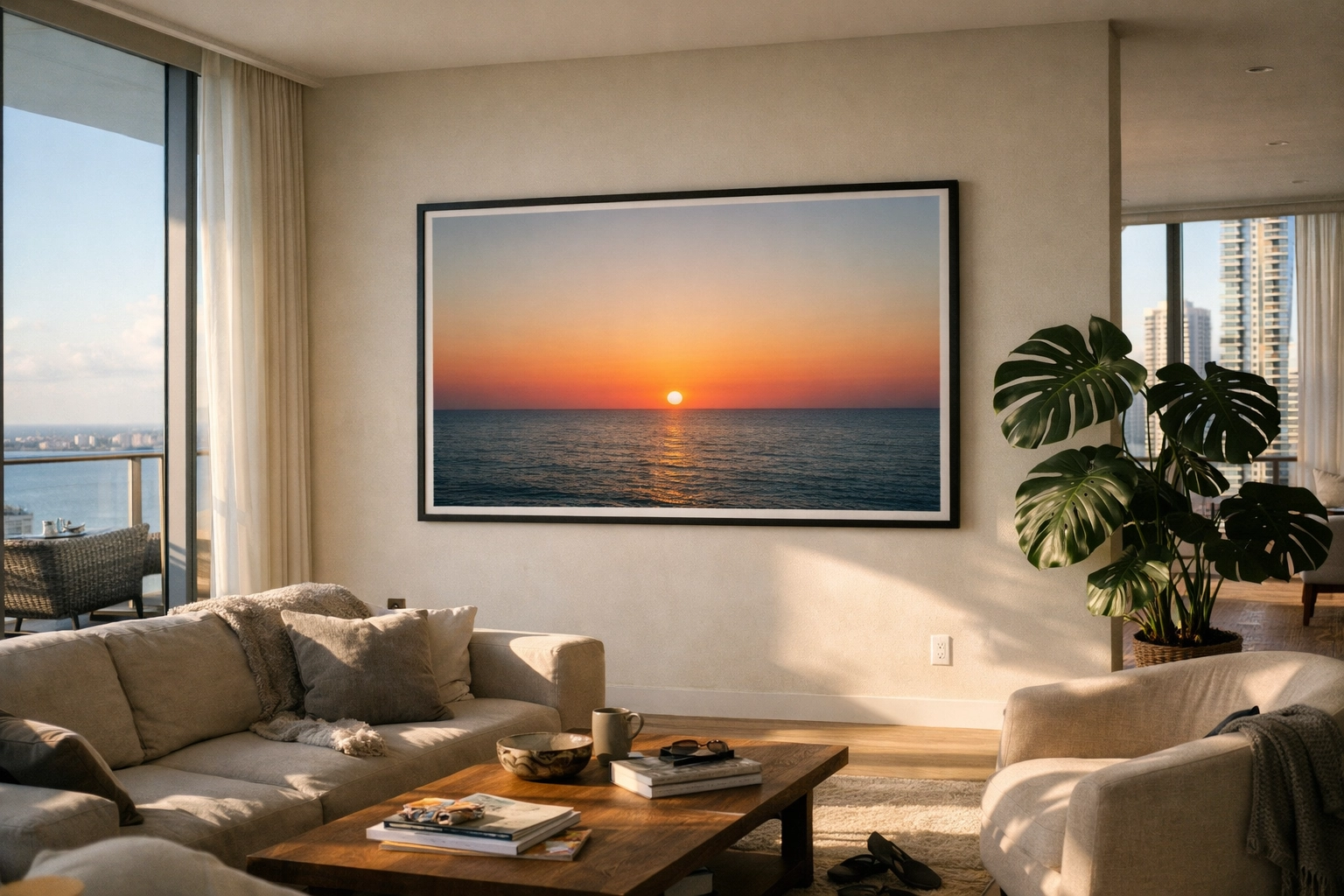
Alt Text: A high-end gallery wall in a Miami luxury penthouse featuring large-scale fine art photography prints with museum-quality framing.
The Fix: Invest in professional product photography or high-quality room mockups. Show the texture of the archival prints. If you want to see how it’s done right, take a look at the gallery presentation at Edin Fine Art. We treat every image like the masterpiece it is.
2. Underpricing to Drive Sales
I see this all the time, and it breaks my heart. You think that by lowering your prices, you’ll attract more buyers. In reality, you are doing the exact opposite. When you price your work too low, you are telling the market that your art is a commodity, not a luxury.
Low prices kill your profit margins. Between the cost of the paper, the ink, the shipping, and the marketing, a $50 print might actually be costing you money to sell. Furthermore, collectors who buy fine art photography often equate price with quality. If it’s too cheap, they assume it’s not "real" art.
| Pricing Strategy | Perceived Value | Profit Margin | Long-term Sustainability |
|---|---|---|---|
| Bargain Pricing | Low / "Poster" quality | Razor thin | Very Low |
| Market Average | Standard / Decorative | Moderate | Moderate |
| Fine Art Premium | High / Collectible | High | Excellent |
The Fix: Price your work based on the value it brings and the costs involved. Leave yourself room for the occasional 25% off sale without dipping into your rent money. High prices create a "prestige" factor that attracts serious collectors.
3. Failing to Sign or Personalize Your Prints
When someone buys a print from you, they aren't just buying paper; they are buying a connection to you, the artist. If you send out a print that looks like it could have come from a big-box IKEA shelf, you’ve lost the "fine art" appeal.
A signature is a mark of authenticity. It transforms a print into a "piece." Without it, the work feels impersonal and mass-produced.
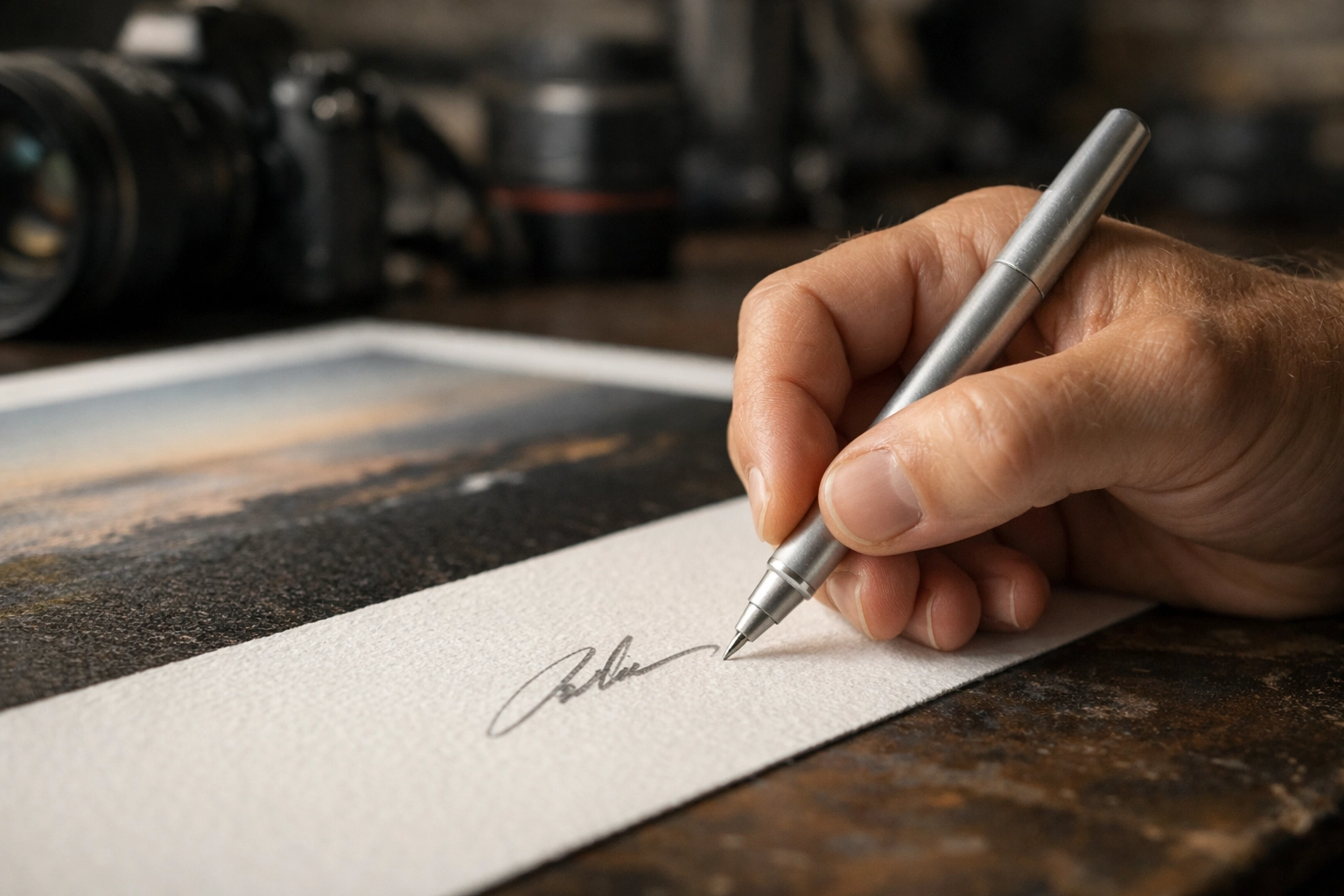
Alt Text: Close up of a photographer's hand signing the bottom corner of a matte archival print in a Reno, Nevada studio.
The Fix: Always sign your prints. Whether it’s a physical signature on the border or a signed certificate of authenticity, this small touch adds immense perceived value. It tells the buyer, "I made this, and I stand by it."
4. Only Offering Digital Files
In the age of "instant everything," many photographers think selling digital files is the way to go. "Let the customer print it themselves!" you might say. But here’s the reality: they won't. Or worse, they’ll take your beautiful, color-corrected file to a cheap pharmacy printer and end up with a green-tinted mess on flimsy paper.
When you sell digital files, you lose control over the final product and you leave a massive amount of revenue on the table.
The Fix: Provide curated physical products. Offer archival prints, canvas wraps, or sleek metal options. By controlling the printing process, you ensure the customer receives museum quality work that will last for generations. If you’re shooting in places like South Beach, you can even point locals to your Private Miami Photography Tour to show them how you capture the shots they’re buying.
5. Overwhelming Clients with Excessive Choices
You might think that offering 15 different sizes, 10 types of paper, and 20 frame styles is helpful. It’s not. It’s paralyzing. This is known as "The Paradox of Choice." When faced with too many options, most people will choose nothing at all.
Your job as the artist is to be the curator. You should know which size and finish best suits your specific image.
| Image Style | Recommended Finish | Why? |
|---|---|---|
| High Contrast B&W | Fine Art Matte | Absorbs light, deepens blacks |
| Vibrant Landscapes | Metallic or Glossy | Makes colors pop and glow |
| Abstract / Textural | Heavyweight Rag | Adds tactile depth |
The Fix: Limit your offerings. Choose the three best sizes and the two most complementary frame styles. Make the decision easy for your customer so they can get straight to the checkout.
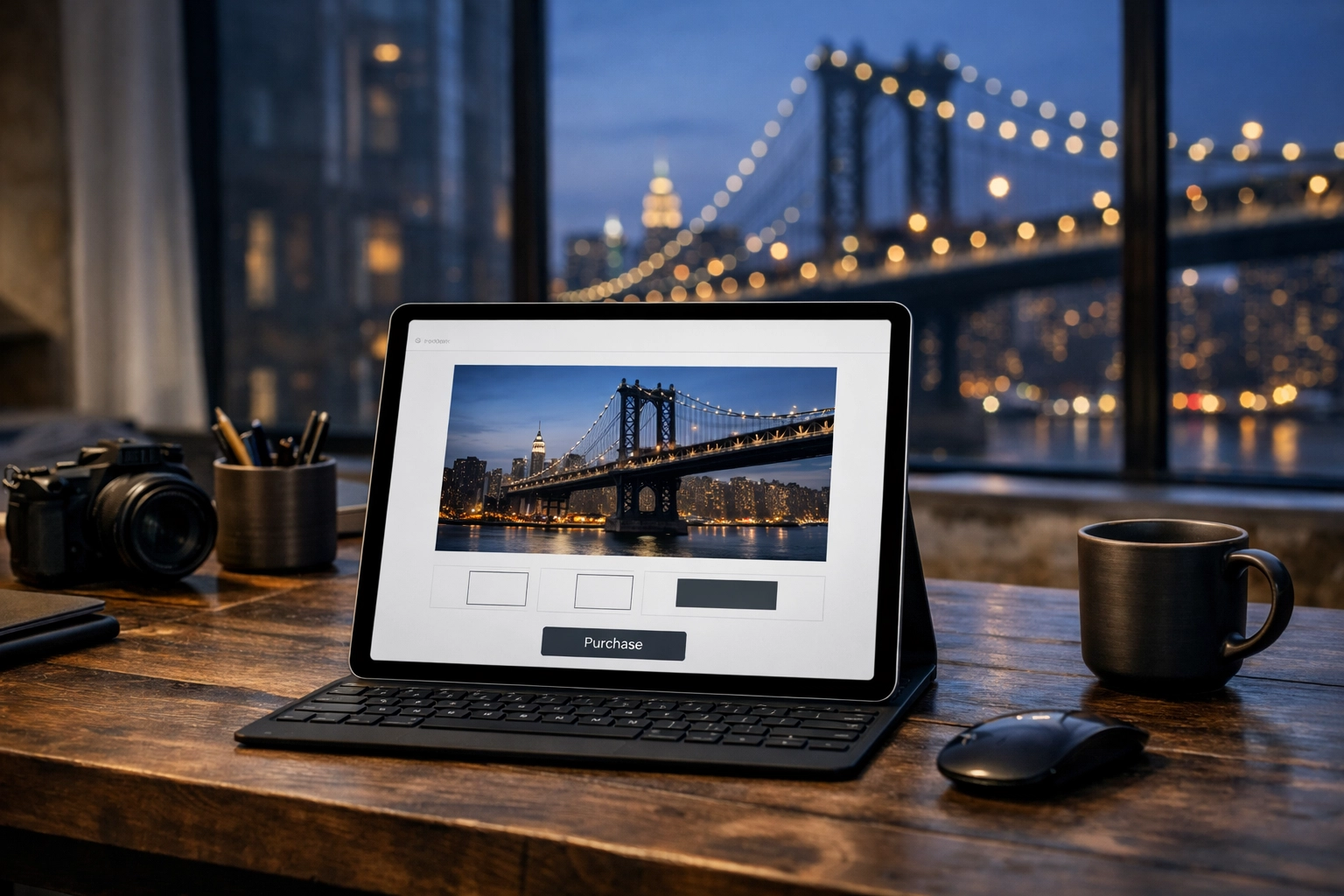
Alt Text: A minimalist website interface showing a curated selection of fine art photography sizes for a New York City skyline print.
6. Using the Wrong Paper and Framing Materials
Not all paper is created equal. If you are using standard glossy photo paper for wall art, you are making a mistake. Glossy prints reflect everything: windows, lamps, the TV: making it hard to actually see the art.
Fine art collectors look for archival prints that won't fade or yellow over time. They want materials that look like they belong in a gallery, not a high school locker.
The Fix: Switch to matte or luster finishes for your fine art photography. Use acid-free, 100% cotton rag papers. This ensures your work maintains its integrity for decades. For more insights on how to elevate your work, explore our site at Edin Chavez Blog for a deep dive into hundreds of tutorials and guides on gear and technique.
7. Failing to Create Scarcity (The "Unlimited" Trap)
If anyone can buy your print at any time in any quantity, there is no urgency. Photography is inherently reproducible, which can drive down the value. To combat this, you need to introduce scarcity.
Limited editions are the cornerstone of the fine art world. When a collector knows that only 10 or 25 copies of a specific image exist in a certain size, the value of that print sky-rockets.
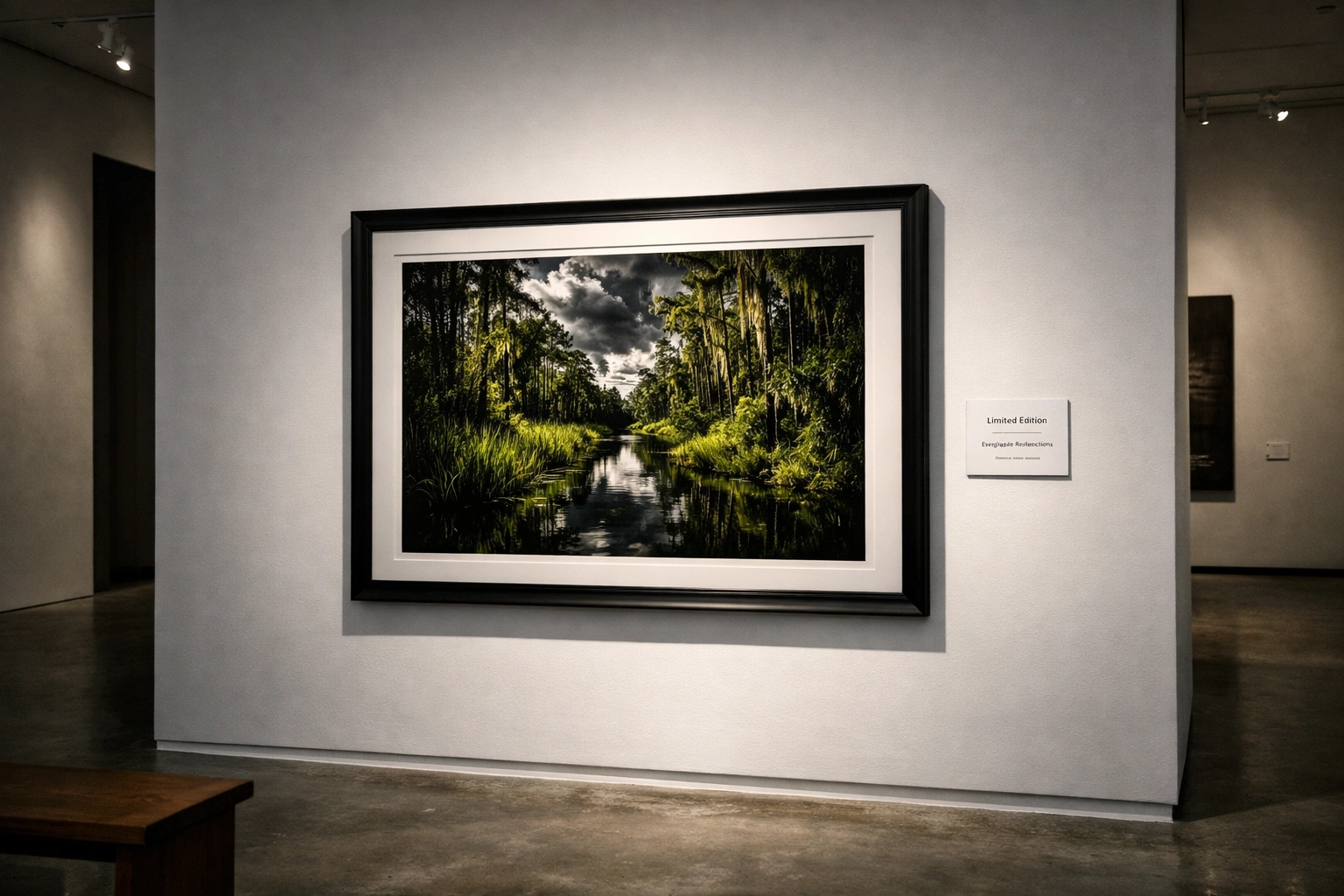
Alt Text: A limited edition fine art print of the Florida Everglades, numbered 1 of 10, displayed in a professional gallery setting.
The Fix: Start offering limited edition runs. Once a series is sold out, it should never be printed again in that format. This creates a "buy it now" mentality and rewards your early supporters. If you’re capturing unique locations like the swamp, check out our Everglades Photography Guide to find the kind of shots that deserve a limited run.
Elevating Your Brand
Correcting these mistakes isn't just about selling more paper; it’s about building a brand that commands respect. When you treat your work with the professionalism it deserves: using the right tools like the Ultimate Lightroom Preset Collection and offering only the best archival prints: the market will respond accordingly.
Your photography is a gift to the world. Don't let poor presentation or a "commodity" mindset hold you back from the success you’ve earned. Whether you are shooting the neon lights of Miami or the rugged peaks of the Sierras, treat every sale like the beginning of a long-term relationship with a collector.
For more information on the professional services we offer, from commercial shoots to high-end gallery sales, visit Edin Studios and see how we bring world-class imagery to life.
Hence, by shifting your focus from "selling a picture" to "providing a masterpiece," you empower yourself to build a sustainable, profitable career in fine art photography. Stop making these mistakes today, and start seeing your work on the walls where it belongs.


